Khapli, Fullness and Slow Eating: Why Texture May Change the Meal Experience
Khapli’s softer texture may influence how you eat, but its potential effect on fullness is personal. Here’s what’s established and what remains uncertain.
Table of Contents
Khapli’s higher water absorption — about 73.0%, against typical roller-milled atta — tends to produce a softer roti with a noticeably different bite. That texture difference is real and well-documented. What it does to a meal beyond texture — whether it changes how full you feel, or how you eat — is a softer, more individual question, and this piece is careful to keep the two separate: texture is established; what texture might do to eating behaviour is suggestive, not settled.
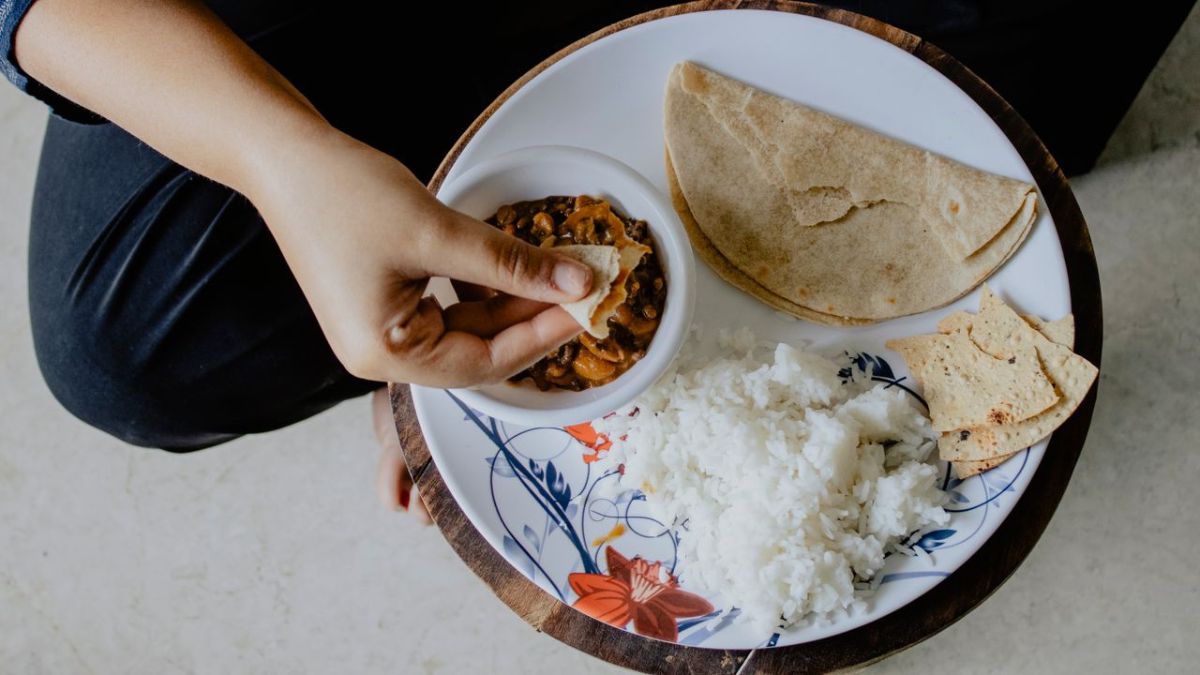
A softer, more pliable roti is often easier to tear and chew than a denser one, and that can change pace without anyone deciding to eat more slowly on purpose — texture quietly sets a rhythm. This isn’t a claim specific to Khapli; it’s a general pattern with food texture and eating speed. Whether it applies the same way to every person, with every roti, isn’t something this series claims to know with certainty.
Khapli’s water absorption of about 73.0% is meaningfully higher than typical roller-milled atta, and its damaged starch profile — about 28.8% against roughly 9.2% for standard milling — reflects the stone-chakki-style grinding that gives it a different mouthfeel. Together, these are part of why people who switch to Khapli often describe the roti as softer or more satisfying to eat. That description is about texture and personal experience — not a verified claim about fullness, satiety hormones, or digestion speed.
| ⓘ What’s Established vs What’s Anecdotal Established: Khapli has notably higher water absorption (~73%) and a different milling/starch profile than typical roller-milled atta — IFCT 2017, brand-verified. Established: eating quickly is generally linked to more gas, bloating, and a reduced sense of fullness — a well-evidenced, general pattern. Anecdotal, not Bible-verified: that Khapli’s specific texture makes people eat more slowly, or feel fuller, in a measurable or universal way. This piece treats the first two as fact and the third as a plausible, individual experience — not a claim made on Khapli’s behalf. |
Eating quickly is one of the more consistent, well-established contributors to gas and bloating, and a meal eaten slowly generally gives your body more time to register that you’re full — which is part of why pace matters more than most people assume. None of this is unique to Khapli; it applies to any meal, any roti, any cuisine. If Khapli’s texture genuinely changes someone’s pace — even by a few minutes — it’s tapping into a real, general mechanism. That’s different from Khapli itself having a special fullness-inducing property, and this piece is careful not to blur the two.
It would be easy — and tempting — to round this off into a tidier claim: ‘Khapli’s texture makes you eat slower, which makes you feel fuller, which means Khapli helps you eat less.’ Each step in that chain has some plausibility, but stacking plausible steps into a confident conclusion is exactly how an honest texture observation turns into an overclaim no single piece of evidence here actually supports. This series would rather leave the chain visibly incomplete than complete it with an assumption dressed up as a fact.
Rather than asking ‘does Khapli make me feel fuller’ as a yes-or-no question, it’s more useful to actually notice, meal by meal: how long did this meal take to eat, how full did you feel afterwards, and how satisfied did the meal leave you. Tracking that across a few Khapli meals — the Read→Do hook for this piece — tells you something real about your own experience, which is more reliable than any general claim this piece, or anyone else, could make on your behalf.
It’s worth being explicit: this piece does not claim Khapli is more filling than other whole grains, that it aids weight management, or that its texture gives it a digestive advantage over regular whole wheat atta. Texture and pace are real, individual, and worth noticing — but they are not the same as a verified satiety or weight-management claim, and this series doesn’t make that leap.
| ⓘ What This Piece Isn’t Saying Not claiming Khapli aids weight loss or appetite control. Not claiming Khapli’s texture makes it more filling than regular whole wheat atta — the two are fibre-equivalent, and no satiety comparison between them is Bible-verified. Not claiming texture-driven slower eating happens for everyone, or to the same degree. Not suggesting Khapli’s older wheat variety status changes how its gluten is digested, or makes it more suitable for anyone with gluten sensitivity — Khapli contains gluten, like any wheat, and is not suitable for coeliac disease or gluten intolerance. |
It’s worth adding one more layer of nuance: a Khapli roti’s texture isn’t identical every time, either. How fresh the flour is, how long the dough rested, how thick it was rolled, and how it was cooked all shape the final bite as much as the grain itself does. The same packet of Khapli atta can produce a noticeably different roti in two different kitchens, or even on two different days in the same kitchen. This is one more reason this piece treats texture as a genuine but variable factor, not a fixed property that guarantees a particular eating experience every time.
This series has already covered most of what actually determines how a roti meal feels — portion, what’s eaten alongside it, pace, timing, hydration — in When Your Roti Meal Feels Heavy, Don’t Blame the Atta First. Texture is, at most, one small additional variable layered on top of those, not a replacement for any of them. A Khapli roti eaten too fast, in too large a portion, with an oily sabzi, is no more likely to feel comfortable than the same meal made with any other atta — texture doesn’t override the basics.
Khapli’s texture is a genuine, verifiable difference from regular roller-milled atta. What that texture does to your own eating pace and sense of fullness is worth noticing for yourself — and is exactly the kind of personal pattern this series keeps coming back to, rather than asserting a single answer on everyone’s behalf.
Disclaimer: This article is for general informational purposes only — not medical or dietary advice.
Khapli's texture — softer, with higher water absorption — is genuinely different from regular roller-milled atta. Whether that translates to feeling 'more filling' varies by person and isn't a verified, universal claim.
Mainly texture: Khapli has notably higher water absorption (about 73%) and a different milling profile, which tends to produce a softer roti with a different bite than standard roller-milled atta.
Eating any meal slowly, with proper chewing, is generally linked to better digestive comfort and fullness signals — this isn't specific to Khapli, though its texture may naturally encourage a slower pace for some people.
This series doesn't make that claim — Khapli is a wheat and contains gluten like any other wheat variety, and no Bible-verified evidence supports a digestibility advantage tied to its heritage status.
It can be genuinely useful — noting fullness, pace and satisfaction across a few Khapli meals tells you more about your own experience than any general claim could.
Not automatically — it's a plausible pattern, not a guarantee. Eating pace depends on the whole meal and the situation, not texture alone.
No — portion, what's eaten alongside the roti, pace, timing and hydration all matter more for how a meal feels than texture does on its own.