
Is Dark Chocolate Good for Gut Health? What the Research Actually Shows
Cocoa compounds can interact with gut microbes, but a few squares are not a digestive shortcut. Here is what the studies show—and what they do not.
Table of Contents
Cocoa compounds can interact with gut microbes, but a few squares are not a digestive shortcut. Here is what the studies show—and what they do not.
| QUICK ANSWER Is dark chocolate good for gut health? It may interact with the gut microbiome, but the evidence is too limited and inconsistent to call it a digestive aid. Cocoa polyphenols can reach the colon, where gut microbes break some of them into smaller compounds. A few human trials have reported changes in bacteria or microbial diversity after flavanol-rich cocoa or high-cocoa dark chocolate; another short-term trial found no clear prebiotic effect. Dark chocolate also contains fibre, fat, sugar, caffeine and theobromine, so the same food may suit one person and unsettle another. Enjoy it as chocolate, not as a treatment. |
For many people, a square of dark chocolate after dinner is a small ritual: bittersweet, slow to melt and conveniently easier to defend than a frosted dessert. Dark chocolate has acquired the reputation of being the sensible chocolate, which can make every square sound as if it is doing important work.
Some of that reputation comes from real science. Cocoa contains plant compounds that researchers are studying for their interaction with gut microbes. The trouble begins when an interesting biological interaction turns into a blanket promise that any dark chocolate bar will improve digestion. The bar still matters, the serving still matters, and the evidence is not finished.
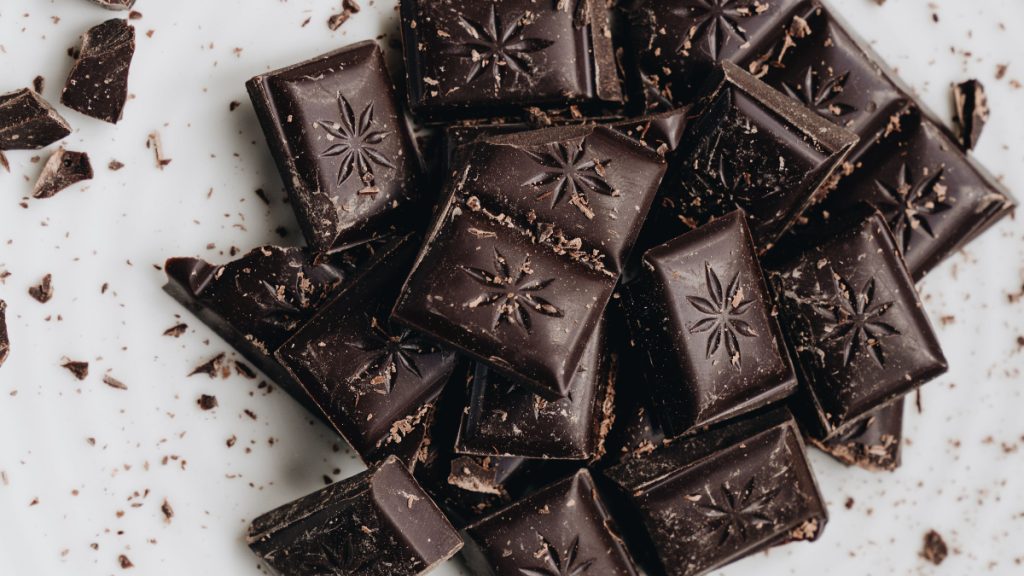
Dark chocolate is made from cocoa-derived ingredients, usually cocoa mass or solids and cocoa butter, together with sugar and sometimes other ingredients. It generally contains more cocoa solids and less milk than milk chocolate, although recipes vary and some products labelled dark chocolate still include milk ingredients.
Cocoa beans naturally contain polyphenols, including flavanols such as epicatechin, catechin and procyanidins. Fermentation, roasting, alkalisation and other processing steps can change how much remains in the finished chocolate. That is why the cocoa percentage on the front of a bar is useful information, but not a laboratory reading of its flavanol content.
A substantial share of cocoa polyphenols is not absorbed in its original form higher up the digestive tract. Some reaches the colon, where gut microbes can transform it into smaller metabolites. The relationship runs both ways: microbes act on the compounds, and the compounds may influence which microbes grow or how active they are.
This is the biological reason researchers discuss cocoa’s possible prebiotic-like effects. A 2020 review of cocoa polyphenols and gut microbes describes that interaction, while also stressing that cocoa type, processing, dose, the food around it and differences between people’s microbiomes can all shape the result.
One controlled crossover study gave 22 healthy adults either a high- or low-flavanol cocoa drink for four weeks. The high-flavanol drink increased measured bifidobacteria and lactobacilli compared with the low-flavanol drink. It was a useful signal, but the test product was a formulated cocoa drink rather than an ordinary chocolate bar.
A later trial asked healthy adults aged 20 to 30 to eat 30 g of 85% or 70% dark chocolate each day, or no chocolate, for three weeks. In the comparison between the 85% chocolate group and the control group, researchers found higher gut microbial diversity and changes in specific bacteria. The trial was small and short, and it did not establish that participants had better digestive health.
The findings are not all positive. A 2024 crossover study in eight healthy adults found no clear increase in bifidobacteria or lactobacilli after eight days of high-dose cocoa-flavanol supplementation. It used a supplement rather than chocolate and was extremely small, so it does not cancel the earlier studies. It does show why one neat conclusion would be premature.
To call dark chocolate a prebiotic in the everyday sense would suggest a reliable, demonstrated benefit from a recognisable serving. Current studies do not give us that. They use different cocoa products, doses, durations and groups of people, and they measure different microbes or diversity scores.
A higher diversity score or a rise in one bacterial group is not automatically a better gut. Researchers must connect those shifts to meaningful health outcomes and see whether they hold up in larger, longer trials. For now, dark chocolate is scientifically interesting—not a microbiome prescription.
Cocoa contributes dietary fibre, so dark chocolate can contain some fibre. The amount varies with the cocoa content and recipe, and the usual serving is small. A couple of squares may contribute to the day’s intake, but they are a poor foundation for it.
For gut health, the everyday plate still does the heavier lifting: sabzi, fruit, dal, chana, rajma, nuts, seeds and whole-grain rotis provide a wider range of fibres and plant compounds. For a practical guide, read High-Fibre Foods and Why Fibre Variety Matters.
It can. Dark chocolate contains fat as well as the naturally occurring stimulants caffeine and theobromine. Depending on the recipe, a bar may also contain a fair amount of sugar, milk ingredients, nuts, sweeteners or other additions. Any of these can change how the complete food feels for an individual.
Portion size is the unglamorous but useful detail here. A couple of squares and half a bar are two different dietary events. If dark chocolate repeatedly brings burning, bloating, nausea, urgency or a generally unsettled stomach, try a smaller portion and compare labels rather than assuming the discomfort is evidence that the chocolate is ‘working’. Persistent or severe symptoms deserve medical advice.
A higher percentage usually means a greater share of cocoa-derived ingredients and less room for sugar or other additions. It does not tell you the exact flavanol content, because the bean and the processing matter too. Compare it as one piece of label information, not a health score.
The ingredient list tells you what the front of the pack does not: how prominent sugar is, whether the bar contains milk ingredients, and what else has been added. If you avoid dairy or have a food allergy, check the allergen declaration rather than assuming every dark bar is suitable.
A very bitter bar is not automatically the cleverer choice. Cocoa origin, recipe and processing all affect flavour. Choose a chocolate you genuinely enjoy in a comfortable portion; there is no gut-health prize for grimly chewing the darkest bar on the shelf.
Dark chocolate does not need a medical alibi. Cocoa polyphenols can reach the colon and interact with gut microbes, and small human studies give researchers good reasons to keep looking. They do not yet show that a retail chocolate bar reliably improves digestion or the microbiome.
If a few squares suit you, enjoy them as part of the way you normally eat. Let vegetables, fruits, pulses, whole grains, nuts and seeds carry the larger fibre job. The chocolate can remain what it was before the health halo arrived: a pleasure, not a project.
| Ask Happy Tummy GPT: “How can I fit dark chocolate into my diet without relying on it for gut health?” Or take the Digestive Quotient Test to look at the wider habits shaping your digestive routine. |
| This is general information, not medical advice. If symptoms continue, are severe, or keep coming back, it is worth speaking to a doctor. Sudden weight loss, blood in stool, severe or persistent pain, or difficulty swallowing need prompt medical attention. For children, during pregnancy, or for older adults, follow a doctor’s guidance before making changes. |
Dark chocolate contains cocoa polyphenols that can interact with gut microbes, and small studies have found changes in some bacteria or microbial diversity. The evidence is inconsistent and does not prove that dark chocolate reliably improves gut health.
There is no good evidence that dark chocolate works as a digestive aid. It may suit some people, while others notice burning, bloating, nausea or urgency. Your repeated response to a sensible portion is more useful than the food's health reputation.
Some cocoa interventions have shown prebiotic-like effects, but studies use different products, doses and methods. Dark chocolate as a general food category is not a proven prebiotic.
Yes, because cocoa contributes dietary fibre. The amount varies by product, and a usual serving is small, so dark chocolate should not replace fibre-rich foods such as vegetables, fruit, pulses, whole grains, nuts and seeds.
No cocoa percentage has been proved best for gut health. A higher percentage generally indicates more cocoa-derived ingredients, but it does not reveal the flavanol content or guarantee a digestive benefit. Choose by the complete label, portion and how the bar suits you.
It can fit into an everyday diet if the portion suits you and the rest of your meals provide variety. Check the ingredients and added sugar, and do not increase the amount simply to chase a gut-health effect.