High-Protein But Low-Fibre Edition: When the Gut Needs More Than Just Protein
A high-protein diet can be satisfying but still leave your gut sluggish when fibre falls behind. Learn how dal, legumes, whole grains, vegetables and water help balance the plate.
Protein-focused eating has become a dominant conversation in Indian food culture. High-protein breakfasts, protein-at-every-meal advice, protein powders in the kitchen cabinet. All of this has a genuine nutritional basis — protein matters, satiety from protein is real, and most Indian diets have historically been on the lighter side of adequate protein. But there’s a specific, predictable gut experience that shows up when protein increases but fibre doesn’t keep pace. The gut doesn’t care how much protein you’re eating. It also needs something to move.
In This Piece
We’ll look at what a high-protein, low-fibre day tends to produce in the gut — the satiated but sluggish pattern that many people eating this way recognise — and why it happens. We’ll also look at the good news specific to Indian food culture: the traditional dal-roti plate was already a high-protein, high-fibre combination, and the fix for the low-fibre problem is often the same food that was there all along.
What a High-Protein, Low-Fibre Day Feels Like
Satisfied after meals — genuinely, because protein does produce real satiety — but with a heaviness or sluggishness that builds through the day. Sometimes a sense that things are moving more slowly than usual, a feeling of being backed up that doesn’t quite turn into pain but doesn’t quite turn into normal comfort either. If this pattern continues across several days, the Stuck Tummy (covered in Tummy Moods #4) becomes a real possibility: fewer, harder, less comfortable bowel movements. The protein delivered what it promised. The gut is asking for something more.
ⓘ Why Protein Alone Doesn’t Keep the Gut Moving
Protein itself is not constipating. The gut slows down when fibre-rich foods are displaced by protein sources rather than eaten alongside them.
Fibre adds bulk to stool and keeps it moving through the colon. Without it, bowel movements can become infrequent and harder to pass.
High-protein eating also requires more water for protein metabolism. Dehydration on a high-protein day compounds the fibre gap.
— Established nutritional principle, consistent with BDA (British Dietetic Association) and NHS dietary guidance
The Indian Kitchen’s Built-In Solution
Dal is simultaneously one of the highest-protein and highest-fibre foods in the Indian kitchen. Whole chana with skin carries about 25.22g of fibre per 100g — more than double whole wheat atta and more than almost any other everyday Indian food. Whole moong carries about 17.04g. Rajma has around 16.6–17.7g. All of these are also substantial protein sources. The traditional dal-roti-sabzi plate was never a low-protein meal; it was a balanced one, where the protein and fibre arrived together rather than in competition. The specific gut experience this piece is describing tends to be most common among people who have shifted away from dal-centred eating towards meat, eggs or protein powder without replacing the fibre that dal was providing.
What Changes When the Protein Source Changes
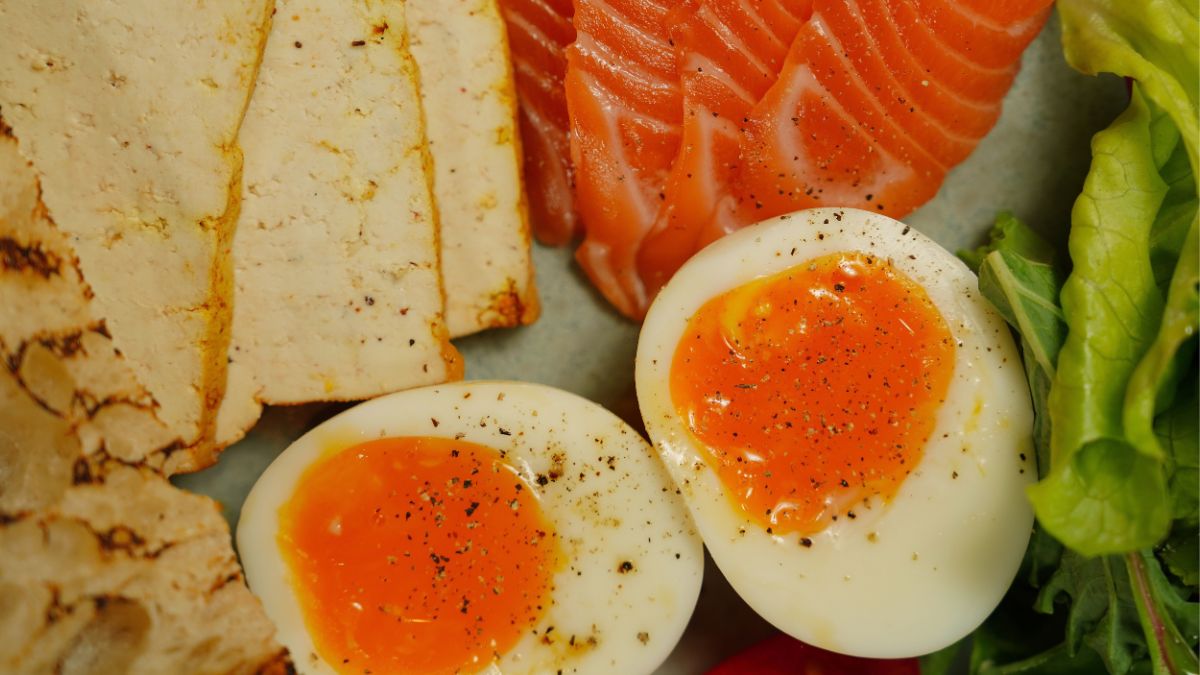
Eggs, chicken, paneer and protein powders are all legitimate protein sources, but none of them carries significant fibre. They deliver their protein and ask the gut to move things along using whatever fibre exists in the rest of the meal. When the rest of the meal is a salad without dressing, a thin roti and nothing else, or simply missing, the gut is managing a reasonable protein load with very little fibre assistance. The fix is not less protein — it’s more fibre alongside it, which usually means more vegetables, more dal, more whole grains, or more legumes at the same meal.
ⓘ High-Protein Sources and Their Fibre Content, Compared
Whole chana (chickpeas): ~25.22g fibre per 100g — high protein AND high fibre
Moong dal (whole): ~17.04g fibre per 100g — both
Rajma (kidney beans): ~16.6–17.7g per 100g — both
Paneer: essentially zero fibre — protein only
Eggs: essentially zero fibre — protein only
Chicken / meat: essentially zero fibre — protein only
— IFCT 2017 for dal figures (S13, verified)
What the Gut Is Asking For
On a high-protein day, the gut tends to be asking for exactly what’s missing from the equation: bulk. Fibre from vegetables, whole grains or legumes alongside the protein source is the simplest answer. The more interesting answer, from an Indian food culture perspective, is that returning dal to the centre of the plate achieves the same result more efficiently than adding a salad alongside chicken or a handful of psyllium husk to a protein shake. Dal is both the protein and the fibre — the plate-building logic was already there.
One Gentle Thing to Try
On the day’s highest-protein meal — whether that’s an egg breakfast, a grilled chicken lunch, or a paneer dinner — add one dal or legume alongside it. Not as a replacement for the protein, but as a companion. A small katori of chana, a side of moong dal, a spoon of rajma mixed into the sabzi. This single addition changes the fibre content of the meal significantly while keeping the protein that makes the meal satisfying. It’s the simplest version of the fix, and the one most consistent with how the Indian plate was designed to work in the first place.
The Hydration Factor People Miss
Protein metabolism produces nitrogen waste that the body excretes through urine — which means high-protein days genuinely require more water than lower-protein ones. Most people on high-protein diets are already at a relative hydration disadvantage, and the standard hydration advice on this platform (6–8 glasses a day as a baseline) tends to be the floor rather than the ceiling on days when protein intake is high. Dehydration and low fibre act on the gut in the same direction — both slow transit, both make stool harder to pass, both contribute to that heavy, sluggish, backed-up feeling. On a day when protein is high and water is low, the gut is managing both at once. Adding water alongside the fibre-rich companion foods is not a separate step; it’s part of the same adjustment.
A Note on Protein Powders and the Gut
Protein powders deserve a brief mention because they’ve become increasingly common in Indian kitchens and the gut experience of using them varies considerably. Whey-based powders are dairy-derived and carry essentially no fibre; plant-based blends sometimes include pea or rice protein alongside small amounts of fibre. Neither replaces the fibre that a dal-based protein source would carry. For someone using protein powder as a meal supplement or replacement, the fibre gap is real and worth addressing deliberately — adding vegetables, a serving of dal or a piece of fruit at the same meal is the most practical way to close it without changing the powder itself.
When This Pattern Deserves More Attention
A high-protein, lower-fibre period that produces some temporary sluggishness and resolves when fibre returns to the diet is ordinary dietary variation. If persistent constipation continues despite increasing fibre and water, if gut symptoms are severe, or if the pattern has been ongoing for several weeks, it’s worth a conversation with a doctor or dietitian rather than continued self-management. Dietary adjustments are the first lever; they’re not always the sufficient one.
Read → Do → Log → Return
Do: Log how your tummy felt after today’s meals
Ask Happy Tummy GPT: “I’m eating lots of protein but my gut feels sluggish — what’s missing?”
Reflect: “High-protein day? Your gut is probably asking for dal alongside it.”
Disclaimer: This article is for general informational purposes only — not medical or dietary advice.
FAQs
Does eating a lot of protein cause constipation?
Protein itself doesn't cause constipation. The gut slows down when fibre-rich foods are displaced by protein sources without being replaced. Dal, legumes and vegetables alongside protein sources prevent this.
Why does Indian dal solve the protein-fibre problem?
Whole chana, moong and rajma are simultaneously high-protein and high-fibre. Unlike animal proteins, which carry no fibre, legume-based proteins bring both in one food. The traditional dal-roti plate was already balanced in this way.
Is a high-protein diet bad for gut health?
Not inherently. It becomes a gut-health pattern issue when fibre-rich foods are consistently displaced rather than accompanied. High protein plus high fibre (as in a dal-based plate) is an excellent gut-health pattern.
How much water should I drink on a high-protein day?
More than usual — protein metabolism produces nitrogen waste that requires more water for excretion. Dehydration on high-protein days compounds the already-reduced fibre, making the gut sluggishness more pronounced.
Can I get enough fibre alongside a non-vegetarian, high-protein diet?
Yes, with deliberate attention. Adding a dal or legume, more vegetables, or whole grains to the day's protein-heavy meals provides the fibre the gut needs alongside the protein from meat or eggs.
When should I see a doctor about gut sluggishness from a high-protein diet?
If constipation persists despite increasing fibre and water over a couple of weeks, or if symptoms are severe. Dietary adjustment is usually sufficient for the ordinary pattern described here; persistent or worsening symptoms warrant medical evaluation.
Do protein powders cause constipation?
They don’t inherently, but they carry no fibre and can crowd out fibre-rich foods. Adding a dal serving, vegetables or fruit alongside powder-based protein fills the fibre gap the powder can’t provide.
You are now being directed to an external website https://www.callr.live/aashirvaadexperts/premium-plan.
This link is provided for your information and convenience only and ITC Limited is not
responsible for the contents or services provided by Brand Touch India or any information that
you share with Brand Touch India.