Buttermilk Benefits After Meals: What Jaggery and Chaas Really Do
What jaggery and chaas actually contribute after a meal, separating traditional digestive rituals from claims about digestion, hydration, probiotics and constipation.
Table of Contents
Buttermilk benefits after a meal are modest and depend on the person and the preparation. Plain chaas can contribute fluid and the nutrients present in curd, and many people find it refreshing—but homemade chaas is not automatically a proven probiotic or a treatment for gas, acidity or a heavy meal. Jaggery, or gur, is an added sugar with a distinctive flavour and small, variable amounts of minerals; there is no good evidence that a post-meal piece stimulates digestive enzymes, prevents constipation or meaningfully improves iron status. Both can belong to Indian food culture without needing a medicinal claim.
That is the useful way to read the after-meal digestive tradition: as a family of small rituals, not one scientifically validated formula. Chaas, gur, saunf and paan do not do the same thing, and regional or household habits are not universal prescriptions. The right question is whether the food suits you and the symptom you are trying to understand.
An after-meal digestive is a food or drink traditionally taken at the end of a meal because it is believed to settle the stomach, freshen the mouth or mark the meal as complete. The category describes cultural use; it does not prove that every item improves digestion biologically.
The habit makes sense even without a treatment claim. A tart or lightly spiced drink can change the sensation left by a rich meal. A small sweet can provide a clear finishing note. Sitting for a moment rather than rushing away may also change how the end of the meal feels. Those are real parts of eating, but they should not be translated automatically into stronger claims about enzymes, gut bacteria or ‘digestive fire’.
Ayurveda uses concepts such as agni and assigns foods qualities within a larger system of assessment. Those concepts can be described as traditional context. They are not interchangeable with measured enzyme activity, gut transit or a medical diagnosis.
Jaggery is an unrefined sweetener—not a digestive medicine
Jaggery is a concentrated sweetener commonly made from sugarcane juice or palm sap. It retains some molasses and its composition varies, but it is still predominantly sugar and counts towards added or free-sugar intake.
Processing differences give jaggery its colour, caramel-like flavour and trace minerals. They do not turn it into a low-sugar food. A small piece is a smaller sugar portion than a large mithai only because the portion is smaller—not because jaggery bypasses the usual metabolic response to sugar.
Does jaggery help digestion or constipation?
There is not enough reliable human evidence to say that jaggery stimulates digestive enzymes or acts as a dependable laxative. If someone passes stool more easily after a particular meal, the rest of the plate, fluids, movement and usual bowel pattern all matter. Jaggery should not replace evidence-based constipation advice.
Jaggery is not a substitute for psyllium, and adding more gur is not a safe way to chase a bowel movement.
Jaggery is not an iron strategy
Jaggery may contain some iron, but the amount varies with the raw material and processing. The small portion eaten after a meal is not a reliable way to prevent or correct iron deficiency, and eating enough jaggery to obtain substantial iron would also add a large amount of sugar. Children, women or anyone with suspected anaemia need appropriate food guidance and, when indicated, testing and treatment—not a daily gur prescription.
Why does jaggery still feel right after a meal?
Flavour and ritual are sufficient explanations. A small piece of gur offers sweetness, aroma and a familiar signal that lunch is over. If you enjoy it, treat it as an optional sweet and account for the portion alongside other added sugars. People monitoring blood glucose should follow their clinician’s advice rather than assuming jaggery is metabolically gentle.
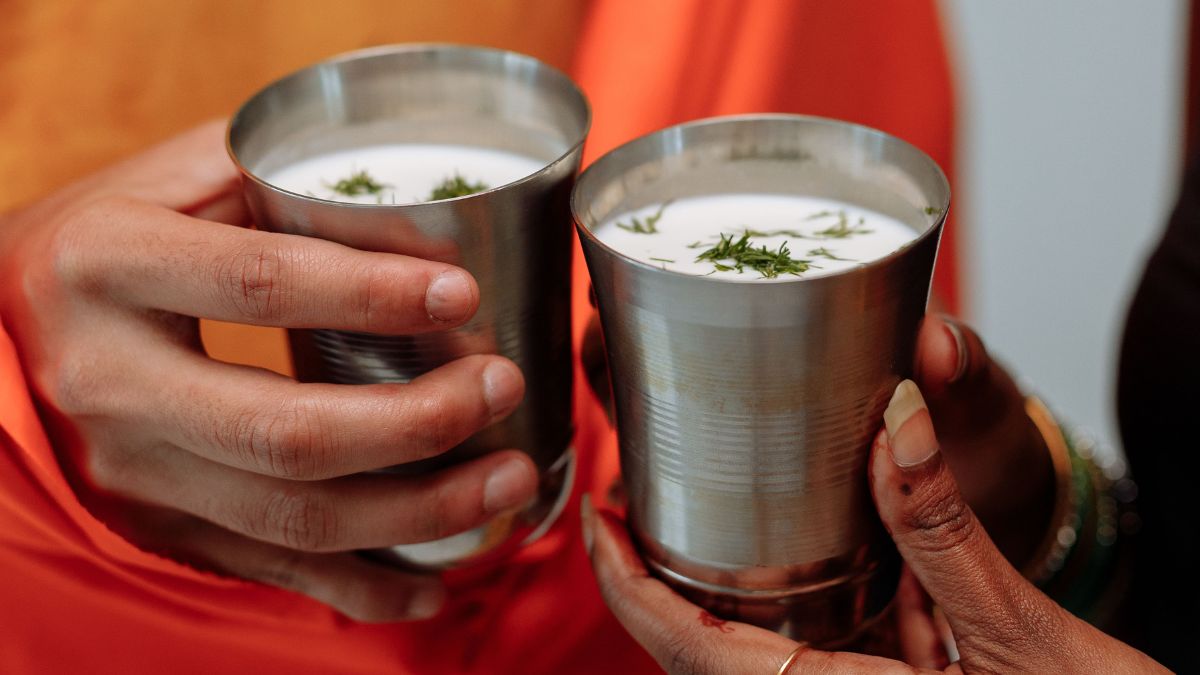
Indian chaas is commonly made by whisking curd with water, with seasonings such as jeera, ginger, curry leaves, coriander or salt varying by home and region. Traditional buttermilk can also refer to the liquid left after churning butter, while commercial products may use different cultures and processes.
The name alone therefore does not tell you the exact nutrient content, salt level or live-microbe profile. Homemade chaas changes with the curd-to-water ratio. A packaged drink may be heat-treated, sweetened or salted, so the ingredient list and label matter more than a broad ‘buttermilk benefits’ claim.
Read more: Curd, Buttermilk and Your Gut: India’s Everyday Probiotics
Chaas can be part of a balanced Indian meal
The Happy Tummy Briefing Bible supports plain curd or fermented yoghurt as a component of a balanced Indian plate. Diluting curd into unsweetened chaas makes a lighter drink and contributes fluid. It can be a pleasant accompaniment to lunch, particularly in warm weather. That is useful without calling it a digestive tonic.
A familiar plate might include sabzi, roti, Aashirvaad Organic Tur Dal and plain chaas. The dal is simply an everyday pulse option and the chaas an optional dairy accompaniment; neither item needs to be sold as a cure for what came before it.
Fermented does not automatically mean probiotic
Probiotics are live microorganisms identified at defined strains and amounts that have demonstrated a health benefit. Traditional fermented foods may contain live microbes, but the species and amounts can be unknown or variable. Some processing also reduces or removes live cultures. Chaas made from curd can therefore be described as a fermented dairy food; it should not automatically be promised to replenish gut bacteria, reduce bloating or improve immunity.
Chaas may feel cooling, but it does not neutralise every spicy meal
A cool, diluted drink can reduce the sensation of heat in the mouth and feel refreshing. That does not establish that chaas heals irritation in the stomach or intestines. Spicy food affects people differently, and dairy can worsen fullness, reflux or discomfort for some. If a particular chilli-heavy meal repeatedly triggers burning, record the meal and symptom rather than relying on chaas to cancel it out.
Chaas hydrates because it contains fluid—not because water floods the stomach
There is no need to avoid ordinary amounts of water with or after a meal on the theory that it dilutes digestion. Chaas contributes to fluid intake, while its sodium and other nutrients depend on the recipe. Extra salt is not required for everyone, and people advised to limit sodium should keep the seasoning light.
Jeera adds a recognisable roasted aroma and has a long traditional association with digestion. Human evidence is not strong enough to promise that a pinch in chaas will prevent gas or bloating. Use it for flavour.
Read more here: Jeera, Ajwain and Saunf: India’s Kitchen Digestives, Explained
Rock salt is not inherently gentler on digestion than iodised table salt. Both contribute sodium. Iodised salt also has a public-health purpose as a source of iodine. Choose the type for culinary fit and use modestly; do not add extra salt to chaas for an unproven enzyme or electrolyte benefit.
You do not need either one for digestion. Choose jaggery if you want a small sweet and it fits your overall sugar intake. Choose plain chaas if you enjoy it, tolerate dairy and want a light meal accompaniment. Taking both does not ‘cover all bases’, and neither should be used to compensate for a meal that routinely leaves you uncomfortable.
Skip or modify chaas if dairy repeatedly causes gas, loose stool, cramps or reflux; lactose tolerance varies, and a milk allergy is a separate safety issue. Check packaged versions for added sugar and sodium. If jaggery is becoming an automatic sweet after every meal, notice the total amount rather than relying on the word ‘unrefined’.
Heaviness after eating can reflect a large portion, a high-fat meal, eating quickly, constipation or another digestive issue. Bloating may come from trapped gas, fermentation, an intolerance or IBS. An after-meal ritual can change taste and comfort, but it cannot identify the cause.
Repeated antacid use, persistent pain, vomiting, difficulty swallowing, or a major change in bowel habits needs clinical advice.
For three comparable lunches, note the meal, portion, pace, whether you had jaggery or chaas, and how you felt at 30 minutes and two hours. Record fullness, bloating, burning, belching and bowel urgency without labelling the food a cure or trigger after one observation. Do not deliberately repeat a food that has caused an allergic reaction or severe symptoms.
Your next step is to keep the ritual that you enjoy and tolerate, change the one linked with discomfort, or discuss a recurring pattern with a professional. Your profile hook is the main reason for the habit—family tradition, sweet craving, refreshment, constipation, bloating or acidity—plus whether dairy usually suits you.
If symptoms continue, are severe, or keep coming back, it’s worth speaking to a doctor. Sudden weight loss, blood in stool, severe or persistent pain, or difficulty swallowing need prompt medical attention. Seek urgent care for a serious allergic reaction, repeated vomiting, black stool, fainting or signs of significant dehydration.
Disclaimer: This article is for general informational purposes only — not medical or dietary advice.
Plain chaas can be a refreshing fluid-containing dairy accompaniment if you tolerate it. It is not necessary for digestion and should not be expected to neutralise an oily or spicy meal. Sweetened or heavily salted versions change the nutritional picture.
There is not enough evidence to promise that ordinary chaas speeds digestion or treats bloating. Its fluid, flavour and curd base may make a meal feel more comfortable for some people; others may experience gas, reflux or loose stool.
Not automatically. Fermentation may leave live microbes, but a probiotic claim requires identified strains, adequate amounts and evidence of benefit. Homemade and commercial chaas can differ, so check the label where a product makes a specific live-culture claim.
Jaggery can be enjoyed as a small sweet after a meal, but it is not required for digestion. It remains an added sugar, and the portion should be considered alongside other sweets and sweetened drinks.
Jaggery is not a dependable constipation intervention. Persistent or recurring constipation needs a cause-focused approach; specific options such as psyllium have a clearer evidence base when professionally appropriate.
Jaggery retains molasses and may contain small amounts of minerals, but it is still predominantly sugar. Choose it for flavour rather than assuming it produces a gentler blood-glucose response or meaningfully supplies iron.
Yes, it can for some people. Lactose intolerance, the amount consumed, added spices, salt and the rest of the meal can affect symptoms. A repeated pattern is more informative than a universal list of ‘good’ and ‘bad’ foods.