Is Your ‘Light’ Meal Actually Low in Fibre?
A meal can feel light but still be low in fibre. Learn how to spot common low-fibre meals and make simple additions that improve fullness and variety.
Table of Contents
A meal can feel light but still be low in fibre. Learn how to spot common low-fibre meals and make simple additions that improve fullness and variety.
A meal can feel light going down and still leave you hungry again within the hour, or leave your gut feeling a little off later in the day. Often, the reason isn’t the meal’s size — it’s its fibre content. Plain toast, white rice with curd, biscuits with chai, or a quick bowl of instant noodles can all feel like sensible, light choices while actually carrying very little fibre. That’s not a reason to avoid them; it’s a reason to notice what’s missing, and what an easy addition might look like. This piece works alongside The Roti Plate Test from earlier in this series — the same plate-building logic, applied to the meals that don’t involve a roti at all.
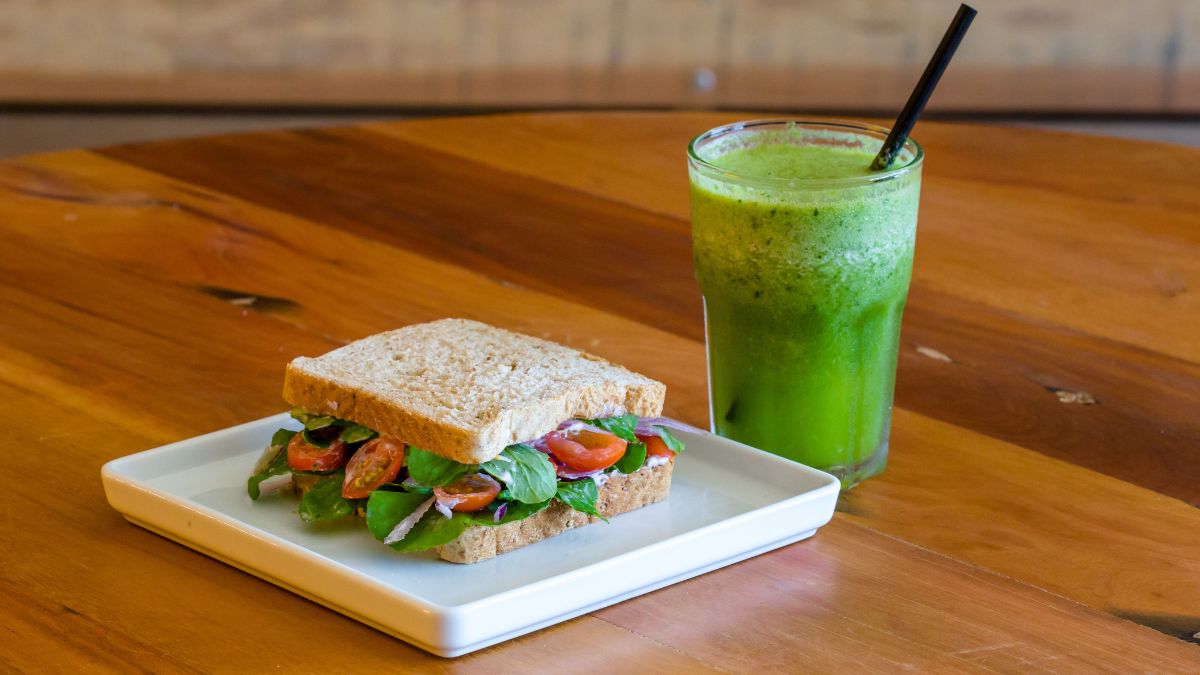
A meal can be genuinely small and still be reasonably fibre-rich — a small bowl of vegetable-loaded poha, for instance. Equally, a meal can feel light specifically because it’s mostly refined carbohydrate and little else — plain toast, or rice with nothing alongside it. The ‘light’ feeling and the fibre content are two different things, and it’s easy to assume one tells you about the other when it doesn’t.
Fibre is one of the things that supports a feeling of fullness after eating — alongside protein, portion size and how slowly a meal was eaten. A meal that’s low in fibre can feel satisfying in the moment and still leave you reaching for something within an hour or two, simply because there was less in it to slow things down.
| ⓘ Light But Low-Fibre vs Light But Fibre-Rich Lighter on fibre: plain toast, white rice + curd only, biscuits + chai, plain instant noodles Lighter in size, still fibre-rich: small vegetable poha, a fruit-and-seed bowl, dal-rice in a small portion The difference isn’t size — it’s what’s actually in the meal, not how much of it there is |
Plain toast, white rice with just curd, biscuits with chai, or instant noodles without any vegetable added — all of these are completely ordinary choices, and none of them are ‘bad’ foods. They’re simply lighter on fibre than they might seem, which is worth knowing if any of them is a near-daily habit rather than an occasional one.
These meals don’t feel like a gap because they don’t feel unhealthy — toast, biscuits and plain rice carry no obvious red flags, so there’s rarely a moment that prompts a second look. The gap shows up indirectly instead: feeling hungry sooner than expected, snacking more between meals, or a general sense that something about energy or fullness isn’t quite right — without an obvious cause, because the meal itself looked perfectly reasonable.
A vegetable stirred into the poha or noodles, a spoon of roasted seeds with the toast, a piece of fruit alongside the chai-and-biscuits — small additions like these add fibre without turning a quick meal into a production. None of this requires replacing the meal itself, just adding one more thing to what’s already there. The goal isn’t to turn toast into a full thali — it’s to close a meaningful fibre gap with the smallest possible change, which is usually enough to make a real difference over a week of repeated meals.
If a particular light meal is a once-or-twice-a-week thing, it’s unlikely to be worth a second thought. If it’s the same toast-and-tea or rice-and-curd combination most mornings or most evenings, that’s where the fibre gap tends to add up — not from any single meal, but from the same low-fibre choice repeating often enough to become the default rather than the exception.
Not every meal needs to be a fibre showcase, and an occasional plain-toast morning or biscuits-and-chai evening is completely normal. This is more useful as a pattern check — if ‘light’ meals like these make up most of your week, that’s worth noticing. If it’s once in a while, it isn’t.
| ⓘ Quick Swaps for Common Light Meals Plain toast → toast with a spoon of seeds, or a whole-grain slice where available Biscuits + chai → fruit + chai, a few times a week Plain instant noodles → add a handful of frozen or chopped vegetables White rice + curd only → add a small side of dal or a vegetable |
These meals are popular precisely because they’re fast, require little planning, and travel well — toast before a commute, noodles after a long day, biscuits with chai during a quick break. None of the suggestions here asks for that convenience to be sacrificed. A spoon of seeds takes seconds; a piece of fruit eaten alongside biscuits adds nothing in prep time. The goal is a small addition that fits inside the same five minutes the meal already takes, not a more elaborate version of it.
Disclaimer: This article is for general informational purposes only — not medical or dietary advice.
Often because the meal was low in fibre, not because it was too small — fibre is one of the things that supports a feeling of fullness after eating.
Plain toast usually is, especially made with refined bread. A vegetable-loaded poha carries more fibre than a plain one, though neither is automatically 'bad' — it depends on what's added.
Adding a vegetable, a spoon of seeds, or a piece of fruit to an otherwise light meal usually adds fibre without significantly increasing the meal's size.
Fibre content tends to matter more for sustained fullness — a small but fibre-rich meal can be more satisfying over the following hours than a larger but low-fibre one.
Check frequency, not any single meal — if the same low-fibre choice repeats most days rather than occasionally, that's the pattern worth a small addition, not a single 'bad' meal.