Khapli for the Roti-Curious Family: A First Introduction
New to Khapli? Understand what this heritage wheat offers, how its dough behaves, and how to introduce it at home without treating it as a nutritional upgrade.
Table of Contents
Khapli is a heritage wheat variety — older, less intensively bred than the hybrid wheat most commonly milled today — that some households are curious about after coming across it in the context of gut health or gut-friendly eating. This piece is the first introduction: what Khapli actually is, what it genuinely offers and what it doesn’t, and how a family making rotis for the first time with it might reasonably approach that transition. It’s not a pitch, and it’s not going to tell you Khapli is better than what’s already in your dabba.
Khapli is a variety of emmer wheat — a tetraploid wheat predating the more widely cultivated hybrid bread wheats grown across most of India today. It has historically been grown in parts of Maharashtra and the Deccan, in lower-input, rain-fed conditions, before modern high-yield wheat varieties became dominant. The specific milling process used for Khapli atta — stone-chakki style, with a grinding profile of about 28.8% damaged starch against roughly 9.2% for standard roller-milling — contributes to its particular texture and dough behaviour.
Khapli atta carries about 11.4g of fibre per 100g — essentially identical to regular whole wheat atta’s 11.36g. This is worth stating plainly from the start, because it’s the most commonly assumed thing about Khapli that isn’t quite true: it isn’t higher in fibre than standard whole wheat atta. Both comfortably beat maida’s ~2.76g per 100g, but they beat it together, as equals. A household switching to Khapli for a fibre advantage over their current whole wheat atta won’t find one in the numbers.
| ⓘ Khapli Fibre: The Honest Summary Khapli atta: ~11.4g fibre per 100g (brand-verified, IFCT 2017) Regular whole wheat atta: ~11.36g per 100g (IFCT 2017) Difference: 0.04g — not meaningful Both carry close to 4× maida’s fibre (~2.76g/100g) Khapli is NOT higher-fibre than regular whole wheat — the two are equivalent |
What Khapli does bring is texture, taste and heritage. Its water absorption — about 73.0%, notably higher than typical roller-milled atta — produces a softer, more pliable dough and tends to result in a softer roti. Its milling profile gives it a particular character that’s noticeably different from a standard factory-milled flour. And its identity as an older, less intensively bred grain is genuinely part of what draws people to it, independent of any nutritional comparison. These are real, legitimate reasons to choose Khapli — they just sit in the texture, taste and tradition column, not the fibre one.
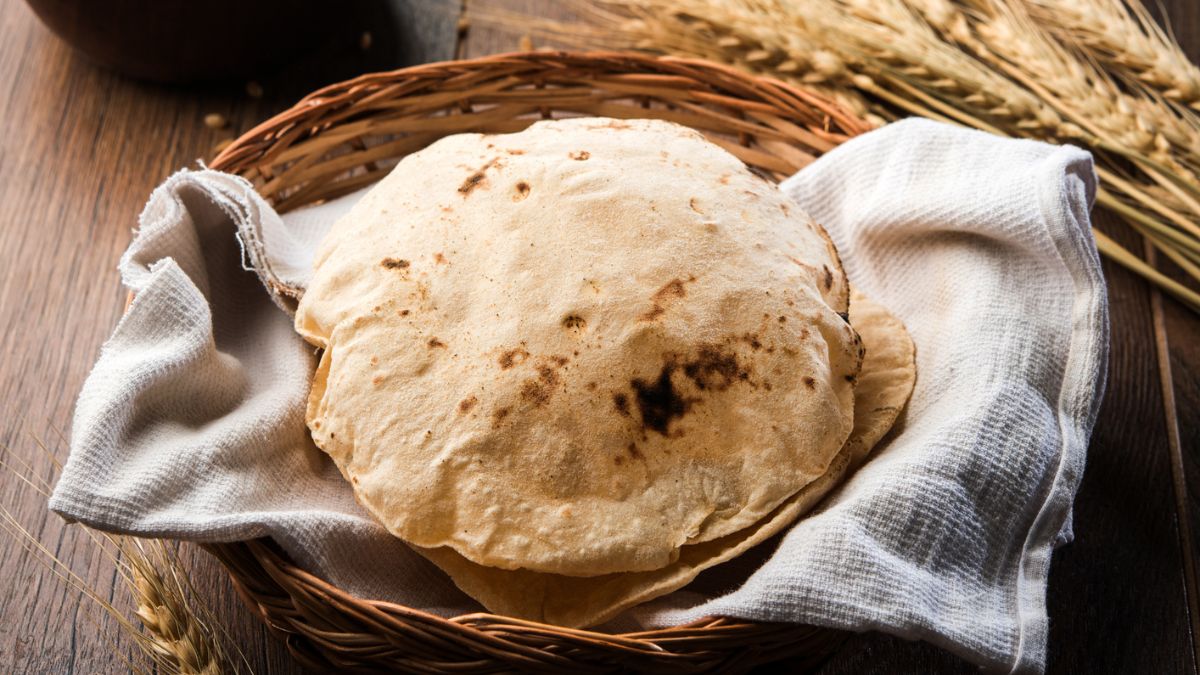
A household making Khapli rotis for the first time will notice the dough handles differently — it absorbs more water than regular atta and benefits from a slightly longer rest before rolling. The roti that comes out tends to be noticeably softer than a standard whole wheat one, with a mild, slightly nuttier flavour. This is the adjustment most families make: getting the dough consistency right, which takes a batch or two but isn’t technically difficult.
In most households, there’s at least one person who doesn’t want to switch from whatever atta is already working. The most useful thing this piece can say to that person is: they’re not wrong. Regular whole wheat atta is perfectly fine, and Khapli doesn’t have a fibre or health advantage over it that would make the switch necessary. If curiosity drives the try, or if the softer texture turns out to suit everyone, that’s a good reason to keep going. If not, going back is equally fine.
The least-pressure way to introduce Khapli to a family is to use it for a single meal — one dinner, not a full kitchen transition — and notice what people actually think. Some families find the softer texture an immediate preference; others need time to adjust to the taste difference; others simply prefer the atta they already know. All three responses are normal, and none of them requires a final decision in either direction after a single meal.
One common approach is to keep regular whole wheat atta as the weekday daily staple and bring Khapli in for the occasional meal where there’s more time to properly rest the dough and notice the texture — a weekend lunch, a dinner with a particular sabzi that suits the softer roti. This keeps the experiment low-stakes and makes it easier to compare the two honestly without one influencing the other by being eaten in a rush.
The practical adjustment is mostly about dough hydration: Khapli absorbs more water, so a household used to regular wheat will usually need to add a bit more water than usual to hit a similarly workable consistency. Getting this right takes a batch or two and is usually figured out by feel rather than measurement — a softer, stickier-than-usual dough that then rests for fifteen to twenty minutes before rolling is roughly what’s being aimed for. Once that calibration is made, the process is not meaningfully harder than regular atta.
This series treats Khapli as one good option among several — not the best choice, not the healthiest, not a gut-health solution. A family that tries it and loves the texture has found a genuinely good reason to stick with it. A family that doesn’t see the point in switching from regular wheat atta they’ve used for years has also made the right call for their household. There’s no correct answer here, and this series isn’t trying to manufacture one.
Disclaimer: This article is for general informational purposes only — not medical or dietary advice.
Not on fibre — the two are essentially equivalent (about 11.4g vs 11.36g per 100g). Khapli's genuine differences are in texture, water absorption and its heritage-grain character.
No — the difference is 0.04g per 100g, which isn't meaningful. Both carry close to four times maida's fibre, but Khapli and whole wheat carry the same amount.
Generally softer with a mildly nuttier flavour, partly because of Khapli's higher water absorption and partly because of its stone-chakki milling profile.
No — Khapli is a wheat variety and contains gluten, like all wheat attas.
It absorbs more water than regular atta and benefits from a slightly longer rest before rolling. The dough tends to be softer and more pliable once rested properly.
Only if they like it — a single test meal without commitment is a reasonable approach. Regular whole wheat atta is an equally fine choice that doesn't need replacing.
Yes — this is a common, practical approach. Many households use regular wheat daily and bring Khapli in occasionally when there's more time to rest the dough properly.
That's a completely valid preference — regular whole wheat atta is an excellent everyday choice with a well-verified fibre content. Khapli doesn't offer a nutritional reason to switch if the taste doesn't suit everyone.
Most households find the dough hydration calibration takes a batch or two — once that's figured out by feel, the process isn't meaningfully harder than regular atta.