Khapli Roti, Porridge, or Cheela: Which Fits Your Day Best?
The same flour can show up very differently on your plate. Here’s how Khapli roti, dalia, cheela, paratha and blended dough fit different kinds of days.
Table of Contents
The same grain can show up very differently on your plate. Here’s how Khapli roti, dalia, cheela, paratha and blended dough fit different kinds of days.
Here’s something that doesn’t get talked about enough when it comes to Khapli: the grain is only half the story. What you make with it — a roti, a porridge, a cheela, a paratha — changes the texture of the meal, what gets added to it, how much preparation it takes, and how neatly it fits into your day.
This isn’t about which preparation is ‘best.’ Khapli is the common thread, but the finished foods aren’t nutritionally identical simply because they come from the same grain. Roti, cheela and paratha are made from Khapli atta; dalia is made from cracked or broken Khapli wheat. Then there’s everything around them: how much oil goes in, what gets stuffed or stirred through, what you pair the meal with, and how large a portion you actually eat.
The grain stays constant. What changes is the format — and the format is what decides whether the meal is quick, spoonable, substantial, or something you save for Sunday.
This is Khapli atta’s home turf, and for good reason. A simple roti — dough, water, a little salt, cooked dry on the tawa — is about as unembellished as a meal gets. No added fat unless you choose to finish it with ghee. This makes the roti the most versatile, lowest-maintenance format: equally at home at lunch or dinner, equally happy next to a dal-sabzi combination or a simple curd and pickle. If you only ever make one thing with Khapli atta, this is the one to start with.
YOU MAY LIKE | Khapli Atta Pancakes: An Easy, Wholesome Breakfast Recipe
Khapli dalia — cracked or coarsely broken Khapli wheat, simmered with water or milk until it softens into a porridge — is a different proposition entirely. It’s softer to eat, takes a little more cooking, and suits a slower start to the day or an evening when a spoonable meal sounds more appealing than another roti.
Because it’s cooked with more liquid and for longer, it has a completely different mouthfeel: softer, less chewy, more spoonable than tearable. That doesn’t automatically make it “easier to digest” for everybody — food form and digestive response are more individual than that — but it can certainly make dalia feel like the gentler-textured option on days when that is what you want.
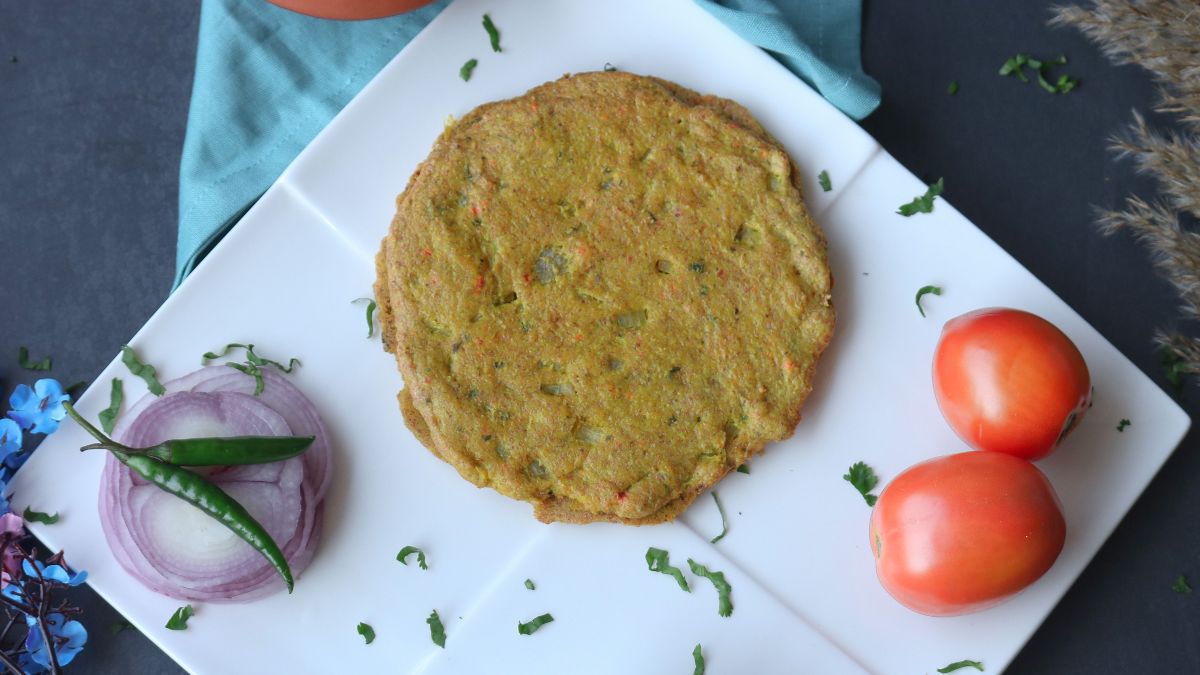
A Khapli cheela — a savoury pancake made from a thin batter of Khapli flour, water, and whatever vegetables and spices you like — is the format for when you need something fast. It cooks in minutes, requires no kneading, and works equally well as a rushed breakfast or an afternoon snack.
Because it’s typically thinner and cooked with a little oil on a hot pan, it has a slightly different texture profile from a roti: crisper at the edges, softer in the centre.
There’s another useful thing about cheela: everything else can go straight into the batter. Onion, coriander, grated carrot, spinach, chilli, ajwain — whatever needs using up in the fridge can become part of breakfast rather than another dish you have to make.
Khapli parathas are satisfying in a way plain rotis aren’t — but how substantial, and how heavy, depends almost entirely on what goes inside and how much fat is used to cook it.
A paratha stuffed generously with vegetables and cooked with a light hand on the ghee is a very different meal from one packed with paneer and cooked liberally in fat. Neither needs to be declared the “wrong” paratha. They are simply doing different jobs.
This is the format where your choices matter more than the flour does.
If your household is new to Khapli and the texture or taste feels like a big leap, a blended dough — part Khapli, part regular atta — is a reasonable way in. It softens the adjustment curve without turning the change into a kitchen project.
Nutritionist and Clinical Dietician Qurath Ain has suggested roughly 70% regular atta and 30% Khapli as one possible starting point, with the proportion adjusted according to what the household actually enjoys. It is a transition suggestion, not a nutritional formula; there is no requirement to eventually reach 100% Khapli.
| Format | Best suited for |
|---|---|
| Roti | Everyday lunch or dinner staple |
| Porridge / Dalia | Slower mornings, softer spoonable meals |
| Cheela | Quick breakfast or snack, minimal prep |
| Paratha | More substantial meals — stuffing and cooking fat change the equation |
| Blended dough | Easing a household into Khapli gradually |
34, marketing professional, finds mornings chaotic and evenings unpredictable.
Asha keeps Khapli dalia for the mornings when she has a little more time — it cooks while she gets dressed and sorts out the rest of the morning. On busier days, it’s a quick Khapli cheela with whatever vegetables are in the fridge. Dinner, when she’s home at a reasonable hour, is a simple Khapli roti with dal. She has never made a Khapli paratha on a weekday — that’s strictly a lazy Sunday brunch thing.
Which Khapli format suits a rushed weekday morning best?
A) A slow-cooked porridge
B) A quick cheela
C) A heavily stuffed paratha
Most people would reach for B — a cheela needs no kneading and cooks in minutes, which makes it the natural fit when the clock is working against you. The porridge is lovely, but it needs a little more cooking time than the morning rush always allows.
There is no single ‘correct’ way to eat Khapli wheat.
The format you choose is really a question about your day — how much time you have, whether you want something spoonable or something you can wrap around sabzi, whether breakfast needs to happen in ten minutes or Sunday lunch has nowhere else to be.
And the format doesn’t work alone. A Khapli roti with dal and vegetables is a different meal from the same roti with pickle. A cheela filled with vegetables is different from a plain one. A paratha’s stuffing can change the entire plate.
Once you start thinking of Khapli as a flexible grain rather than a fixed recipe, it becomes much easier to fit into a routine that already has enough moving parts.
A simple Khapli roti is the most familiar starting point if your household already makes rotis. If dough handling is the barrier, a Khapli cheela may be even easier because it uses a pourable batter rather than a kneaded dough.
Not usually. Dalia is made from cracked or broken Khapli wheat rather than flour. Aashirvaad’s Samba Broken Wheat, for example, is made from 100% Khapli wheat.
Yes. Khapli flour can be mixed with water, vegetables and spices into a pourable batter and cooked on a tawa. You can also use Khapli atta in a cheela recipe combined with besan.
Yes. Blending can make the flavour and texture transition more gradual. One suggested starting point is around 70% regular atta and 30% Khapli, adjusted according to household preference.
There isn’t one universally healthiest format. What the finished meal looks like depends on the preparation, portion, cooking fat, fillings and accompaniments. A plain roti, vegetable cheela and heavily stuffed paratha may all begin with Khapli, but they are not the same meal.
This piece offers general kitchen and lifestyle guidance, not medical or dietary advice. If you are managing a specific health condition, consult a qualified healthcare professional before making significant dietary changes.