


Table of Contents
The snack you reached for five minutes ago — were you hungry, or were you just… there? Learning to tell the difference is one of the quietest and most useful things you can do for your gut.
Quick question. The last time you had a snack — a biscuit, a handful of something, a piece of fruit, whatever it was — what prompted it? Not what you told yourself prompted it. What actually did?
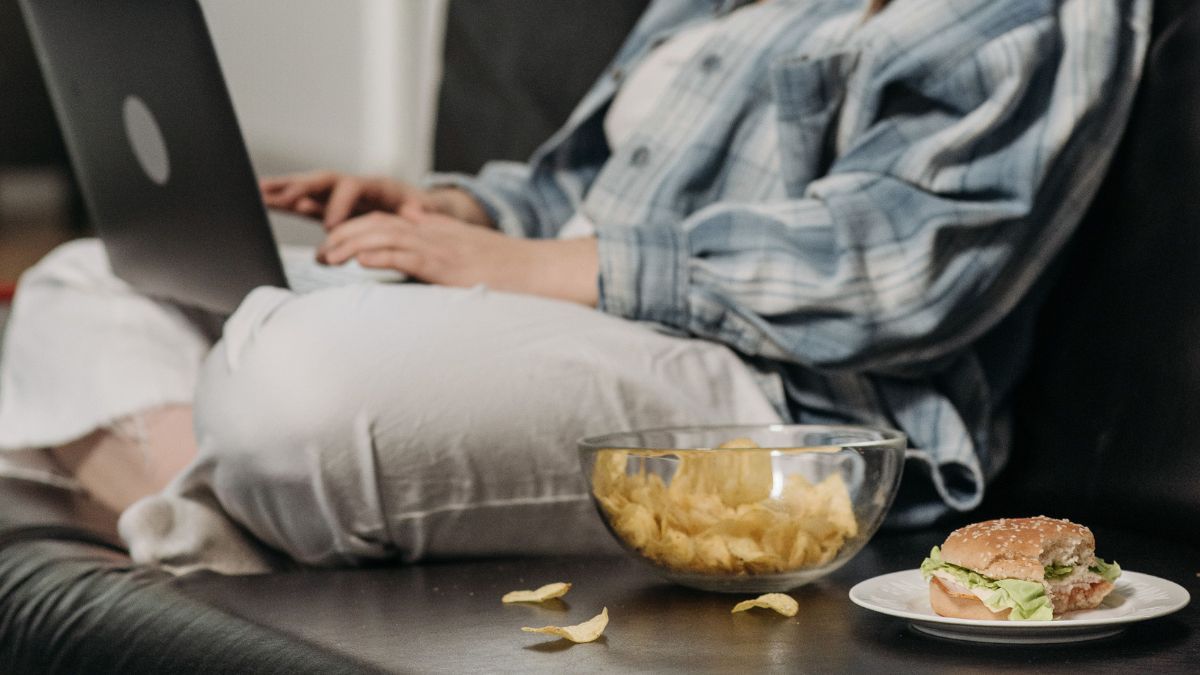
Was it hunger? Was it boredom? Was it the clock saying it was 4pm and 4pm is snack time? Was it stress, dressed up as appetite? Was it just that the food was there and you walked past it and it happened?
Most people, if they are honest, eat a significant portion of their daily food for reasons that have nothing to do with actual hunger. This is not a moral failing — it is extremely human. Food is comfort, it is ritual, it is social, it is habit. The kitchen is where you go when you need a break from your desk. The biscuit is what happens when the meeting runs long. The extra helping at dinner happens because the food is good and there is more of it.
None of this is inherently a problem. But if you are looking at your eating and wondering why you do not feel as satisfied as you expect to — why you are always grazing, why the meals do not seem to land properly, why you finish eating and feel vaguely unsettled rather than settled — it is worth checking whether your eating is responding to hunger or to everything else.
What actual hunger feels like
This sounds like a strange thing to have to describe. But a lot of people, especially those who eat regularly and plentifully, have lost touch with the physical sensation of genuine hunger. Not the mild “I could eat” feeling that arrives around mealtimes as a matter of habit, but the actual body signal: a hollowness, a mild urgency, a physical pull toward food that comes from the stomach rather than the head.
Genuine hunger builds gradually. It does not usually arrive suddenly and urgently unless you have gone significantly too long without eating. It also tends to be relatively non-specific: when you are actually hungry, most food sounds appealing, not just the specific thing you are craving. If you are “hungy” for precisely one thing — something sweet, something salty, the specific biscuit on the third shelf — that is usually craving or habit rather than hunger.
Learning to notice the difference — not to judge it, just to notice it — is genuinely useful. Because the answer to a craving and the answer to actual hunger are slightly different, and responding to a craving with a full meal tends to produce that overfull, vaguely unsatisfied feeling that makes you wonder whether you have any relationship with food at all.
The satisfaction gap
Autopilot eating tends to be unsatisfying eating, and unsatisfying eating tends to produce more eating. This is the loop that drives most grazing: you are not quite satisfied, so you have a little more, and you are still not quite satisfied because the thing you are eating is not really addressing the thing you needed, and so the cycle continues.
There is a version of this that is purely psychological — eating for comfort or distraction — and a version that is partly physiological. If your meals are not particularly satisfying — if the lunch does not hold you, if the breakfast does not quite land, if the dinner leaves you looking for something extra an hour later — your body genuinely keeps asking for more because it did not get what it needed from the meal itself.
This is where meal quality comes back in. Meals that are well-composed — with enough protein, enough fibre, a grain that is doing proper work rather than just filling space — tend to produce genuine satisfaction. The eating ends and the body settles. The signal to stop is clearer, and it is easier to honour.
Grazing is often the body’s way of saying the meal did not finish the job. Sometimes that is an eating-habit question. Sometimes it is a meal-quality question.
Where the flour comes in
It might seem like a stretch to connect “are you actually hungry” to a conversation about atta. But the link is genuine.
A roti made with a stone-ground whole grain flour — the kind where the bran and germ are intact, where the grain has not been heavily refined for industrial efficiency — tends to produce a different post-meal experience than one made with refined flour. Not a dramatic transformation. Just a meal that lands differently. That holds longer. That satisfies in a way the other one does not quite manage.
Aashirvaad Chakki Khapli Atta is that kind of flour. Ancient Emmer wheat, stone-ground in the traditional chakki style, sourced from the regions in Karnataka and Maharashtra where Khapli has been cultivated for generations. The grain’s natural structure is preserved rather than processed away. And the roti it produces is one that — paired with a proper dal and a vegetable — tends to mean the meal is genuinely done when you push the plate away. Not technically done. Actually done.
The check-in habit
The most practical version of all of this is a single small habit: before you eat something, particularly between meals, just check in. Not a long process, not a meditation. Just a moment: am I hungry? Where is the feeling coming from? Is this my stomach or my head?
Sometimes the answer is: yes, I am hungry, and this food is a good response to that hunger. Sometimes the answer is: I am bored, and I should go for a walk. Sometimes it is: I am stressed, and I need five minutes away from the screen, not a biscuit. Sometimes it is: I just ate two hours ago and this is habit, not hunger, and I can wait.
None of these answers require you to eat less or restrict yourself or do anything particularly difficult. They just require a moment of noticing before the autopilot kicks in. And over time, that noticing — that small gap between impulse and action — is where the relationship with food quietly gets better.
Your gut is a good source of information about what is actually going on. It is worth checking in.
This article is part of the Trust Your Gut series on Happy Tummy. It is for general informational purposes and does not constitute medical or dietary advice. Read more from the series here:
Trust Your Gut: When Your Afternoon Energy Crash Might Be Starting at Lunch
Trust Your Gut: Why Your Body Loves Routine More Than You Think
Trust Your Gut: Why Do Some Meals Feel Heavier Than Others?
Trust Your Gut: Why Do Some Lunches Leave You Looking for Snacks an Hour Later?