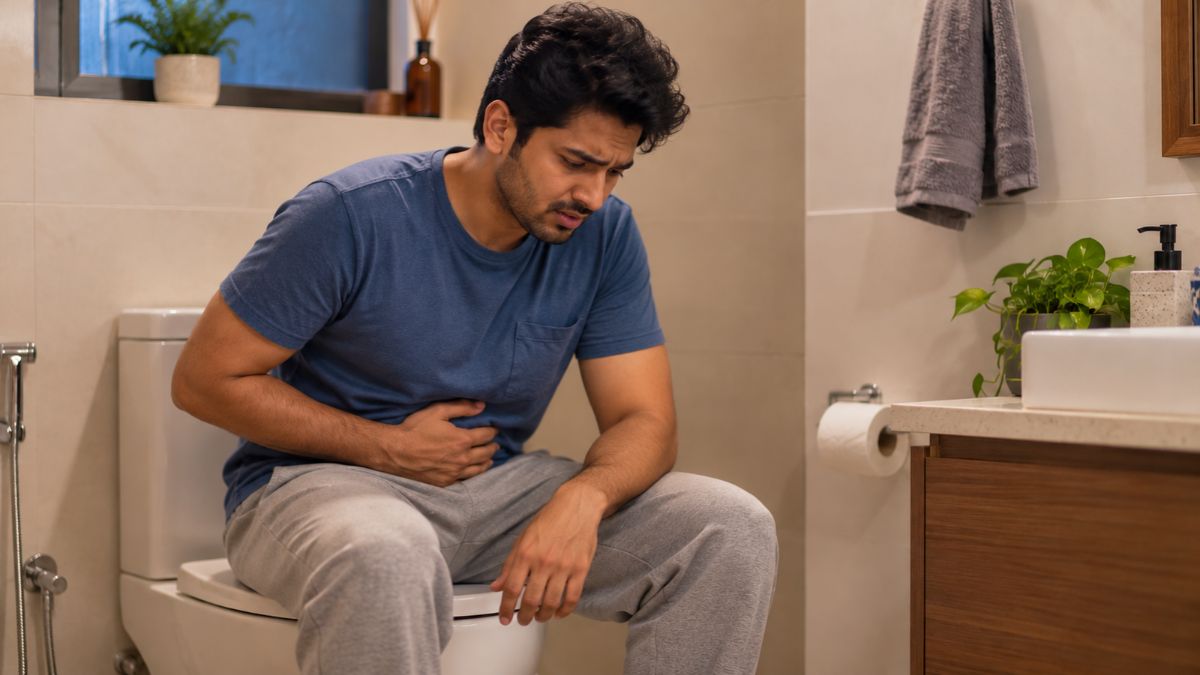
Loose Motions and What to Eat to Settle Your Stomach
Loose motions drain water and electrolytes. Learn how to rehydrate with ORS, which Indian foods are gentle on your stomach, and what to avoid.
Table of Contents
Expert reviewed by Qurath Ain, Certified Nutritionist and Clinical Dietitian
When you have loose motions, start with fluids: replace lost water and electrolytes with oral rehydration solution (ORS), then add simple, low-fat, easy-to-digest foods in small portions. Do not starve yourself, because the World Health Organization recommends continuing nutrient-rich food during diarrhoea, alongside rehydration.
Diarrhoea generally means passing watery or loose stools three or more times a day. In many short-lived cases, the biggest immediate concern is the loss of water and electrolytes, not hunger. Prepare ORS as directed on the packet using safe, clean drinking water, and take small, frequent sips if you are vomiting. Homemade fluids such as rice kanji can complement ORS but should not replace it.
Indian kitchens offer gentle options: soft moong dal khichdi, rice kanji, curd rice, a light chicken rice soup for non-vegetarians, and soft roti with mild potato once you crave a proper meal. Keep seasoning minimal, and skip heavy ghee, green chillies, and garam masala for now. Eat smaller portions through the day, and return gradually to your usual diet as your stools normalise and your appetite returns.
Temporarily avoid oily, fried, spicy, or heavily seasoned foods, extremely sugary drinks, raw foods and cut fruit from uncertain sources, and eating outside. Limit excess fibre, caffeine, and raw onions. Hygiene matters too, since contaminated food and water are important causes of diarrhoeal illness. Persistent diarrhoea needs medical diagnosis and treatment, and you should not rely on self-medication or over-the-counter drugs. Consult a healthcare provider for the right diagnosis and treatment.
There are few things in life capable of ruining an otherwise perfectly ordinary day as much as a bout of loose motions. One minute you are going about your day according to its routine, and the next, your entire schedule revolves around finding the nearest bathroom. In such moments, food becomes a source of suspicion. Even the thought of a heavy meal feels unbearable, let alone a simple glass of water.
Loose motions, or diarrhoea, generally means passing watery or loose stools three or more times a day, although what feels unusual can vary from person to person. It may happen because of an infection, contaminated food or water, certain medicines, food intolerances, or other gastrointestinal problems. In many short-lived cases, the biggest immediate concern is not hunger but the loss of water and electrolytes from the body.
And this is where food needs to be approached differently. There is no magical Indian dish that can instantly stop diarrhoea, and the old idea of surviving solely on a severely restricted diet is not particularly helpful either. The focus should instead be on hydration, tolerable foods, adequate nutrition, and food safety while the underlying problem is taken care of with medicines and plenty of rest.
Thankfully, Indian kitchens are full of simple foods that fit remarkably well into this approach.
Before reaching for a bowl of khichdi, think about hydrating your body first. Loose stools cause your body to lose water and vital electrolytes, including sodium and potassium. The World Health Organization (WHO) recommends oral rehydration solution (ORS) to replace these losses, particularly when dehydration is a concern. ORS should be prepared according to the instructions on the packet, using safe and clean drinking water.
If you or your loved one is also vomiting, take small, frequent sips of ORS instead of trying to drink a large glass in one go. For children, however, continued feeding alongside ORS is particularly important. WHO recommends oral rehydration therapy and continued feeding during diarrhoeal episodes, rather than the unnecessary withholding of food. Once fluids are being replaced, food can slowly make its way back onto the plate.
At the end of the day, these are general guidelines meant only as a reference, not a medical diagnosis. For proper medical advice, always visit a licensed medical professional.
The trick is to temporarily favour foods that are simple, cooked with relatively little fat, and easy for your body to tolerate and digest. And this is where Indian kitchens have an advantage.
Soft Moong Dal Khichdi
If there were an unofficial Indian comfort food hall of fame, khichdi would surely have a permanent seat. Made throughout the country following varying culinary traditions, the dish is at its best when cooked particularly soft and simple for an unsettled stomach.
Combine rice and yellow moong dal with plenty of water and cook until the grains and lentils practically melt into one another. Keep the seasoning restrained: a little salt and perhaps a tiny amount of turmeric is enough. Skip the heavy ghee tempering, green chillies, and garam masala for now.
The finished khichdi should be gentle, moist, and easy to spoon up. It is filling without being an intimidating meal, which makes it particularly useful when your appetite is returning but your stomach is still feeling fragile and unsettled.
Rice Kanji
Rice kanji is one of those wonderfully humble preparations that has existed in Indian kitchens long before anyone even thought of giving it a popular wellness label. Simply cook rice with considerably more water than usual until it becomes soft and porridge-like. You can season it lightly with salt and pepper. The result is a thin rice porridge that is both warm and soothing.
It also contributes to your overall fluid intake. The Indian Council of Medical Research-National Institute of Nutrition (ICMR-NIN) specifically lists rice kanji among the homemade fluids that can be used for children during diarrhoea, alongside ORS and appropriate feeding.
If you are preparing rice kanji for someone who has very little appetite, a small bowl served warm can be considerably more appealing than a full plate of food.
The important distinction to remember is that homemade fluids such as rice kanji should not be treated as a replacement for ORS, especially when ORS is recommended. They can complement your fluid intake, while ORS remains the main evidence-based fluid option for replacing lost electrolytes.
Curd Rice
Curd rice, or buttermilk with rice, is easily digestible. It is rich in probiotics, helps promote good gut bacteria, supports overall gut health, and helps maintain the pH of the digestive system.
Light Chicken Rice Soup
For non-vegetarians, a simple chicken soup can offer a welcome change from dal and rice. It gives the body a modest but solid dose of much-needed energy, protein, and essential nutrients. To make it, cook boneless chicken with rice, carrot, and plenty of water until everything is soft and tender.
Keep the seasoning minimal: a little salt, pepper, a squeeze of lime, and perhaps a small amount of ginger. Avoid turning it into a rich chicken preparation, as that is not the current priority. The finished soup should be thin enough to sip, with tender chicken and soft rice providing something more substantial to chew on and draw nourishment from.
Soft Roti with Mild Potato
When you start craving a proper meal again, a soft plain roti with any lightly cooked potato preparation can be a reasonable transition. Remember to make the roti without excessive oil or ghee and to prepare the potato simply, perhaps with a little turmeric, pepper, and salt, or as a homely mash. Avoid frying the potatoes until crisp; those are dishes for another day. If the roti feels too dry or difficult to eat, stick with rice-based meals until your appetite and digestion improve and stabilise.
BRAT Diet
BRAT (banana, rice, apple, and toast) is an age-old home remedy that is also nutritionally and clinically significant for anyone experiencing diarrhoea. These foods are proven to help control diarrhoea temporarily, but persistent diarrhoea needs medical diagnosis and treatment.
There is a time for pakoras. For biryani. Even a time for that extra-spicy schezwan fried rice you swear you can handle easily. But active diarrhoea is probably not it. It is sensible to temporarily avoid oily, fried, spicy, or heavily seasoned foods. Extremely sugary drinks can also be a poor choice, especially when hydration and recovery remain the priority.
Raw foods and cut fruit from uncertain sources also deserve extra caution. Food and water contaminated with infectious organisms are important causes of diarrhoeal illness, which makes hygiene particularly important during recovery. Avoid eating out unless absolutely necessary. Safe, simple, home-cooked meals are your best friend, particularly in an hour of need. Limit excess fibre and dairy, and try to cut back on foods such as caffeine, spices, raw onions, etc.
One of the oldest responses to an upset stomach is to stop eating altogether. But diarrhoea can already put the body under nutritional stress, so prolonged fasting is probably not a favourable goal. WHO recommends continuing nutrient-rich food during diarrhoeal illness, particularly in children, alongside appropriate rehydration.
So, instead of forcing down three large meals, try smaller portions throughout the day. A little rice and dal in the morning, some banana later, soft khichdi or curd rice at lunch, and perhaps idli or rice kanji in the evening can be far more manageable than attempting a full thali. As your stools become more normal and your appetite returns, gradually go back to your usual diet.
At the end of the day, your focus should be on getting better as soon as possible. If that is achievable by drinking lots of clean water and ORS and eating simple, home-cooked meals in small portions, so be it.
Do not rely on self-medication or over-the-counter drugs, as they can have serious health implications. Please consult your healthcare provider for the right diagnosis and treatment.
This article is for general education and does not replace medical advice. Persistent diarrhoea needs medical diagnosis and treatment. Do not rely on self-medication or over-the-counter drugs, and consult a licensed healthcare provider for the right diagnosis and treatment.
ORS, prepared as per the packet with safe, clean drinking water. If vomiting, take small, frequent sips instead of a large glass.
Simple, low-fat foods such as soft moong dal khichdi, rice kanji, curd rice, or soft roti with mild potato, in small portions.
No. Rice kanji can complement your fluid intake, but ORS remains the main evidence-based option for replacing lost electrolytes.
No. Prolonged fasting is probably not helpful; WHO recommends continuing nutrient-rich food alongside rehydration. Try smaller portions through the day.
Oily, fried, spicy, or heavily seasoned foods, extremely sugary drinks, and raw foods or cut fruit from uncertain sources.