How a Vegetarian Diet Can Support Gut Health (and Where It Falls Short)
A meat-free plate can be rich in fibre and variety or mostly maida, dairy and fried snacks. Here is how to tell the difference and improve it one change at a time.
Table of Contents
A vegetarian diet can support gut health, but not automatically. Removing meat does not automatically add fibre or plant variety. A day built around dal, whole grains, vegetables, fruit, nuts and seeds gives gut microbes far more to work with than one built mostly around maida, fried snacks, sweets and large amounts of dairy. A study of 21,561 people found distinct microbiome patterns across vegans, vegetarians and omnivores, while healthy plant-food diversity mattered across all three. Start with what is on the plate, not the label.
Today, 1 October, is World Vegetarian Day. In India, where vegetarian food is everyday food in many homes, it is a good moment to ask a question that often slips past us: is a vegetarian diet automatically good for the gut?
The assumption is easy to follow. Vegetarian means plants, plants contain fibre, and gut microbes use some fibres as fuel. But the label only tells you what is absent. It says nothing about whether the plate holds dal and vegetables or maida and mithai, and that difference matters.
Gut microbes ferment certain fibres and other carbohydrates that escape digestion higher in the gut. This produces compounds, including short-chain fatty acids, that are involved in normal gut function. Pulses, whole grains, vegetables, fruit, nuts and seeds do not all provide the same fibres or plant compounds, which is why variety is useful.
That variety point matters more than chasing one heroic food. Read more about why fibre variety matters across an Indian diet.
A Nature Microbiology analysis examined stool samples and food-frequency data from 21,561 people across five cohorts. Vegans, vegetarians and omnivores had distinguishable microbial patterns. That does not mean one label produced a universally healthier microbiome: the study was observational, and people within each group ate differently.
The most useful result was that links between a higher healthy plant-based diet score and specific microbial signatures were broadly consistent across diet groups. Omnivores who ate a wider range of healthful plant foods could share some signatures seen in vegetarian or vegan patterns. What people regularly ate told us more than the label alone.
A prospective analysis of 209,298 US adults made a similar diet-quality point using heart outcomes. Comparing the highest and lowest score groups, a pattern rich in whole grains, fruit, vegetables, nuts and legumes was associated with 25% lower coronary heart disease risk. A plant-based pattern weighted towards refined grains, sweetened drinks, sweets and potatoes or fries was associated with 32% higher risk.
This was an observational heart-health study, not a gut trial, and it does not make potatoes or any other staple inherently bad. Its relevance here is narrower: two diets can both be called plant-based while differing sharply in food quality.
ICMR-NIN’s nutrient recommendations use about 40 g of dietary fibre per 2,000 kcal as an adult reference. A vegetarian label does not get a person there. Actual fibre-rich foods do: pulses, whole grains, vegetables, fruit, nuts and seeds.
None of these plates needs to be banned. The useful move is to notice what is carrying the meal and add what is missing.
| FAMILIAR PLATE | WHAT MAY BE MISSING | ONE CHANGE TO TRY |
| Paneer butter masala and butter naan | Paneer brings protein, but the meal may be light on vegetables, pulses and whole grains. | Add a dal or vegetable dish and swap one naan for a whole-wheat roti. |
| Aloo paratha with butter and pickle | Whole-wheat dough and potato can contribute some fibre, but plant variety may still be narrow. | Add methi, cauliflower or peas to the filling and serve fruit, chana or tolerated curd alongside. |
| Chai with samosa kachori or biscuits | This is often a refined-flour and fried snack rather than a complete meal. | On ordinary days, choose roasted chana, peanuts or fruit and keep the samosa for when you genuinely want it. |
| White rice thin dal papad and aloo fry | The grain and pulse are present, but the pulse portion and vegetable range may be small. | Make the dal thicker and add a non-potato sabzi or salad. The rice does not need to disappear. |
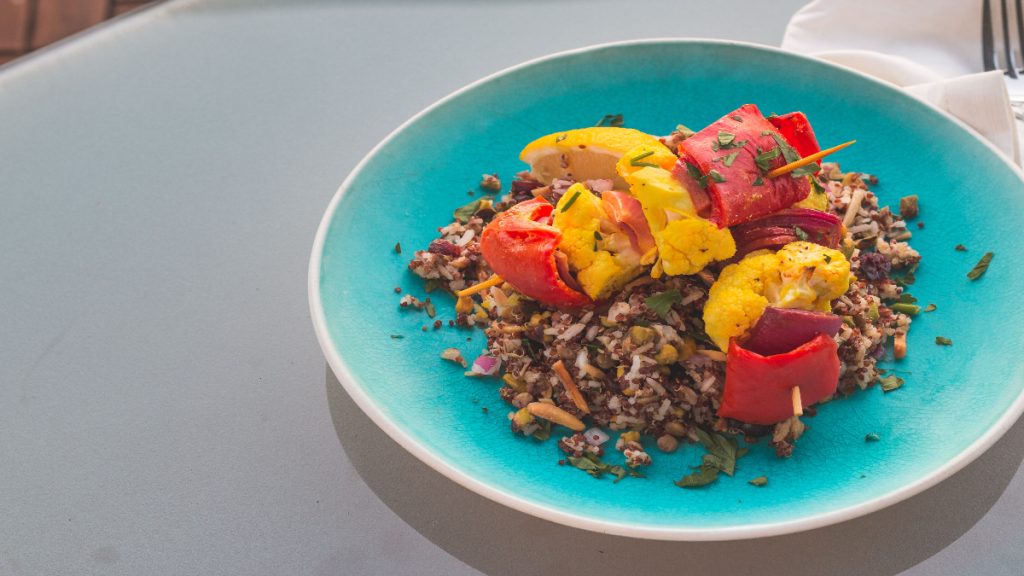
Start at the top and stop at the first answer that needs work. One useful change is enough for today.
Ask Happy Tummy GPT: ‘Here is what I usually eat in a day. Show me the first place to add a pulse, whole grain or vegetable without changing the whole menu.’
For a broader look at food and lifestyle habits, take the Digestive Quotient Test.
A fibre-rich meal can be nourishing and still produce temporary gas. The useful question is what changed and whether the discomfort settles, not whether the food has failed a health test.
Pulses, soy foods, nuts and seeds can help cover protein while also contributing fibre. Paneer and other dairy foods bring protein but no fibre, so a paneer-heavy day can still be low in the plant material gut microbes use. A simple dal, grain and sabzi combination often does more jobs at once than making one rich paneer dish carry the whole meal.
Being vegetarian can be a strong foundation for gut health, but it is not a guarantee. Fibre, plant variety, portion, preparation and personal tolerance shape what the gut experiences. On World Vegetarian Day, the most useful question is not only ‘Is this vegetarian?’ It is ‘Where are the pulses, whole grains and different plants on this plate?’
This article is for general information only and is not medical or dietary advice. Children, people who are pregnant or breastfeeding, older adults, and anyone taking medicines or managing a health condition should seek individual guidance before making substantial dietary changes. Increase fibre gradually and keep fluids adequate unless a healthcare professional has advised otherwise. If digestive symptoms continue, are severe or keep returning, speak to a qualified healthcare professional. Sudden weight loss, blood in the stool, severe or persistent pain, persistent vomiting, or difficulty swallowing need prompt medical attention.
It can be. A vegetarian diet built around pulses, whole grains, vegetables, fruit, nuts and seeds can provide fibre and plant variety. A vegetarian diet built mostly around refined flour, fried snacks, sweets and large amounts of dairy may provide much less of both.
Common reasons include fermentable carbohydrates in pulses, lactose in dairy, a sudden increase in fibre, large raw portions and eating quickly. Change one factor at a time. Persistent, painful or worsening bloating needs medical advice.
Not automatically. ICMR-NIN uses about 40 g per 2,000 kcal as an adult reference, but meeting it depends on the actual foods eaten. Pulses, whole grains, vegetables, fruit, nuts and seeds do the work; the vegetarian label does not.
Paneer provides protein and other nutrients but no dietary fibre. It can fit into a balanced meal, while gut comfort depends partly on dairy tolerance. Pair it with dal, vegetables and whole grains rather than asking paneer to be the whole plate.
Some vegetarian foods, especially pulses and certain vegetables, contain carbohydrates that gut microbes ferment. Gas is a normal by-product, although the amount and discomfort vary. Smaller portions, gradual increases and thorough cooking may improve tolerance.
There is no single best food. A useful pattern combines pulses, whole grains, several vegetables and fruits, plus nuts or seeds. Different foods provide different fibres and plant compounds, so regular variety matters more than one superfood.
Fresh curd may contain live cultures and can be part of a varied diet if dairy suits you. The organisms and amounts are not standardised, however, and curd is not required for a healthy gut. People with lactose intolerance may tolerate different portions differently.
No. The large microbiome study found that healthy plant-food diversity mattered across vegan, vegetarian and omnivorous diets. People who eat meat can still build a plant-rich, high-fibre pattern, while a vegetarian label alone does not guarantee one.