How Much Fibre Do You Need Every Day? Understanding Fibre Intake in an Indian Diet
How much fibre do you need daily? Understand WHO, NHS and ICMR-NIN recommendations, plus practical ways to increase fibre through Indian meals.
Table of Contents
If you look at a typical Indian thali, you will probably find several sources of dietary fibre: a bowl of dal, a couple of rotis, some sabzi and perhaps a serving of fruit. But how much fibre do these foods actually provide, and are you getting enough throughout the day?
For most adults, 25–30 g of dietary fibre is a useful reference range to understand. The World Health Organization (WHO) recommends at least 25 g of naturally occurring dietary fibre daily for people older than 10 years. The UK National Health Service (NHS), meanwhile, recommends 30 g a day for adults.
ICMR-NIN expresses its fibre guidance in relation to energy intake. Its reference of approximately 15 g per 1,000 kcal works out to around 30 g for a 2,000-kcal diet. This is why you may come across different figures when researching daily fibre requirements. They do not necessarily contradict one another; they use different ways of expressing dietary guidance.
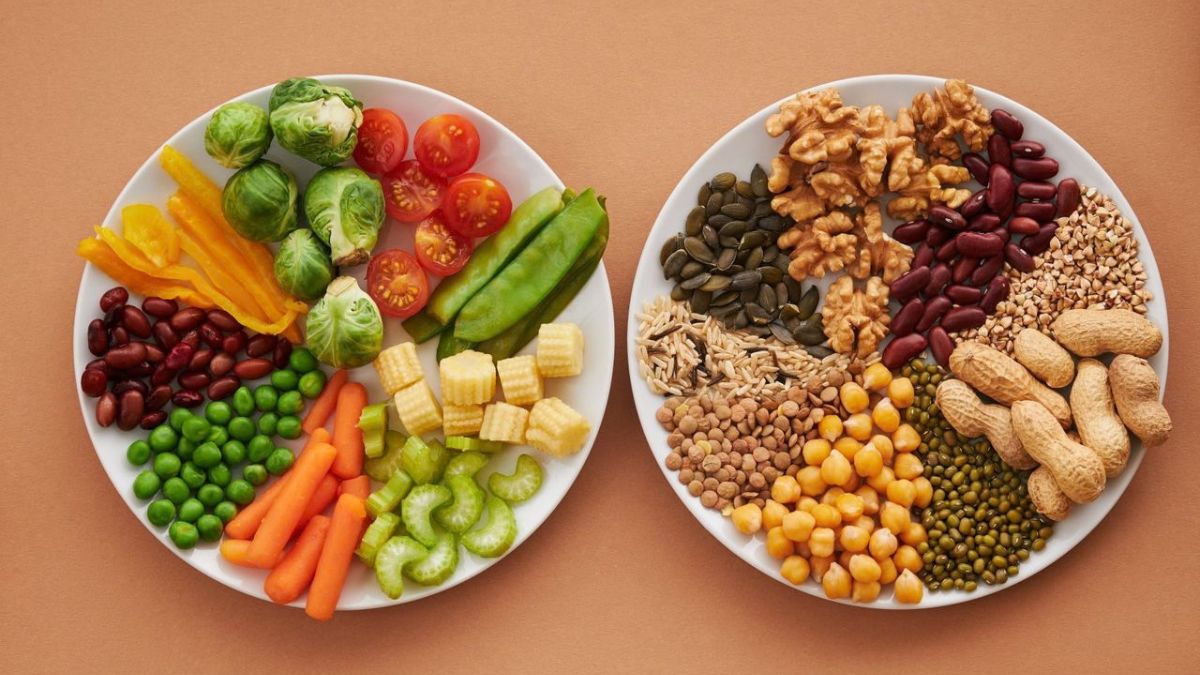
You can get fibre from familiar Indian foods, including whole-wheat atta, whole pulses, vegetables, fruits, nuts and seeds. The amount you consume depends on the ingredients, their quantities and how you prepare them. A bowl of cooked dal, for instance, does not provide the same amount of fibre as 100 g of dry pulses.
If you currently eat relatively little fibre, increase your intake gradually. A sudden change can cause bloating and wind. Drinking enough fluids also helps fibre do its job. Your ideal intake may vary with your energy requirements, digestive health and individual tolerance, so a general number should not become a rigid prescription.
Some sources recommend 25 g, others suggest 30 g, and you may even come across 40 g. It can get confusing when you are simply trying to work out whether your everyday meals are meeting your fibre needs.
The difference becomes easier to understand when you look at how each organisation expresses its recommendation.
The World Health Organization (WHO) recommends at least 25 g of naturally occurring dietary fibre every day for people older than 10 years.
As part of a healthy, balanced diet, the NHS recommends 30 g of fibre daily for adults. It also reports that average adult fibre consumption in the UK is around 20 g a day. This is a UK consumption figure, not an estimate of how much fibre Indian adults eat.
ICMR-NIN expresses its fibre reference in relation to energy intake. At approximately 15 g per 1,000 kcal, this works out to around 30 g for a 2,000-kcal diet.
These figures are therefore not directly interchangeable. WHO provides a minimum daily recommendation, the NHS gives an adult daily recommendation, and the ICMR-NIN reference scales with energy intake.
It simply means that the reference amount of fibre is connected to your overall energy intake. Here, kcal refers to kilocalories, commonly called calories.
Using the ICMR-NIN reference of approximately 15 g per 1,000 kcal, you can work out the following examples:
These calculations help explain how an energy-based reference works. They are not personalised fibre prescriptions for everyone eating those amounts of calories. Your energy requirements depend on factors such as age, body size, activity levels and health status.
Yes. You do not necessarily need unusual ingredients or complicated recipes to include more fibre in your meals. Ordinary Indian foods can contribute throughout the day.
Consider a day that includes poha with peas and peanuts for breakfast, two rotis with a katori of toor dal and a generous serving of bhindi for lunch, followed by rice with whole moong and a carrot-and-cabbage salad for dinner.
A serving of whole fruit, such as guava, can contribute further.
The total fibre depends on the actual quantities used. Roti size, the amount of dal, the proportion of vegetables and the size of the fruit portion all make a difference. Therefore, a meal plan should be treated as an illustration rather than a guaranteed 30 g or 40 g fibre calculation.
For a closer look at how individual foods contribute, read The Fibre Math of an Indian Meal.
ALSO READ | Can Too Much Fibre Cause Bloating? Why It Happens and What Helps
It is easy to focus on whether a meal contains grains or dal without considering which kind, or how much.
The Indian Food Composition Tables 2017 (IFCT) provide useful comparisons. Per 100 g of edible ingredient, the tables report approximately:
| Food | Dietary fibre per 100 g |
|---|---|
| Wheat flour, atta | 11.36 g |
| Refined wheat flour (maida) | 2.76 g |
| Whole green gram (moong) | 17.04 g |
| Green gram dal (split moong) | 9.37 g |
These are raw ingredient values, not the fibre content of cooked portions.
The comparisons do not make maida forbidden or split dal a poor choice. They simply show how choosing whole grains and whole pulses more often can help increase your fibre intake without necessarily making every meal larger.
Keep the measurement in mind, too. A figure for 100 g of dry dal is not the amount in a cooked katori. Water changes the cooked weight, and a thin dal and a thick dal can fill the same bowl while containing different amounts of pulse.
A practical approach is to vary your pulses rather than replace every familiar dal. Keep the preparations you enjoy and introduce whole pulses where they fit.
You can also explore our guide to Which Dal Has the Most Fibre?.
Eating more fibre is generally encouraged, but suddenly changing your diet can leave you feeling uncomfortable.
A rapid increase in fibre may cause wind and bloating, particularly if your usual meals contain relatively little of it. That is why gradual changes are easier to manage.
Instead of replacing several meals and snacks at once, try making one small change at a time:
The NHS guidance on increasing fibre also recommends introducing fibre-rich foods progressively.
ALSO READ | From Atta to Amla: A Full Day of High-Fibre Indian Foods
Both fluids and fibre matter for digestive health. Dietary fibre absorbs water, and adequate fluid intake helps it work effectively.
The National Institute of Diabetes and Digestive and Kidney Diseases (NIDDK) advises drinking plenty of liquids to help fibre work better. However, the amount of fluid you need depends on factors such as your activity level, health and where you live.
Increasing your fibre intake does not mean you have to gulp down a fixed amount of additional water. Focus on staying adequately hydrated and seek individual advice if you have specific fluid restrictions.
Not necessarily. A general recommendation is a useful starting point, but digestive tolerance and individual health needs matter.
If you have irritable bowel syndrome (IBS), the type of fibre you eat can matter as much as the total amount. Some people tolerate certain fibre-rich foods better than others. A doctor or dietitian can help you identify suitable food choices rather than turning a general recommendation into a rigid rule.
If you have another bowel condition or a history of bowel obstruction, seek individual medical advice before deliberately increasing your fibre intake.
For everyone else, the simplest starting point is your next familiar meal, not a complete kitchen makeover.
This article is intended for general informational and educational purposes. It does not replace personalised medical or nutritional advice, diagnosis or treatment. Individual fibre and fluid requirements may vary depending on age, energy needs, digestive health and other medical conditions. If you have persistent digestive symptoms, a diagnosed bowel condition or a history of bowel obstruction, consult a qualified healthcare professional before making significant dietary changes.
Around 30 g is a useful reference for many healthy adults, particularly when their daily energy intake is around 2,000 kcal. Individual requirements and digestive tolerance may vary.
WHO recommends at least 25 g of naturally occurring dietary fibre daily, while ICMR-NIN expresses its reference in relation to energy intake: approximately 15 g per 1,000 kcal.
The general fibre reference is not determined by vegetarian status. Vegetarians can obtain fibre from whole grains, pulses, vegetables, fruits, nuts and seeds.
Increase fibre gradually rather than making several dietary changes at once. This gives your digestive system time to adjust and may help reduce wind and bloating.
Adequate fluids help fibre work effectively. Your individual fluid requirements depend on your health, activity level and other factors, so avoid following a fixed additional water target without medical advice.