

11 Benefits and uses of Neem Leaves
Why are neem leaves considered a natural powerhouse? Discover the myriad health benefits of neem leaves in our comprehensive blog.
Table of Contents
Mother Nature has a gift of a few bitter foods that work very sweetly to protect us from getting sick. Neem is one such blessing.
Neem is the pride of India. You may easily find it covering the spans of Northern India due to its therapeutic and medicinal properties. Its leaves are no less some elixir when used wisely.
Neem leaves have not only been used medicinally for ages but the twigs are also used to clean teeth naturally – a natural dental caretaker. Today, science is proving well the worth of neem leaves, and we’ll tell you just that.
Let’s learn what neem is, how it can benefit our bodies inside-out, when not to use it, and a few interesting facts.
Neem is a medicinal plant that is native to India. Its bark, stem, leaves, seeds, root, and even young shoots, every part is beneficial. The leaves are so bitter that you might not chew a few for a few seconds.
Its fruits are equally bitter and contain neem seeds. These small fruits, 1 cm in diameter, are called nimboli. But neem is not completely bitter. When completely ripe, these same bitter fruits turn yellowish and sweeter.
Neem is often called as ‘the village pharmacy’.
In rural regions, neem twigs are still used as a natural brush due to neem’s antimicrobial properties. The twig is first chewed at the end to make it fibrous. These fibres are then used as a brush.
Today, science has put this medicinal plant thoroughly under its microscope’s eye and known its potential benefits.
Because neem leaves are considered medicinal and nutritious, they are used in cookery in some parts of India.
In Bengal, young neem leaves are prepared with brinjal.
The dish is called ‘nim bēgun bhājā’ and acts as an appetiser.
Now, let’s learn why neem leaves are so valued through the many neem leaves benefits.
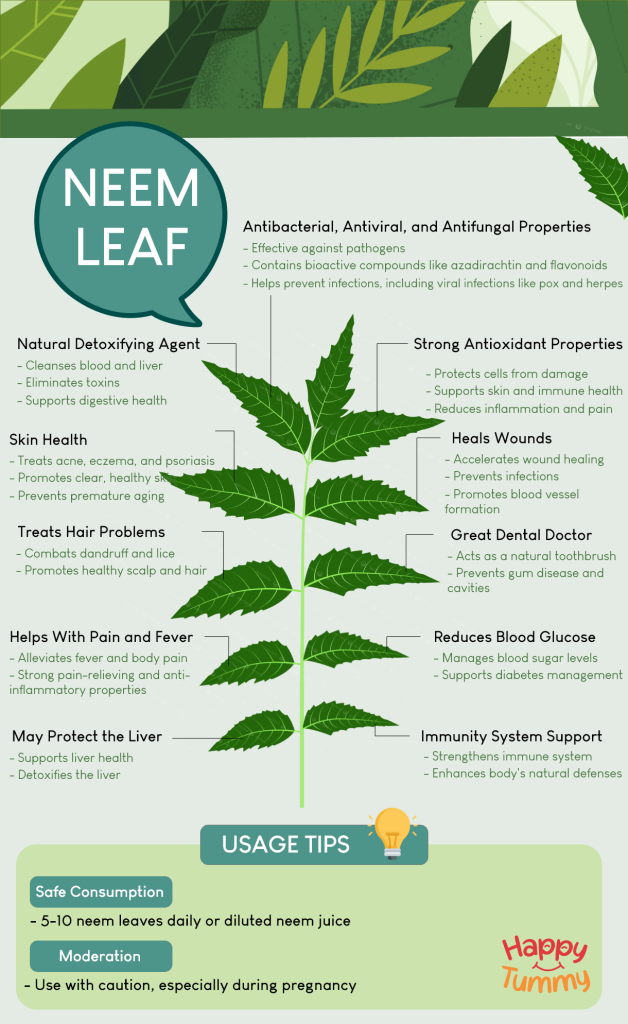
Neem is an exceptional natural detoxifying agent, celebrated for its ability to purify the body by eliminating toxins from the blood and liver. Its powerful bioactive compounds offer strong antibacterial, antifungal, and antiviral properties, which facilitate the cleansing of harmful pathogens.
By supporting the detoxification of the gastrointestinal tract, neem enhances digestion and boosts immune function, thereby contributing to overall health.
Regular use of neem helps maintain systemic detoxification, making it a vital component in natural detox regimens.
Aashirvaad Atta and Multigrains introduced the Digestion Quotient. Now you can take a two-minute quiz to see how well your digestive system is performing.
Neem is renowned for its potent antibacterial, antiviral, and antifungal properties due to its bioactive compounds like azadirachtin, nimbidin, and flavonoids. These compounds effectively combat a wide range of pathogens.
Neem’s antibacterial qualities help treat skin infections and wounds, while its antiviral properties inhibit the replication of viruses
During the COVID-19 pandemic, research was conducted to determine if neem was effective against viruses. The results showed that neem leaf extract had strong antiviral properties thanks to its phenolic compounds and flavonoids. [1]
In India, neem leaves have long been used as a preventive measure against pox viruses, such as smallpox and chickenpox. People boil a bunch of neem leaves and mix them into bath water, and some even drink neem water despite its strong taste. However, it is not effective at curing it. So, always take preventive measures whenever in such a situation.
Many studies support the effectiveness of neem in preventing pox infections. However, neem is not a cure for these infections, so it’s important to take preventive steps to avoid contracting them. [2]
Antioxidants are quite crucial when it comes to our health. There have been so many recent discoveries around it about how they prevent our cells from damage. A hidden saviour indeed!
Neem contains several antioxidants that offer numerous health benefits such as:
These benefits are those that have been studied. There might be numerous other underlying benefits still waiting in the hope of being discovered. [3]
Since ancient times, neem oil extract has been used as an effective birth-control method [4]
Neem is widely utilized in home remedies by most Indian Households. Its amalgamation with turmeric has proven to be one of the best when it comes to skincare. Their strong anti-inflammatory, antifungal, and antibacterial qualities enable them to effectively treat a range of skin disorders, including psoriasis, acne, and eczema. Neem is like a Swiss Army knife for your body. It has different tools (properties) to tackle various problems – reducing inflammation is like its bottle opener, fighting fungi is its corkscrew, and battling bacteria is its knife. [5]
Neem plant has active ingredients gedunin, nimbolide, and nimbidin, which are responsible for anti-inflammatory and anti-infective properties. People include neem in their daily skincare for beautiful, cleaner, healthier skin, whether topically with neem paste or neem-infused oils. In ancient times and even today, people make juice out of neem leaves as they are also a great source of antioxidants, which shield the skin from the elements and prevent premature aging, leaving it looking young and glowing.
To get a healthy glowing skin from inside, chew 4-5 neem leaves empty stomach
Neem paste mixed with a pinch of turmeric and rosewater can be your effective and cost-effective acne remedy
We all treasure our hair because it sets the tone of our personalities. But regular hair problems such as dandruff, lice, fungal infection, etc., keep on challenging our strong and silky dreams.
Our ancestors always used neem against their numerous hair problems, the most common among being lice infestation.
Neem contains potent compounds that can bring havoc upon lice resting on our scalps. But the study was around need seed only. More studies are required to see the efficacy of neem leaves.
One study found out that neem leaves and rosemary extract worked wonderfully well in dealing with dandruff, even much better than common anti-dandruff agents (ketoconazole). [6]
Ugh! Those painful days of fever when the world seems to matter no more. All we crave is a moment of relief. Although we usually look for relief with symptomatic treatment, neem can do wonders without leaving any trace of side effects.
Neem leaves have been used for centuries to treat fever and body pain. It was believed to be a wonderful remedy against common fevers.
Today, science has found those beliefs to be true. Neem does contain strong pain-relieving and fever-reducing properties. This makes neem leaves a low-cost treatment for common fever. [7]
Even today, you might see thousands of people living in rural areas following the age-old tradition – neem twigs for dental cleaning. Not only the branches, but the leaves too possess strong antibacterial properties.
Chewing tender neem stem in the morning can release antibacterial compounds into your mouth. These compounds can then fight off decaying agents and thus prevent gum or dental problems.
Today, there are numerous products out in the market (mouthwash, toothpaste, etc.) that help to prevent dental issues. But why depend on those when you can naturally eat neem leaves? Neem leaf extract is still widely used, and that too effectively, to prevent cavities and gum diseases. [8]
Blood sugar imbalance has become a norm these days. The onset of poor diet, stressful lifestyle, and other things have pushed our bodies to be unstable in terms of blood glucose. But uncontrolled blood sugar is a thing to fear about. It can not only lead to quick weight gain but can also push the heart into a swamp of diseases. But neem leaves can help.
For ages, neem leaves have been used to treat blood sugar imbalance due to their antidiabetic properties. While neem bark is one thing that is used to treat blood glucose issues, neem leaves have also been found to be potent enough. Numerous studies have found that neem leaves show significant anti-diabetic activities. [9]
Simply chewing on neem leaves in the morning for a few weeks can be effective in controlling blood sugar imbalance. However, it requires a strict medical supervision specially if taken empty stomach. [10]
In Ayurveda and Unani medicine systems, neem leaves are much valued when it comes to wounds and injuries. Usually, neem leaves are crushed and then applied to the wound directly. This way, it firstly prevents the start of an infection, and then it quickens the wound healing process.
The magic that spells this healing lies in its anti-inflammatory and neovascularisation properties. [11]
Neem leaves contain phenolic and other plant compounds that work on inducing inflammatory responses. This quickens the wound-healing process.
Also, neem leaves even show neovascularisation. This means that our bodies form more blood vessels. When more blood vessels are formed, more nutrients and immune cells reach the wounded area.
The liver is one such organ in the human body that does not have its duplicate (as in kidneys, lungs, etc.). And it keeps working on days and nights to keep our bodies free from toxins. But rarely do we care about the health of our livers. Although it can rejuvenate itself, there is a limit to it.
Neem leaves possess effective compounds that hold the potential to protect the liver from damage. It is hepatoprotective. [11]
So, are not all these neem leaves benefits wonderful enough to make you munch on these right now? But there is more. These leaves offer a few more benefits that Ayurveda and our ancestors believed in. However, these benefits have been supported by a few studies only. Here are those:
Indian Ayurvedic Texts have always appreciated neem as it is the traditionally used to support the immune system. The most talked about cure for leading a healthy lifestyle is boosting immunity. The Indian ingredients that are prominent is neem and turmeric!
Research and experiments have shown that immunomodulatory effects of neem leaves have resulted in building up anti-body titer, that ultimately boosts immunity. Think of neem as a personal trainer for your immune system. Just as a trainer helps you build strength and adapt to different exercises, neem helps your immune system become more responsive and adaptable to various health challenges. [14]
Neem’s content of bioactive compounds, such as polysaccharides and limonoids, enhances the body’s natural defense mechanisms. Bioactive compounds in neem are like secret agents in your body. They’re always active, working undercover to protect and defend your health from various threats.
Now, as we all know that neem is a medicinal plant, it must be used with caution too.
Neem leaves are really good for your health, but you need to know how to utilize them properly to gain the most benefit. There are a few easy ways to get the most out of neem leaves if you want to use them for skin care or health benefits.
Neem leaves are really good for your health, but you need to know how to utilize them properly to gain the most benefit.
There are a few easy ways to get the most out of neem leaves if you want to use them for skin care or health benefits.
Neem leaves are commonly used to brew tea. This is an excellent choice if you want to boost your immune system or clean your body naturally. This is how you can do it:
You can drink neem tea to purify your blood and improve your overall health.[1] Just don’t eat too much, because neem can be really strong.
The best way to incorporate neem into your hairstyle or skincare routine is to use neem powder. One can purchase neem powder or grind fresh neem leaves into a powder.
Neem oil is derived from the seeds of the neem tree and is highly beneficial to you. One can purchase neem oil or extract it by crushing fresh neem leaves and extracting the oil.
You need to grind fresh neem leaves along with a bit of water to make a neem leaf paste.
With these easy recipes, these neem leaves can be easily incorporated into your health and fitness regimen.
Aashirvaad Atta with Multigrains collaborated with renowned nutritionists to make the My Meal Plan test. The test tells you how much fibre you consume each day, then creates a meal plan tailored to you.
Many people believe that neem leaves are good for your health, but you should use them carefully. Neem is a natural medication; therefore, you should use it carefully to avoid potential adverse effects. You should be aware of the potential risks and safety measures associated with using neem.
Neem – the village pharmacy, as it’s called, is a wonder of nature. From its roots to its leaves, every part of this tree holds medicinal value. Though bitter to taste, the benefits of neem leaves are as sweet as honey for our health.
Whether it’s boosting immunity, managing blood sugar, or promoting hair and skin health, neem leaves have proven their worth time and again. Numerous studies vouch well for these benefits. And if you feel like embracing it completely, try using it for your wounds and dental issues too. They might make you smile.
So, next time you see a neem tree, realise that you are looking at the natural pharmacy. But remember, just like any other medicinal herb, moderation is key.
Wishing you health and happiness (with a pinch of bitterness).
Chewing on neem leaves daily can provide several health benefits such as better dental care, enhanced immunity, blood glucose balance, liver protection, antibacterial benefits, etc.
Neem leaves have been used medicinally for centuries for their therapeutic nature. They possess strong antibacterial, antiviral, antioxidant, antimalarial, antifungal, immunomodulatory, and other beneficial properties.
Neem leaves have not yet been found to leave any side effects when consumed in safe amounts, i.e., a few leaves each day. However, it is advised to avoid it during pregnancy.
Neem juice is a great detoxifier. It can not only support your liver to flush out toxins but can even protect your liver from damage. Plus, it offers several other benefits such as enhanced immunity, better dental health, antioxidants, etc.