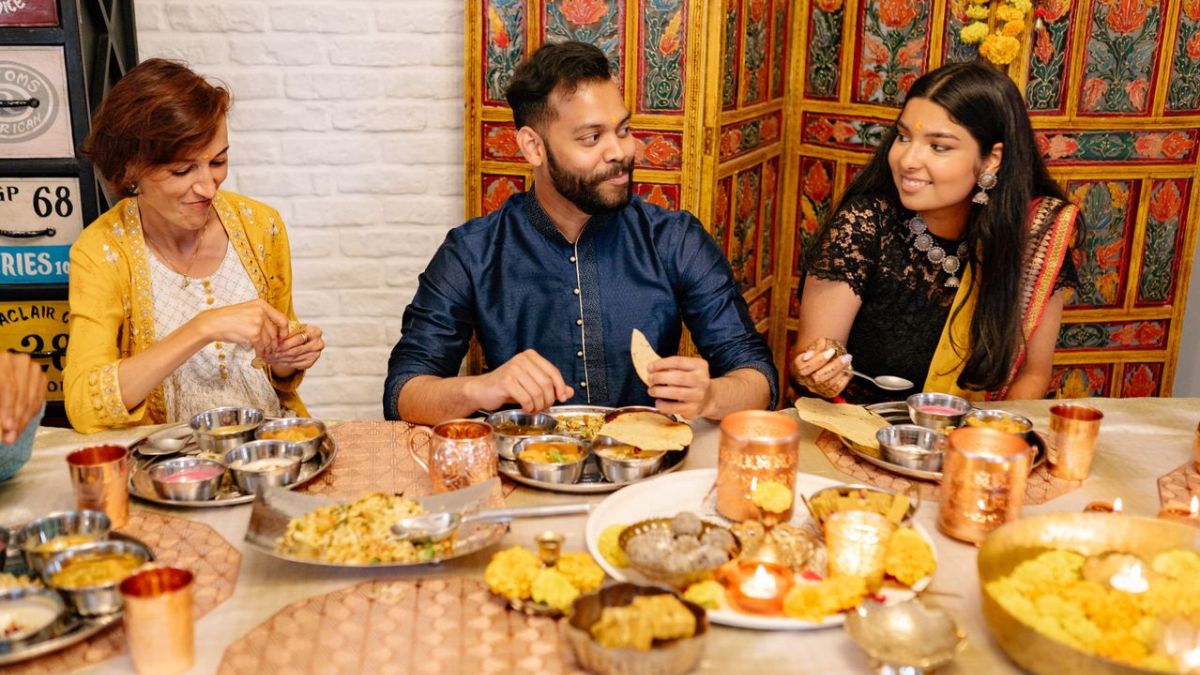
Diwali is in two weeks. Or Navratri just ended and Dussehra is next week and Bhai Dooj is after that. The calendar is full of occasions and the kitchen has been running continuously for ten days. Your gut is participating in all of this with varying degrees of enthusiasm.
Indian festival food is some of the most genuinely wonderful food in the world. It is made with care, with intention, with recipes that carry family history, and in quantities that reflect the belief that abundance is a form of love. The gut is not complaining about the existence of festival food. It has been processing festival food for generations.
What it has noticed, increasingly, is the pace. The October-November festival cluster in particular — Navratri running into Dussehra running into Diwali running into Bhai Dooj, with regional variations adding their own occasions to the calendar — creates several consecutive weeks where the food is richer, sweeter, more fried, and less predictable in its timing than any other period of the year. And the gut, which was designed for occasional feasting rather than sustained festive eating, has a different experience of the tenth day of celebrations than it did of the first.
What changes between day one and day ten
The first day of any festival is a genuine joy for most guts. The food is festive, the occasion is happy, the eating is intentional and celebratory. The gut handles abundance reasonably well when the abundance is occasional.
By day ten, several things have shifted. The gut’s microbiome, which depends on dietary diversity and fibre, has been receiving a diet that is higher in sugar and refined flour and lower in the vegetables, legumes, and whole grains that maintain its balance. The sleep has been disrupted by late evenings and early morning pujas. The routine meals that anchor the gut’s rhythm have been replaced by festival food at festival times. The digestive complaints that begin around day seven or eight of sustained festive eating — the bloating, the sluggishness, the sugar cravings that arrive even when you have already had sweets — are the gut’s accumulated response to a changed environment.
The sweet overload and blood sugar
Festival season produces a specific pattern of eating that the gut finds challenging: sweets, often on an empty stomach or as the first food of the day, followed by rich savoury food, followed by more sweets, without the fibre and protein that would moderate the blood sugar impact of all of it. The blood sugar curve of a Diwali day looks nothing like the blood sugar curve of a normal day, and the afternoon sluggishness and inexplicable hunger that appear during festivals are directly connected to this.
The mitigation is not avoiding sweets. It is ensuring that the sweet arrives after something with fibre and protein rather than before it. A proper meal before the mithai. A Khapli roti with dal before the puja prasad. The sequence matters enormously for what the gut experiences afterward. Aashirvaad Chakki Khapli Atta makes this practical: a quick Khapli cheela or paratha before the festival eating begins gives the gut a stable foundation from which the celebration food is processed considerably more comfortably.
The fasting and feasting cycle of Navratri
Navratri presents a different gut challenge: the specific eating pattern of fasting on certain days and eating on others, often with the fast-breaking meal being richer and larger than everyday eating. The gut adapts to fasting reasonably well, but the transition from fasting to feasting — when the system that has been in a reduced-input state for several hours suddenly receives a large, rich meal — is where discomfort tends to arise.
Ending a fast with a moderate meal rather than a large one, and staying adequately hydrated through the fast day, are the two things that make this transition easier for the gut. Water, coconut water, and fruit through a fast day maintain the gut environment in a way that pure food restriction does not.
The maintenance meals that hold it together
The gut’s survival strategy for festival season is the same as for wedding season: protect one everyday meal. A breakfast of whole grain flour — Khapli atta if possible, something stone-ground and less refined rather than the maida that festival season tends to concentrate — eaten before the day’s festivities begin. A bowl of dal when the opportunity presents itself. Curd when there is curd. Water consistently through the day.
These are not restrictions. They are the maintenance meals that keep the gut capable of enjoying the festival food without the accumulated consequences that arrive when the maintenance meals disappear entirely.
Festival food is the point. The maintenance meals are what make it possible to enjoy the festival food all the way through to the end of the season rather than crashing somewhere in the middle.
Your gut loves festival season. It just needs a little support to love it all the way to Bhai Dooj.
This article is part of the Your Gut During… series on Happy Tummy. For general informational purposes only — not medical or dietary advice. Read more of the series here:
Your Gut During Wedding Season
Your Gut During a Work Trip
Your Gut During Summer
Your Gut During Monsoon
Your Gut During Exam Season
Your Gut During Holiday Travel
Your Gut During Long Commutes
Your Gut During Back-to-Back Celebrations