What Your Gut Wishes You Knew Before Starting Yet Another Weight-Loss Journey
The decision is made. The resolve is strong. The plan is in place. Your gut has been here before — several times, actually — and it has a few things to say before you begin.
The decision is made. The resolve is strong. The plan is in place. Your gut has been here before — several times, actually — and it has a few things to say before you begin.
There is a particular energy that accompanies the start of a new weight-loss attempt. The clarity of a decision made, the sense of finally doing something, the optimism of a clean slate. You know what you are going to eat. You know what you are not. You have probably also told a few people, which makes it feel more real.
Your gut has watched this beginning before. It recognises the energy. And while it is not here to discourage you — genuinely, it is not — it has accumulated some observations across the previous attempts that it would like to share before this one gets underway.
The restriction spiral
Most weight-loss approaches, however sensible they start, involve some degree of eating less than the body is used to. This is fine. The gut can handle it. What it struggles with is the version that tips from “reasonably less” into “actively deprived” — which happens more often than people plan for, because the initial motivation makes deprivation feel manageable right up until it does not.
When the gut is consistently receiving less than it needs, it adjusts. Gut motility slows. The microbiome, which depends on regular fibre to maintain its diversity, becomes less varied. Digestive enzyme production changes. The system that was running at a comfortable level starts running differently — not broken, but noticeably less smooth. The constipation, the bloating, the low energy that often accompanies restrictive eating is not a coincidence or a detox response. It is the gut telling you clearly that it is not happy with the current arrangements.
The fibre blind spot
The biggest gut-related mistake in most weight-loss plans is reducing fibre while reducing calories. Foods that are cut first — rice, rotis, bread, legumes — are often also the primary fibre sources in the Indian diet. The low-carb approach that eliminates grains and pulses in pursuit of weight loss frequently produces a gut that is simultaneously calorically restricted and fibre-depleted. The combination is not pleasant.
The gut needs fibre the way a car needs oil — not as a fuel source, but as the thing that keeps the whole system running. Cutting carbs without replacing the fibre from those carbs with other sources is a guarantee of digestive difficulty that tends to arrive around week two, right when the initial motivation starts to wobble anyway.
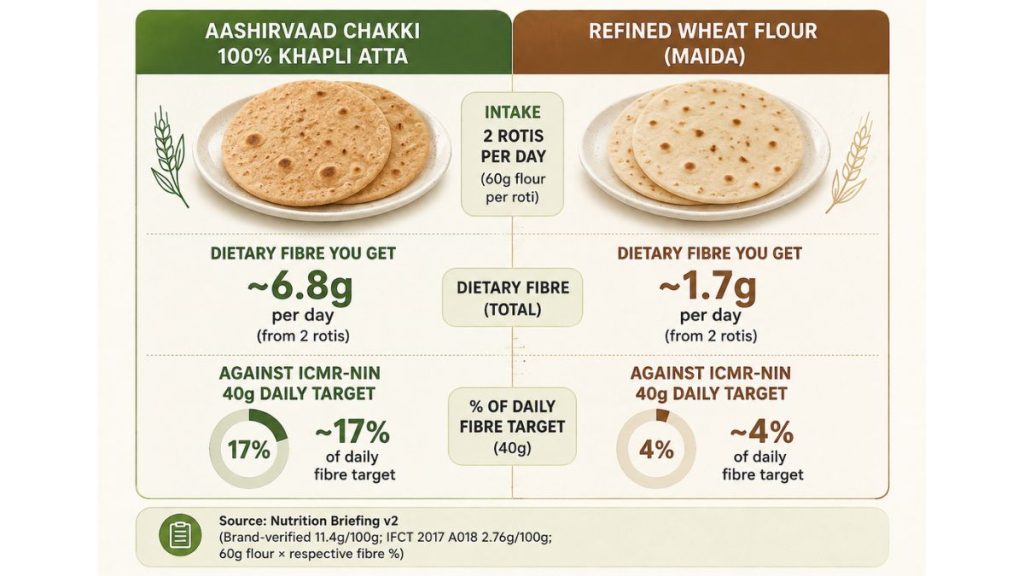
Whole grain flour is one of the easiest ways to maintain fibre intake while moderating overall carbohydrate load. A smaller number of rotis made from Aashirvaad Chakki 100% Khapli Atta provides more fibre than a larger number of rotis made from refined flour. You can eat less and keep the gut happy, if the less you are eating is whole rather than refined.
Is Khapli atta good for weight loss? Khapli atta does not cause weight loss, but it makes a calorie-moderated diet easier to sustain. Its fibre content supports gut motility and satiety — both of which reduce the digestive disruption and cravings that derail most weight management attempts. The practical point: a smaller number of Khapli rotis still provides significantly more fibre than the same number made from refined flour.
The sustainability question your gut is already asking
Here is the thing about weight-loss plans that the gut registers before the brain does: is this a way of eating you can actually maintain, or is it a sprint with a finish line? Because the gut does not respond well to sprints. It takes several weeks to adjust to a new dietary pattern. By the time it has adjusted, if the plan was always temporary, the adjustment begins again in reverse when the plan ends. And the reverse adjustment — the rebound — is often harder on the gut than the original change.
The gut is asking, before you begin: if this goes well, what does it look like in a year? Is the eating pattern you are about to adopt one that could become the permanent pattern, or is it something to survive until a goal weight is reached? The answer to that question will predict, with reasonable accuracy, whether this attempt is different from the previous ones.
What the gut would actually prefer
Not a dramatic overhaul. A gradual improvement in the quality of everyday food. More whole, less processed. More fibre from grains and legumes — a roti from Aashirvaad Chakki 100% Khapli Atta with dal counts here, not as a weight-loss food but as the meal you eat on an ordinary Tuesday. Meals at consistent times. A daily diet that is a little better than the one before it, maintained for long enough that the gut adjusts and settles into it as the new normal.
This is less exciting than a dramatic weight-loss plan. It produces slower visible results. It is also the approach the gut can sustain indefinitely without the disruption cycle that most dramatic plans produce.
Your gut is not against weight loss. It is against the approach that treats it as a temporary emergency rather than a permanent upgrade. One of those it can sustain. The other it cannot.
Your gut is rooting for you. It just wants this to be the last time you start, rather than the latest time.
This article is part of the What Your Gut Wishes You Knew Before… series on Happy Tummy. For general informational purposes only — not medical or dietary advice. Read more of the series here:
You are now being directed to an external website https://www.callr.live/aashirvaadexperts/premium-plan.
This link is provided for your information and convenience only and ITC Limited is not
responsible for the contents or services provided by Brand Touch India or any information that
you share with Brand Touch India.