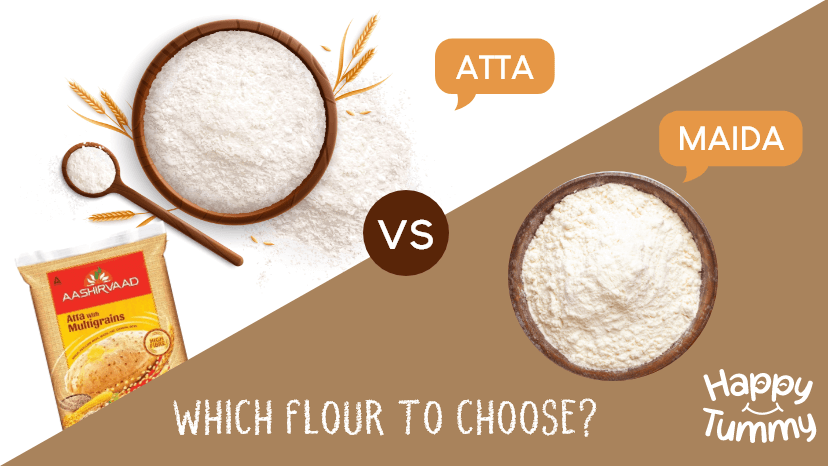


Atta vs. Maida – Which Flour to Choose?
This instructive guide will explain the main differences between atta and maida flour. Make wise decisions for your culinary explorations.
Table of Contents
Nobody likes eating the same thing over and over again, and Indians adore variety in their cuisine. And with the abundance of possibilities available, why not?
We have choices for sabzis and curries in addition to the type of bread we wish to consume with it. From paranthas and chapatis to puris, theplas and naan, the list is endless.
And to make all these wonderful and delicious recipes, we need our hero ingredient – flour. No dish will be complete without this super ingredient. But how do you decide which flour to go with – atta or maida?
These are common ingredients that are mostly found in Indian kitchens. You may feel to interchange if one is unavailable, but both have different characteristics and how they impact the recipe.
So, to choose wisely and healthily, it is a good idea to be aware of the differences between these two excellent components. So why are we still waiting? Let’s begin our exploration now.
Aashirvaad Atta and Multigrains has collaborated with professional nutritionists to introduce My Meal Plan Test. It is a fast, simple test that will help you determine how much fibre you are currently consuming daily and develop a personalised meal plan that meets your nutrition goals.
How is atta made, and how is it different from maida? It is a common question.
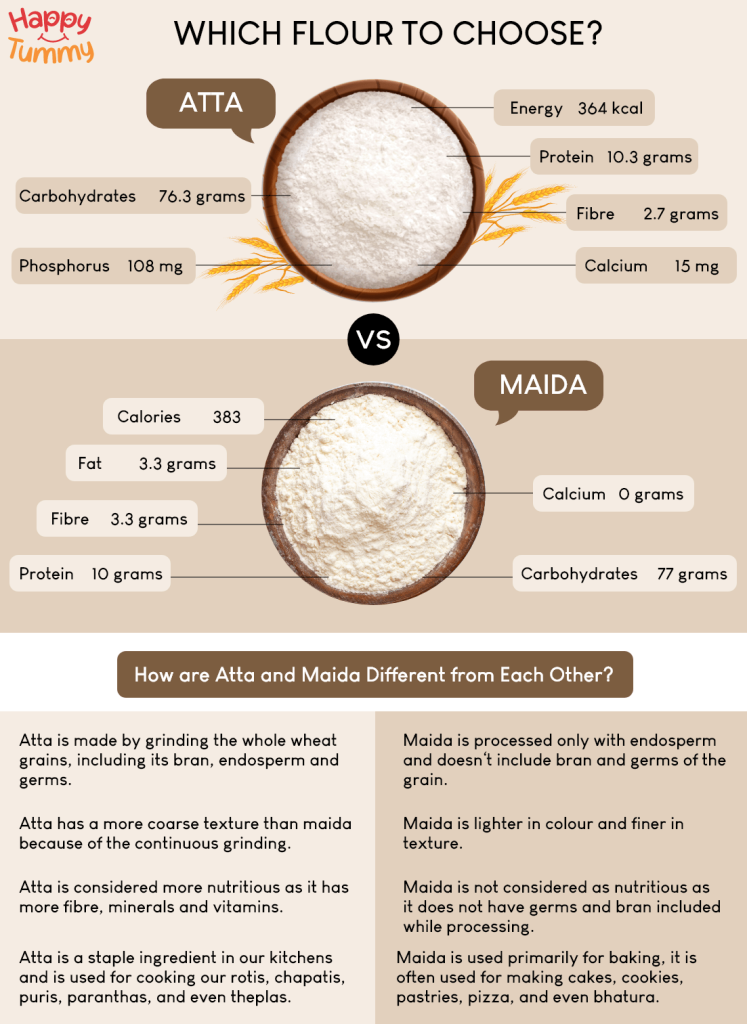
Atta is made by grinding the whole wheat grains, including its bran, endosperm and germs. On the other hand, maida is processed only with endosperm and doesn’t include bran and germs of the grain.
If you compare the textures, you will realize that atta has a more coarse texture than maida. Atta’s texture is because of the continuous grinding, whereas maida is lighter in colour and finer in texture.
Moreover, atta is considered more nutritious compared to maida. Atta has more fibre, minerals and vitamins, often missing in maida as it does not have germs and bran included while processing.
Do you know you can get more fibre if you use multigrain atta? Try Aashirvaad Atta with Multigrain, which has the goodness of six grains and is more fibrous.
In addition, you can also check the fibre content in the dishes made of atta by checking their fibre ratio on My Meal Plan.
The next big question that is commonly asked is where to use atta and where to use maida.
These two flours have different uses in our Indian kitchens because of their texture and properties. Atta is a staple ingredient in our kitchens and is used for cooking our rotis, chapatis, puris, paranthas, and even theplas.
While maida is used primarily for baking, it is often used for making cakes, cookies, pastries, pizza, and even bhatura (for chole bhature). It is because all these dishes require the flour to rise and have a fluffier and lighter texture.
Whether you use atta or maida is essentially a matter of the recipe you are preparing and the texture or taste you want to achieve.
Both flours are made from wheat, but their choice is influenced by processing and nutritional content, which makes each better suited to a particular type of dish.
Here is a guide to assist you in determining what flour to use in your favourite recipes:
Maida is the flour used to make baked goods with a light, soft consistency. It is fine and free of bran; therefore, it can be used in recipes which require a light, fluffy texture. Prepare maida cakes, pastries, cookies, and muffins with a soft crumb and delicate texture.
Reasons Why Maida Works: The finer texture of Maida and its low fibre content make it rise easily, giving the bread a soft, tender crumb.
Atta will be appropriate in preparing roti, paratha and chapati. It is rough, and this, in combination with the content of the bran and germ of the breads, adds to them the chewiness and flavour that makes them so good.
Why Atta Works: The atta contains its own fibre, making it elastic in the dough and thus capable of producing flat breads that are rolled and cooked on a hot griddle.
Maida is also used to make puri and bhatura because it can be fried into soft, puffy bites. Maida is low in fibre, and the dough is finely textured, resulting in rapid rising and puffing when baked in hot oil.
Why Maida Works: Due to maida’s smoothness, it is light and airy when fried, making it the perfect ingredient for dishes where the outer part needs to be crisp and the inner part soft.
Atta is also used to make stuffed parathas and plain parathas, as it has a heavy texture and is also high in fibre. It is not rollable or stuffable, and the dough is not stiff to work with.
Why Atta Works: Atta is healthier and has a higher nutritious value, which makes parathas more substantial and full-bodied, and gives them a tested stuffing made with ingredients such as potatoes, paneer, or vegetables.
Maida is typically used to make pizza dough and pasta because of its fine texture, which yields smooth, elastic dough. Maida is also essential in the preparation of pizza dough, which gives it a thin, crisp crust. Maida pasta is tender to eat.
The reason Maida Works: Maida is better because it has a finer texture and a higher gluten content; hence, it is easy to stretch and performs well in pizza crusts and pasta.
Understanding the peculiarities of atta and maida will help you make better choices in cooking and baking, and your dishes will have the desired texture, taste, and nutritional content.
You need to cook a light and soft dish or a heavy and chewy one. One thing you need for cooking to be successful is the right flour.
Here is the nutritional value of eating rotis made of atta. The table below will show you the different nutrients you can get in 100 grams of atta [1]:
| Elements | Amount |
| Energy | 364 kcal |
| Protein | 10.3 grams |
| Carbohydrates | 76.3 grams |
| Fibre | 2.7 grams |
| Calcium | 15 mg |
| Phosphorus | 108 mg |
Now, let’s look at the nutritional value of maida. The table below lists the many nutrients that can be obtained from 100 grams of maida. [2]:
| Elements | Amount |
| Calories | 383 |
| Fat | 3.3 grams |
| Carbohydrates | 77 grams |
| Fibre | 3.3 grams |
| Protein | 10 grams |
| Calcium | 0 grams |
Interested in learning the performance of your digestive system? Aashirvaad Atta and Multigrains present the Digestion Quotient, a hassle-free, two-minute quiz that can provide you with insights into your digestive health.
It is fast, simple, and a potential initial step toward a healthier, happier gut! Take the quiz today and start feeling different.
The distinction between atta and maida flour can be crucial in culinary arts, where accuracy and subtlety frequently distinguish the ordinary from the spectacular.
While maida delivers a fine, smooth texture suitable for some delicate recipes, atta offers your dishes a hearty, nutty flavour and extra nourishment.
You may create recipes that taste excellent and have the ideal consistency if you know when and how to utilize these flour.
The atta vs. maida argument finally highlights the culinary expertise that allows you the creative freedom to modify recipes to your preferences.
To achieve culinary perfection, remember this floury battle the next time you’re in the kitchen.
Atta is made of the whole grain that includes every part of it. In contrast, maida is not made of whole grain and is processed and often bleached. Hence, the nutrients available in atta are more than maida, making it a healthier option for daily consumption.
No, atta and maida are two different ingredients that are made in different ways. The main distinction between the two is that while atta is created from the wheat grain’s germ, endosperm, and bran, maida is made from the endosperm.
Yes, you can use maida to prepare chapatti, parantha, puris and other dishes.