The Desk-Bound Professional's Guide to a Calmer Gut
Long sitting, hurried lunches, chai, stress and late meals can all shape how your stomach feels by evening. The useful fixes are smaller than a total workday overhaul.
Table of Contents
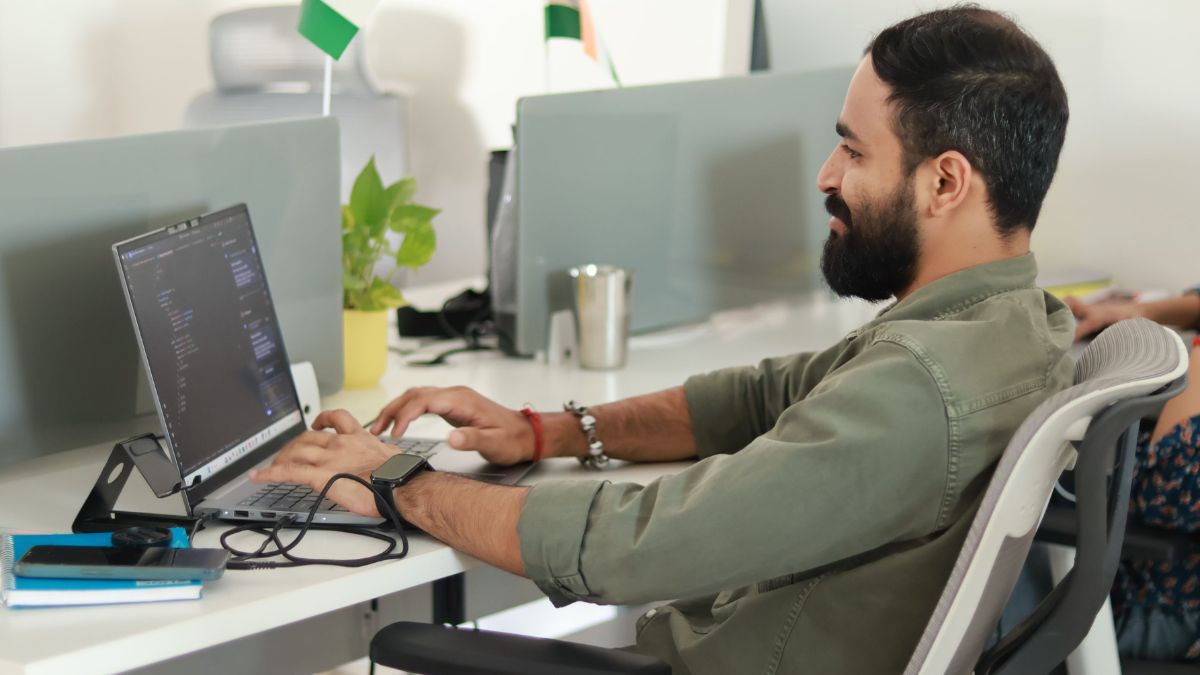
A desk job can affect how your gut feels through several things stacking up at once: long stretches with very little movement, meals eaten too fast or too late, chai or coffee that may trigger symptoms in some people, and the quiet, constant hum of work stress. None of these automatically causes digestive trouble. But when they become the shape of five working days every week, they can make bloating, reflux symptoms or irregular bowel habits more noticeable for some desk-bound professionals.
Those 9-to-5 memes are pretty accurate. We’re simply paid labourers with no time to eat. Of course, some cool offices and smart people are the exceptions, but most of us get so immersed in work that we’re either skipping meals or eating whatever we can find quickly.
It’s no exaggeration to say that the modern 9-to-5 has stretched to 9-to-8 in many offices, leaving us with conditions that are far from ideal for a comfortable routine: long hours of sitting, irregular eating, worry that never completely goes away, chai first thing for some of us, lunch in twelve minutes while glued to a laptop, and so on. The stomach may not object to every one of those things, or every day. But if your digestive discomfort reliably follows the same kind of workday, the day around the food is worth looking at as closely as the food itself.
| Why rushed, distracted eating can feel different The cephalic phase of digestion is real: sensory cues around food can trigger anticipatory digestive responses before and during a meal. What is not well established is that working at a screen suppresses this response enough to cause bloating or heaviness. The more useful reason to reduce distraction is behavioural: it can change eating pace, attention and awareness of fullness. |
The nature of a desk-bound workplace can shape digestion on several levels at once, and no, it isn’t only about stress or poor food choices. So before jumping into ways to fix our gut as working professionals, it helps to look at what long working hours tend to change: how much we move, how regularly we eat, how quickly we eat, when we drink caffeine, and how wound-up the nervous system stays through the day.
Low physical activity is associated with constipation, and regular movement is commonly recommended as one of the lifestyle measures that may help bowel regularity. What the evidence does not justify is saying that every hour spent sitting directly ‘slows peristalsis’ by a predictable amount. The more useful point for a desk worker is simpler: when most of the day is sedentary, you lose the walking, standing and incidental movement that would otherwise be part of an ordinary day.
That matters because physical activity and bowel regularity are linked, even if the exact mechanism and effect vary between people. You might therefore be eating a perfectly decent diet and still find that constipation or a heavy, sluggish feeling becomes more noticeable during especially inactive weeks. Getting up does not manually push lunch through the gut, but building more movement back into the day is a reasonable part of the picture.
| A familiar Wednesday: Karan’s back-to-back day Karan has four meetings scheduled between 10 am and 4 pm on a typical Wednesday, and treats lunch as something to grab between the second and third one, usually eaten at his desk while replying to messages. Instead of assuming the food is to blame when he feels bloated by evening, he tries a simple comparison on a quieter work-from-home day: the same kind of lunch, but eaten away from the laptop, followed by a short walk. If the quieter version repeatedly feels better, that does not prove one mechanism caused the symptom. It does give Karan something much more useful than a guess: a workday pattern worth testing again. |
If you look closely, many desk-bound professionals are not eating in ways that make the day particularly comfortable. It’s not due to a lack of care — rather, it’s simply that the demands of the workday often don’t allow for anything different.
Skipping breakfast because you aren’t hungry is not automatically a digestive problem. But skipping meals because work got in the way, then arriving at lunch or dinner ravenous and eating a much larger meal very quickly, can be uncomfortable for some people. The same goes for lunch gobbled at the desk while answering emails, long gaps with little food or water, and the only substantial meal of the day arriving late in the evening.

There is a genuine cephalic phase of digestion: seeing, smelling, tasting and anticipating food can trigger salivation and other anticipatory digestive responses. What is much less certain is the popular claim that looking at a laptop ‘blunts’ that response enough to explain bloating or heaviness. The practical case for stepping away from the screen is more modest. Distracted eating can affect attention to the meal, pace and awareness of fullness, and it may make it easier to eat past the point that feels comfortable.
Dinner timing can matter too, but the gut is not simply ‘switching off’ at night. Gastrointestinal motility and other digestive processes do follow circadian rhythms, and very large meals late in the evening can feel uncomfortable for some people. If reflux is part of the problem, leaving a few hours between dinner and lying down is a more evidence-based reason to move that meal earlier where possible.
| Part of the day | Typical desk day | A gentler version to try |
| Morning | Rushed start; chai or coffee before any food | If the first cup bothers you, shift it until after breakfast or a small snack |
| Lunch | Twelve minutes, at the desk, screen on | Give yourself fifteen to twenty minutes away from the screen where possible |
| After lunch | Straight back to the next task, sitting | Take a short, comfortable walk or at least stand and move |
| Through the afternoon | Sitting for hours at a stretch | Break up long sitting periods with brief movement |
| Evening | The only substantial meal, eaten very late | If late meals feel uncomfortable, make dinner earlier or less heavy where practical |
From the tech industry to media houses, Indian offices run on chai breaks. During a hectic day, that can mean the first cup arrives before breakfast and the next one appears whenever energy dips.
Caffeine and coffee can trigger reflux or heartburn in some people, and coffee can stimulate gastric acid secretion. But the idea that drinking chai on an empty stomach leaves acid with ‘nothing to digest’ so it starts damaging the stomach lining is not a good description of what happens. An empty-stomach cup is not automatically harmful. The more useful question is whether it reliably gives you burning, nausea, reflux or discomfort.
If it does, try shifting the first cup until after some food, making it weaker, reducing the number of cups, or simply watching whether a different timing changes the symptom. A banana or a handful of roasted chana can be a perfectly practical desk-day snack if you want one, but it isn’t a compulsory protective layer for the stomach.
At this point, it may sound like we blame stress for almost everything that goes wrong in life. But the link between stress and the gut is real. The brain and digestive system communicate in both directions, and psychological stress can alter gastrointestinal motility, secretion and sensitivity. The effect is not identical in everybody: for one person the gut may speed up, for another it may slow down, and for someone else the main change is that ordinary sensations feel much harder to ignore.
That is why your stomach can seem to join the deadline even when your meals haven’t changed much. You don’t need a neat story about blood being ‘redirected away from digestion’ to explain it. The brain-gut axis is enough: when the nervous system is under pressure, gut function and gut sensation can change with it.
Try this prompt: “Here’s what a typical workday looks like for me, including roughly how long I’m desk-bound, when and how I eat my meals, my chai or coffee habits, and any digestive symptoms I’ve noticed. Can you help me spot patterns in my day that might be worth changing or discussing with a healthcare professional?”
Your desk job does not have to mean a lifetime of gut trouble. The useful approach is to change the workday one variable at a time — movement, meal pace, caffeine timing, hydration, dinner timing or stress — and see what your own symptoms actually track with.
The next time your stomach feels as stressed as your schedule, remember that a calmer day for your gut may begin with a few small choices made through the day, not a dramatic overhaul.
How long were you desk-bound today? Log it alongside when you ate, how much you moved, your chai or coffee timing and how your stomach felt by evening. A pattern repeated across several days is more useful than blaming one lunch.
A desk job can change the context in which you eat: less movement, more rushing, more caffeine, irregular timing and a nervous system that may stay switched on long after the meeting ends. None of those is a diagnosis, and none needs a dramatic fix. Break up the sitting, make meals a little less frantic where you can, notice whether caffeine or late dinners trigger symptoms for you, stay hydrated, and treat persistent digestive problems as something worth assessing rather than simply part of office life.
This article is for general informational and educational purposes only and is not a substitute for personalised medical advice, diagnosis or treatment. Digestive symptoms can have many causes unrelated to desk work. Speak to a qualified healthcare professional if symptoms are persistent, worsening or interfere with daily life. Seek prompt medical advice for blood in the stool, unexplained weight loss, severe or persistent abdominal pain, persistent vomiting, difficulty or pain with swallowing, or other concerning symptoms.
• NIDDK. “Eating, Diet, & Nutrition for GER & GERD.”
• Moloney RD et al. “The impact of acute and chronic stress on gastrointestinal physiology and function: a microbiota-gut-brain axis perspective.” Journal of Physiology (2024). • World Health Organization. “WHO Guidelines on Physical Activity and Sedentary Behaviour.” (2020).
It can shape factors that affect digestive comfort, including activity levels, meal timing, stress, sleep and caffeine habits. A desk job does not automatically cause gut problems, but the routine around it can contribute to symptoms for some people.
Low physical activity is associated with constipation, and regular activity may help bowel regularity. The direct link between sitting itself and bloating is less clear, so persistent bloating should not automatically be blamed on a desk job.
Not for everyone. There is no good evidence that an empty-stomach cup automatically damages the stomach lining. Caffeine or coffee can trigger reflux or burning in some people, though, so if you repeatedly notice symptoms after your first cup, try changing the timing or amount.
Start with what is easiest to repeat: a short walk after lunch, pacing during an audio call, taking the stairs, or standing and moving for a couple of minutes between tasks. Public-health guidance supports limiting sedentary time and replacing some of it with activity of any intensity.
There is no strong evidence that a screen switches off digestion. But distracted eating can change how quickly you eat and how closely you notice fullness, while the desk meal often comes bundled with stress and more sitting. If it repeatedly feels worse, try eating the same kind of lunch away from the screen and compare.
Digestive processes follow daily rhythms, but late eating is not automatically harmful. If large late meals make you uncomfortable, shifting them earlier may help. People with reflux symptoms may benefit from leaving at least a few hours between eating and lying down.