Navratri Food: Nine Nights, Many Plates Across India
Vrat thalis, Bengali bhog, Gujarati farali snacks and Golu sundal: the same festive season can look very different from one kitchen to the next.
Table of Contents
Navratri food changes as you travel across India. Many North Indian vrat meals use kuttu, singhara, rajgira, sabudana, potatoes, fruit and dairy, while avoiding regular grains and pulses. Bengali Durga Puja bhog often brings khichuri, labra, bhaja, chutney and payesh to a shared table. In Gujarat, farali dishes accompany the garba season; in many South Indian homes, Golu visits come with sundal. What is offered during a festival is not automatically permitted in every fast: follow your household’s customs when choosing the ingredients.
Ask someone who skips onion and garlic during Navratri what they miss, and the answer might be those two ingredients and the chance to eat a regular meal. But here’s the really interesting thing about the way India eats during these nine nights. It’s not just about restricting what you eat. Across different regions, it’s a whole separate cuisine, with its own ingredients, its own logic and, in many cases, its own kind of abundance.
Sharad Navratri and Durga Puja fall in autumn, yet they mean completely different things depending on where you are. In 2026, Sharad Navratri begins on 11 October. Drik Panchang’s Kolkata calendar lists Durga Puja observances from 16 to 21 October; follow your local panchang for individual rituals and timings. The food that goes with them tells you more about regional identity than practically anything else.
The word ‘fast’ carries a great deal of weight in this context. In many North Indian vrat traditions, fasting means avoiding meat, onions, garlic, regular rice and wheat, and pulses, though every family has its own rules. Some people fast on selected days rather than all nine. The thing is, what you’re allowed to eat can be surprisingly filling. Kuttu ka atta (buckwheat flour) is used to make rotis and pakodas. Singhare ka atta (water chestnut flour) goes into halwa and pooris. The simple tapioca pearl, sabudana, turns into khichdi, kheer or vada. Many households use rock salt, known as sendha namak, instead of table salt.
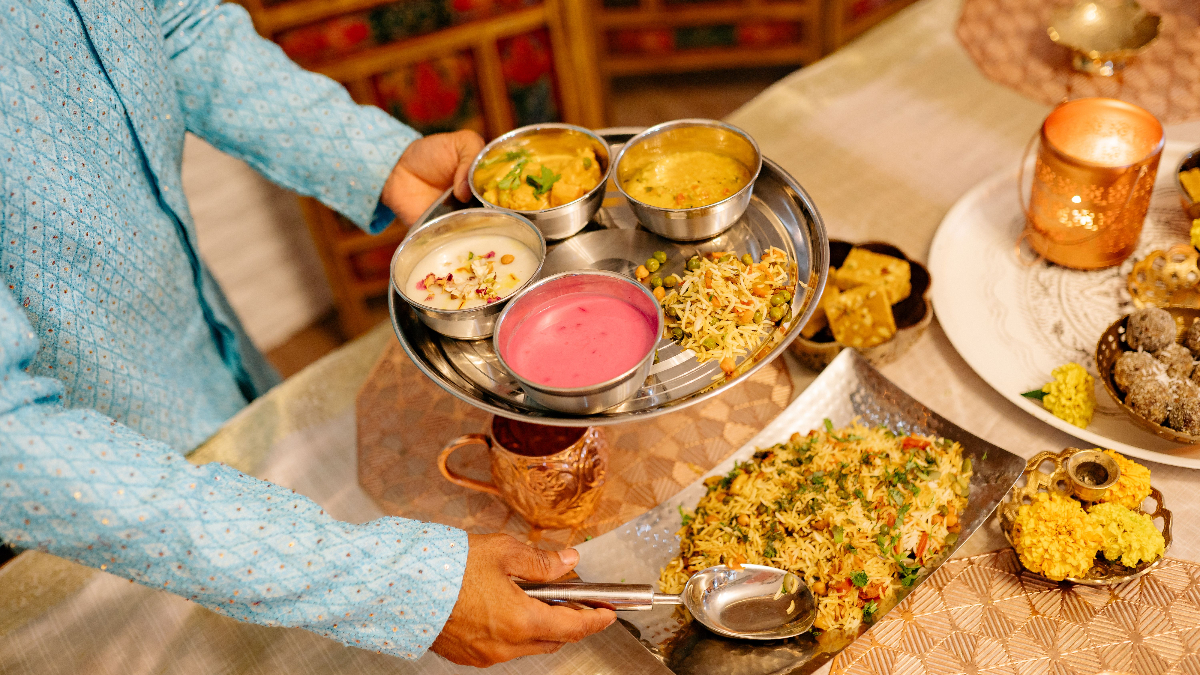
This can be a full-on feast. A North Indian vrat thali might come with a bowl of sweetened curd, rajgira roti, aloo ki sabzi and makhana kheer, depending on household practice. Kuttu contributes plant protein, although the amount in a serving depends on the recipe and portion. Sabudana, on the other hand, is mostly starch, so peanuts, curd or permitted vegetables give it useful company on the plate.
Our guide to sabudana and gut health explains its role in a fasting meal without asking it to supply everything on its own.
For many people in West Bengal, Durga Puja isn’t really a fasting festival in the traditional sense. The attention turns to puja bhog, food offered to Goddess Durga and then shared as prasad. A familiar bhog menu at a pandal features a spread including khichuri made with fragrant gobindobhog rice and moong dal, crispy begun bhaja (fried aubergine), a flavourful labra (mixed vegetable dish), crunchy papad and tangy chutney. A bowl of payesh (rice kheer) often completes the meal perfectly. Individual pujas have their own menus.
In many bhog kitchens, the food is prepared without onion and garlic. The flavours come from ginger, whole spices and good-quality ghee. On Ashtami and Navami, the queues for bhog can become part of the pandal scene. It’s not just a meal; it’s more like a shared experience.
One of the most auspicious moments of Durga Puja is the Sandhi Puja, which takes place at the junction of Ashtami and Navami tithis. The ritual window is traditionally 48 minutes, with the exact timing set by the local panchang. Bhog and prasad arrangements follow each puja’s own schedule.
The sweets come into their own at the very end of the Puja. On Bijoya Dashami, when families visit friends and elders to exchange greetings, many homes are stocked with coconut ladoo (narkel naru) and sesame balls (til naru), often alongside nimki and ghugni. In some homes, these are made by the same hands every year.
In Gujarat, Navratri is a nine-night dancing celebration, and the food surrounding it reflects that enthusiasm. People dance garba and dandiya raas for hours. A meal before the dancing and something to eat afterwards can become part of the rhythm of the evening.
Many Gujarati homes observe upvas (fasting) with farali dishes through the day: sama rice (barnyard millet), rajgira sheera, boiled peanuts and fruit, for example. Then comes more joyful feasting after the garba. A Navratri favourite is farali pattice, a fried potato cutlet that may use arrowroot or another fasting-approved flour, often with a coconut and peanut filling. There is also sabudana khichdi, finished with a squeeze of lemon and fresh coriander.
Food stalls at some garba venues make the meal part of the evening out, too. For someone observing upvas, the ingredients still need to fit their own fasting rules. Festival fasting and celebratory nightlife can, quite naturally, go hand in hand.
In parts of Tamil Nadu, Andhra Pradesh, Telangana and Karnataka, families celebrate Navratri with Golu, a tiered display of dolls and miniatures set up at home. Related traditions are known as Bommala Koluvu in Telugu and Gombe Habba in Kannada. In the evenings, neighbours visit each other’s displays and share prasad. Sundal is a familiar offering, especially in Tamil Golu homes.
Sundal is a simple, dry preparation of cooked legumes, tempered with mustard seeds, dried red chillies, curry leaves and grated coconut. Some households offer a different sundal on each of the nine days: chickpeas, black-eyed peas, green moong, white peas, horse gram and so on. The choice and sequence vary. It sounds modest, but the rotation brings a variety of pulses to the table, each with a slightly different texture and flavour. Sundal also contributes plant protein and fibre.
Our guide to which dals and pulses have the most fibre puts those familiar ingredients in context.
On any other day, sundal is everyday home cooking. During Golu, that ordinary cooking takes on a spiritual quality.
Alongside sundal, some South Indian festival visits include kosambari, a salad traditionally made with soaked moong or chana dal, cucumber and coconut. Soaking softens the dal, but it is not a substitute for cooking. For a safer home version, cook the dal until tender, then cool it promptly before mixing it with the other ingredients. Keep the salad refrigerated until serving.
Thamboolam, the parting gift given to visitors, may include betel leaves, a banana or coconut, kumkum and turmeric. Some traditions include areca nut, too. Areca nut is carcinogenic even without tobacco; its ritual inclusion should not be taken as advice to chew it. Some households add a small packet of sundal or a homemade sweet.
Nine days of festival eating can mean unusual mealtimes, especially when a long day of fasting ends with fried farali snacks late at night. A few simple habits can keep the food enjoyable: choose a portion that feels comfortable, eat at an unhurried pace, and include permitted fruit, vegetables or dairy instead of relying entirely on fried snacks. Drink water when your fast allows it, following any medical advice to limit fluids.
There is no universal first food for breaking a fast. Choose foods that suit your practice and health. If you are pregnant or breastfeeding, have a health condition or take regular medicines, get individual medical advice before fasting. Do not change medicine doses or timing on your own.
For ideas, see our guide to seven Navratri meals without deep-frying. Choose the recipes that fit your own fast rather than borrowing another region’s food rules along with its menu.
Across these regional traditions, the food has some similarities. Much of it skips onion and garlic, and many dishes make use of familiar ingredients: millets, legumes, dairy and fresh vegetables. That’s not really a trend; it has been part of these household traditions for generations.
Whether it’s Bengali bhog at a communal pandal, Gujarati farali pattice after hours of garba, or Tamil sundal shared between neighbours during Golu visits, the food is doing more than just filling a plate. It marks time and builds connections. And it reminds us that eating well need not mean leaving that meaning behind.
Drik Panchang: Navratri dates; Durga Puja calendar for Kolkata; Sandhi Puja
Dassana’s Veg Recipes: Navratri recipes and fasting customs; Farali pattice
Bong Eats: Khichuri, labra, chutney and payesh; Narkel naru
Ministry of Tourism, Incredible India: Vibrant Navratri Festival 2026
Karnataka Tourism: Gombe Habba; Bhajan Samaj: Golu Vaibhavam; Subbus Kitchen: Navaratri sundal recipes
ICMR-NIN: Dietary Guidelines for Indians 2024; Protein content and amino acids profile of pseudocereals
German Federal Institute for Risk Assessment: Lectins in plant-based foods
WHO/IARC: Areca-nut chewing is carcinogenic to humans
US National Institutes of Health: To Fast or Not to Fast
Disclaimer: This article offers general food and nutrition information, not individual medical advice. Festival foods and fasting customs vary by family, region and community. Follow any prescribed dietary or fluid guidance, and seek individual medical advice before fasting if your health or medicines may be affected.
Some vrat meals use kuttu, singhara or rajgira flour, potatoes, sabudana, fruit and dairy. There is no universal list: permitted ingredients depend on your family’s fasting practice.
It depends on the fast. Many North Indian customs exclude regular rice; samak is barnyard millet, not rice. Rice-based bhog elsewhere does not make rice permissible in every fast.
Durga Puja bhog is food offered to the goddess and shared as prasad. A familiar menu includes khichuri, labra, bhaja, chutney and payesh; individual menus differ.
Sundal is a cooked-legume preparation offered as prasad in many Golu homes. Some households vary the pulse each day; visiting guests share it as part of the celebration.
No. Farali describes food permitted under a fasting practice, not a digestive guarantee. Portion, preparation and personal tolerance matter; a fried pattice differs from a bowl of curd.