No Onion or Garlic During Navratri: Why You May Feel Less Bloated
If your stomach feels different during Navratri, two familiar ingredients may be part of the explanation. Fructans, portions and the rest of the plate all matter.
Table of Contents
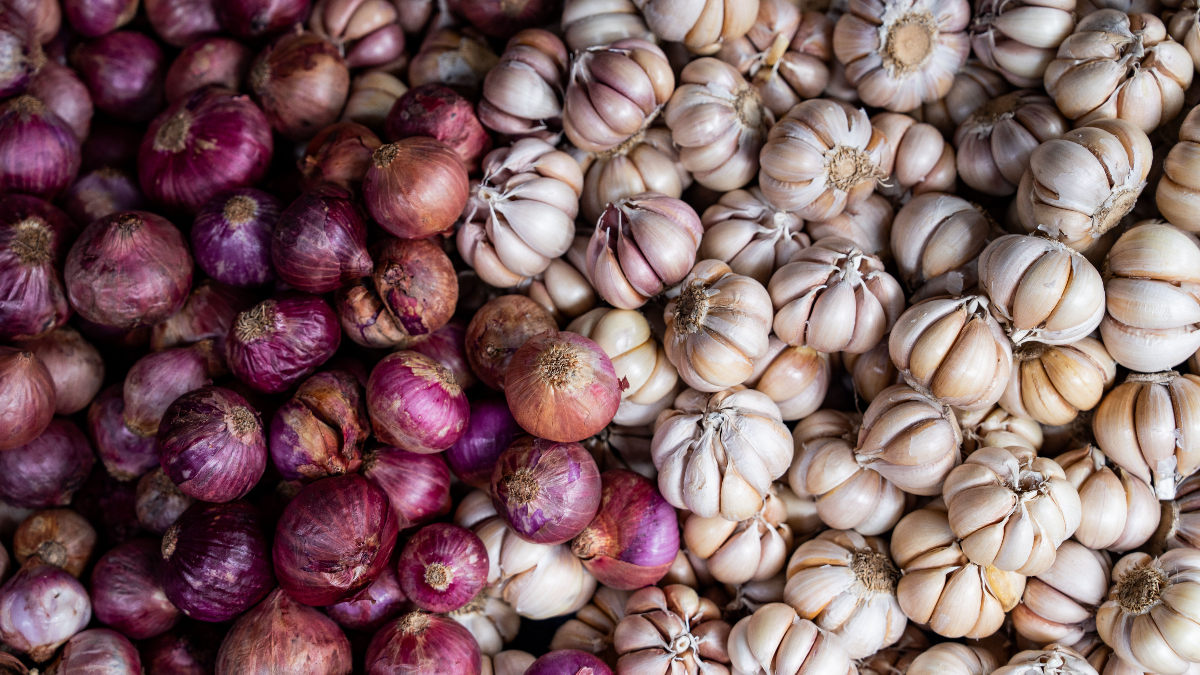
Some people feel less bloated when they stop eating onion and garlic during Navratri. Both contain fructans, a type of carbohydrate that gut bacteria ferment, producing gas. Eating less of them may ease symptoms in people who are sensitive, but Navratri changes more than two ingredients: portions, meal timings and other foods often change too. Feeling better during a fast does not prove that onion or garlic caused the discomfort, and it is not evidence of fat loss. There is no fixed day when your gut should start feeling different.
During Navratri, many households leave onion and garlic out of the kitchen. Then someone at the table says their belly feels less heavy, or that the familiar after-dinner bloating has eased. It is an interesting observation, especially if these ingredients usually find their way into your dal, sabzi and curry.
Many people put it down to eating lighter overall. But there is a particular carbohydrate in these two ingredients worth getting to know. It helps explain why the same meal can sit comfortably with one person and leave another feeling rather uncomfortable.
Fructans are chains of fructose molecules found in foods including onion, garlic and wheat. They are a type of dietary fibre that human digestive enzymes do not break down, as described in research from Monash University.
Fructans can reach the large intestine, where gut microbes use them as food. Fermentation creates gas, which can leave some people feeling bloated or uncomfortable. This is part of normal gut activity; the amount eaten and individual sensitivity help determine whether it bothers you.
Think of a little onion shared across a kadai of sabzi and a large onion salad alongside your own meal. Those are different amounts. Cleveland Clinic’s explanation of fructans notes that tolerance varies: a person may manage a smaller amount of a food but feel uncomfortable after a larger serving.
You may also come across the term FODMAP in gut-health reading. It covers several groups of fermentable carbohydrates, including fructans. A food’s FODMAP content does not tell you how every person will feel after eating it.
In kitchens where onion and garlic start off many savoury dishes, leaving them out can reduce one source of fructans across several meals. That could contribute to greater comfort for someone who is sensitive to them. It is a plausible explanation, not proof of what caused an individual’s bloating.
And onion and garlic may not be the only things leaving the plate. Some vrat traditions also avoid wheat and pulses. Wheat contains fructans, while pulses contain other fermentable carbohydrates. But Navratri food traditions differ across India: a menu that excludes pulses in one household can look very different from the sundal shared during Golu visits in another.
If your usual onion-rich curry and wheat roti become a kuttu cheela with curd, several things have changed at once. Ingredients, portions, preparation and even the time you eat may all be different. That meal alone cannot tell you which change mattered.
Vrat food is not automatically gentler on the stomach, either. A large plate of fried kuttu puris is a different experience from a modest cheela. Milk, some fruits and other permitted foods can also contribute to gas symptoms in some people. The whole meal still counts.
Plenty of people eat onion and garlic regularly without discomfort. Others notice that a particular meal or portion tends to leave them bloated. There is no universal ranking that makes garlic harder on everyone’s gut than onion, or cooked onion comfortable for everyone.
For someone who often feels bloated after dinner, a few more comfortable days can feel like a quiet revelation. It is worth noticing. It still does not establish a diagnosis, identify a single ingredient as the culprit or show that everyone would benefit from the same change.
A few comfortable meals during Navratri do not settle that question. If onion and garlic usually agree with you, there is no need to avoid them for gut health. They can be part of a varied diet, and their fructans can be used by gut microbes.
You can also choose to leave them out for religious, cultural or personal reasons. Neither ingredient is indispensable to every meal. Indian kitchens already know how to build flavour with ginger, cumin, coriander and other permitted seasonings; the choices depend on the dish and your household’s practice.
If bloating returns when your usual meals return, pay attention to the whole pattern. Repeatedly cutting out more foods on your own can make meals unnecessarily restrictive. A doctor or dietitian can help you work out what needs investigating.
Cooking softens onion and garlic and changes their flavour, but it does not reliably make them fructan-free. Monash University cautions that the effect of cooking on FODMAP levels varies with the food, temperature and other conditions.
Fructans dissolve in water. If onion or garlic cooks in a soup or curry, some fructans can move into the liquid. Picking out the visible pieces afterwards does not remove what has already dissolved, as Monash’s cooking guidance explains.
Oil behaves differently because fructans do not dissolve in it. For ordinary meals where garlic is permitted, a commercially prepared garlic-infused oil with low-FODMAP certification can offer garlic flavour with a tested low FODMAP content. Follow the product’s serving and storage instructions.
That is a cooking option, not permission to change a vrat’s rules. If your practice excludes garlic, do not assume garlic-infused oil is permitted.
Homemade garlic oil also needs careful storage. The CDC advises refrigerating homemade garlic- or herb-infused oils and discarding them after four days. Picking out the garlic does not make the oil safe to store on the kitchen shelf.
If your stomach has felt more comfortable during the festival, a few notes can help you remember what was different. NIDDK suggests keeping a food and symptom diary to discuss with a doctor or dietitian. You do not need to turn every meal into an experiment.
| What to note | An everyday example |
| Ingredients | What was in the meal? Note changes beyond onion and garlic, such as wheat, pulses, milk or fruit. |
| Portion and preparation | Was it a small cheela and curd, several puris, or a large late-night meal? Include snacks and drinks. |
| Timing and pace | Was the meal rushed? Did you eat much later than usual or after a long gap? |
| Discomfort | When did bloating begin, how long did it last, and did it happen on days without onion and garlic? |
These notes can make a conversation with a healthcare professional more useful. They cannot diagnose a food sensitivity, and a comfortable nine-day stretch is not a reason to start a broad elimination diet.
Speak to a doctor if bloating repeatedly bothers you, affects daily activities, changes suddenly or comes with abdominal pain, changed bowel habits or unexplained weight loss. Persistent symptoms deserve attention beyond changing the tadka.
Long after the nine days are up, that sort of attention to your everyday meals is worth keeping.
Gibson and Shepherd (2010), Journal of Gastroenterology and Hepatology
Cleveland Clinic: Fructans and individual tolerance
Monash University: Cooking with onion and garlic — myths and facts
Monash University: FODMAP frequently asked questions
NIDDK: Eating, diet and nutrition for gas in the digestive tract
NIDDK: Symptoms and causes of gas in the digestive tract
CDC: Homemade garlic- and herb-oil storage guidance
Disclaimer: This article provides general food and digestion information, not personalised medical advice. Fasting customs vary by family and tradition. Seek medical advice for persistent, worsening or unexplained digestive symptoms, and follow any prescribed dietary guidance.
Their fructans are fermented by gut microbes, producing gas. Eating less may help sensitive people, but other Navratri meal changes matter too; improvement alone does not identify a trigger.
Neither is universally harder to tolerate. The amount eaten, the rest of the meal and your own response matter more than a blanket ranking of these two ingredients.
Not reliably. Cooking changes their taste and texture, but fructans can remain in the food or cooking liquid. Picking garlic out of a curry does not remove dissolved fructans.
Do not assume so. If your fasting practice excludes garlic, an oil infused with garlic may not fit those rules. Follow your household or tradition's guidance rather than its nutrition label.
Feeling better during Navratri is not enough to identify a trigger or justify permanent avoidance. If symptoms recur, discuss the pattern with a doctor or dietitian before restricting more foods.