Fibre Variety, Not Just More Fibre: The High-Fibre Foods That Matter
High-fibre eating is less about finding one standout food and more about variety. See how pulses, seeds, millets, fruit and whole grains contribute to an Indian plate.
Table of Contents
High-fibre eating is less about finding one standout food and more about variety. See how pulses, seeds, millets, fruit and whole grains contribute to an Indian plate.
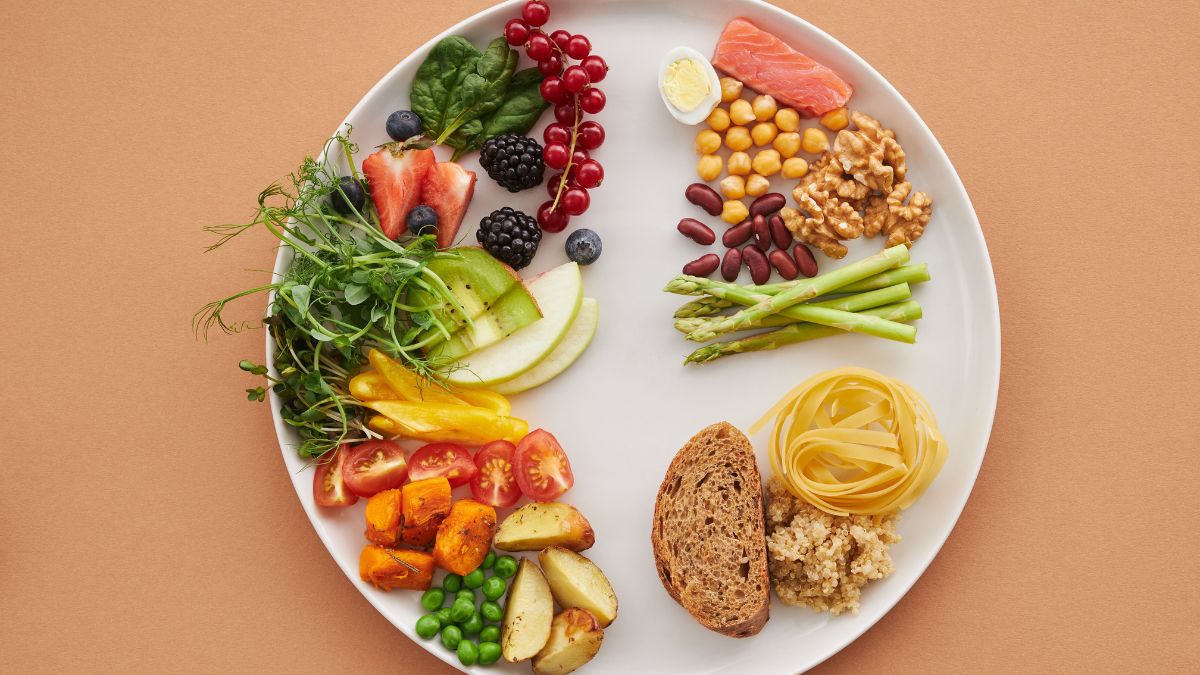
High-fibre foods aren’t a short list dominated by one grain. Whole pulses, seeds, fruit and millets all carry meaningful fibre — several of them more, gram for gram, than wheat atta itself. Chana, with skin, carries about 25.22g of fibre per 100g; flaxseed about 26.17g; moong about 17.04g — all comfortably ahead of whole wheat atta’s 11.36g. The point isn’t to rank these foods against each other. It’s that a fibre-friendly plate is built from variety, not from any single ‘high-fibre’ hero food working overtime.
Fibre isn’t one thing. Soluble fibre dissolves into a gel that slows digestion — found in oats, peas, beans, apples and psyllium. Insoluble fibre adds bulk and keeps things moving — found in whole wheat, bran, cauliflower and potato skins. Most everyday Indian foods bring a mix of both, which is part of why ICMR-NIN recommends sourcing nutrition from at least eight to ten different food groups a day, rather than maximising any single one. A diet built around one very high-fibre food, however impressive its number, still tends to lean heavily toward one of these two types — variety across several foods is the more reliable way to get a genuine mix of both.
Pulses are where an Indian plate quietly earns most of its fibre. Whole chana, with skin, carries about 25.22g of fibre per 100g — among the highest of any everyday Indian food. Rajma sits at about 16.6–17.7g, whole moong at about 17.04g, urad dal at about 11.93g, masoor at about 10.43g, and toor at about 9.06g. These are IFCT 2017 figures per 100g, dry weight — the actual fibre on your plate depends on how much ends up in the katori, but the relative ranking holds across all of them.
| ⓘ Pulse Fibre Ranking (per 100g) Chana, whole with skin: ~25.22g Rajma: ~16.6–17.7g Moong, whole: ~17.04g Urad dal: ~11.93g Masoor: ~10.43g Toor: ~9.06g For comparison — whole wheat atta: ~11.36g |
Flaxseed is one of the most fibre-dense everyday foods available — about 26.17g per 100g — and sesame isn’t far behind at roughly 17g per 100g. Because seeds are eaten in small quantities, a spoonful stirred into curd, chutney or a sabzi adds disproportionately to your day’s fibre relative to how little space it takes up on the plate.
Bajra carries about 11.49g of fibre per 100g, ragi about 11.18g, and jowar about 10.22g — all comparable to whole wheat, not higher. Millets are worth including for variety — different grains, different micronutrient profiles, a different texture on the plate — rather than because any one of them represents a fibre upgrade over wheat. Most millets are also naturally gluten-free, which is a separate, genuine reason some households include them, independent of the fibre comparison.
Guava carries about 8.59g of fibre per 100g, amla about 7.75g — both genuinely high-fibre fruit, not just a vitamin-C habit. ICMR-NIN also recommends that vegetables, fruits and tubers make up roughly half your plate, with at least 400g of vegetables and 100g of fruit a day.
Brown rice carries about 4.43g of fibre per 100g against white rice’s roughly 2.81g — a real but moderate difference, not a dramatic one. It’s worth knowing if rice is a daily staple in your house, but it’s a smaller lever than adding a katori of dal or a spoon of flaxseed. This is a useful corrective to a common assumption: switching grain colour alone won’t transform a meal’s fibre profile the way switching from rice to dal-heavy eating, or adding seeds, reliably does. Worth doing if the taste and texture suit your household — not worth treating as the single biggest fibre lever available.
None of this means restocking your kitchen. It means noticing what’s already there: the dal you’d make anyway, the til or flax sitting in a jar, the guava that shows up seasonally, the bajra or jowar roti your household already eats sometimes. A genuinely high-fibre day in an Indian kitchen rarely looks like a special diet — it looks like an ordinary thali where dal, vegetables, a grain and something small and seed-like all show up, rather than the plate leaning entirely on roti or rice to do the work alone.
Before assuming a meal is ‘low fibre’ or ‘high fibre’, it’s more useful to count sources than to estimate grams. A plate with a whole grain, a dal, a vegetable and either a seed or a fruit is touching four different fibre groups — regardless of the exact numbers behind each one. A plate with just rice and a thin sambar is touching one or two. That single count, done casually, tells you more about a meal’s fibre variety than any specific gram figure would.
| ⓘ Easy Variety Additions, by Category Seeds: a teaspoon of flax or sesame stirred into curd, chutney or a sabzi Pulses: rotating chana, rajma and moong through the week, not just one dal on repeat Fruit: guava or amla a few times a week, alongside whatever’s already a habit Grain: a bajra or jowar roti once or twice a week, alongside regular wheat |
It’s tempting to look at a ranked list like this and start optimising around the single highest number — eating more flaxseed, say, because it tops the chart. That’s not really the point. A varied plate, drawing a little from several categories, is both more sustainable and more nutritionally rounded than a diet built around one standout ingredient, however impressive its fibre count. The goal of this piece isn’t to crown a winner; it’s to make the full range of options visible, so the choice of what to add can be about what’s realistic and appealing, not just what scores highest on a single measure.
Disclaimer: This article is for general informational purposes only — not medical or dietary advice.
Flaxseed (about 26g per 100g), whole chana (about 25g per 100g), and rajma and moong (about 17g per 100g) are among the most fibre-dense everyday Indian foods — several of them ahead of wheat atta itself.
No — bajra, ragi and jowar are comparable to whole wheat on fibre, not higher. They're worth eating for variety, not as a fibre upgrade.
The difference is moderate, not dramatic — about 4.43g versus 2.81g per 100g. Useful to know, but a smaller lever than adding dal or seeds to a meal.
No. A katori of dal, a handful of vegetables, a spoon of seeds and a piece of fruit through the day adds up faster than chasing any single high-fibre food.
Whole chana, with skin, tops the everyday list at about 25.22g per 100g — ahead of rajma, moong, urad, masoor and toor.
A little of several is generally more sustainable and nutritionally rounded — different foods bring different fibre types and other nutrients, not just a single gram count.
Soluble fibre dissolves into a gel that slows digestion (oats, beans, apples); insoluble fibre adds bulk and keeps things moving (whole wheat, bran, vegetable skins). Most everyday foods provide a mix of both.