Healthy Snacks for Kids' Tiffin Boxes: Gut-Friendly Indian Ideas
Familiar Indian foods, fruit, fibre and age-appropriate textures can make a practical tiffin your child will actually eat.
Table of Contents
Familiar Indian foods, fruit, fibre and age-appropriate textures can make a practical tiffin your child will actually eat.
| QUICK ANSWER Healthy snacks for kids’ tiffin boxes do not need special ‘probiotic’ labels. A practical lunchbox combines familiar foods from two or three groups: perhaps vegetable poha with fruit, idli with chutney, or a roti roll with paneer and sabzi. Whole grains, pulses, fruit and vegetables add fibre and variety, while enough to drink through the day supports comfortable bowel habits. The food must also suit the child’s age and chewing skills. For children under five, modify choking hazards such as whole nuts, grapes, cherry tomatoes, firm apple pieces, popcorn and spoonfuls of nut butter. |
A child’s tiffin box can become a quiet lesson in eating. It teaches what counts as everyday food, what a balanced combination looks like and whether mealtimes feel curious or pressured. That lesson is repeated far more often than any one ‘perfect’ lunchbox.
The practical test is not whether the food photographs well. A half-eaten salad that comes home every day is less useful than two small vadas with chutney and fruit that your child happily finishes. Nutrition matters, but so do familiarity, appetite, texture, time and the simple fact that school lunch is eaten away from you.
For a child’s tiffin, ‘gut-friendly’ is not a promise that one food will change the microbiome. It means regularly offering a varied mix of fibre-containing plant foods, enough to drink through the day, and meals that the child can chew and tolerate comfortably.
The ICMR–NIN Dietary Guidelines for Indians 2024 encourage variety across cereals and millets, pulses and other protein foods, milk or milk products, nuts and seeds, vegetables and fruit, while advising limits on foods high in fat, salt or sugar and on ultra-processed foods. A tiffin does not need to contain every group; it only needs to contribute sensibly to the child’s whole day.
If you are increasing fibre, do it gradually and keep water available through the day. A sudden jump from mostly refined snacks to large servings of bran, raw vegetables and seeds can mean more gas or discomfort. Ongoing changes in bowel habits, appetite, growth or pain deserve a conversation with a paediatrician rather than repeated lunchbox experiments.
A food can be nutritious and still be the wrong shape or texture for a young child. Chewing skill and supervision matter as much as age, and school rules should always take priority.
Official guidance from the US Centers for Disease Control and Prevention and the UK government’s early-years choking guide agrees on the practical principle: make round, hard, sticky or difficult-to-chew foods safer before offering them to young children.
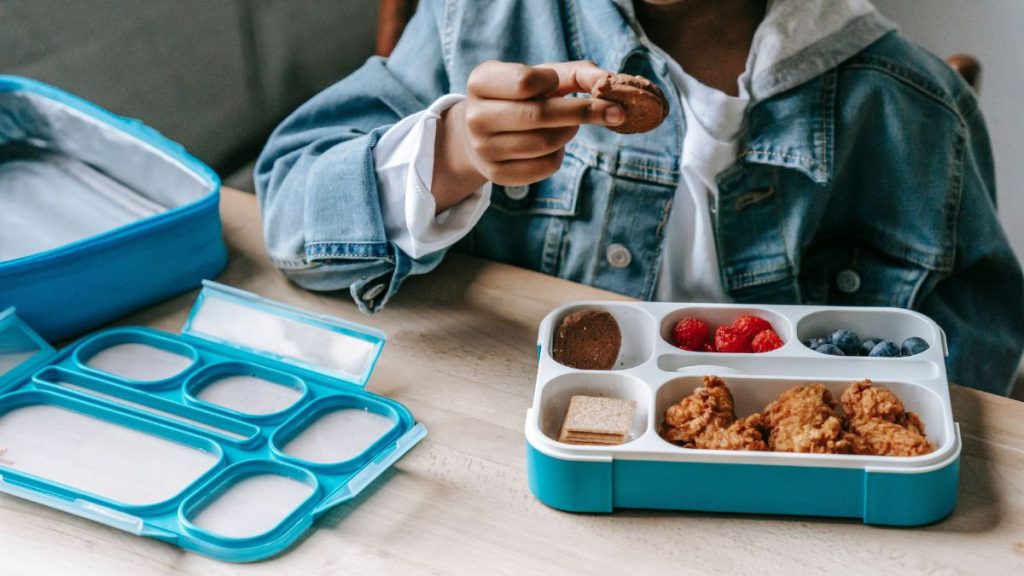
A useful tiffin formula is simple: start with a familiar cereal, millet or pulse-based food; add paneer, dal, a thick chutney or curd where safe cold storage permits; then include fruit or vegetables. The exact combination can change with appetite and what the family is already cooking.
These are templates, not rules. If breakfast was generous and dinner will include dal and vegetables, the tiffin can be smaller. If your child has sports practice after school, the portion may need to be more substantial. Look at the day, not one compartment.
Use this as a starting point and swap in foods your child already knows. Repetition is not failure; it is often how children become comfortable with a food.
| DAY | TIFFIN IDEA | PACKING NOTE |
| Monday | Vegetable poha + orange or mosambi | Pack fruit separately so the poha stays dry. |
| Tuesday | Idli + thick chutney + banana | Cut the idli into manageable pieces for younger children. |
| Wednesday | Besan or moong cheela + pear slices | Roll or cut the cheela into easy-to-hold strips. |
| Thursday | Paneer-and-sabzi roti roll + guava | Keep the filling fairly dry and cut the roll to suit the child’s grip. |
| Friday | Dhokla or thalipeeth + seasonal fruit | Choose a familiar regional favourite and adjust the texture for age. |
Fruit does not have to be disguised to count. A few banana coins, papaya cubes, orange segments or thin slices of guava or pear can be the most realistic part of the tiffin. Choose what travels well in your climate and cut it in a form your child can manage safely.
If the fruit returns untouched, try a smaller portion, a different cut or a fruit your child already accepts. Avoid turning the lunchbox into a test of obedience. Food refusal on one day does not make the fruit—or your attempt—a failure.
Curd is a familiar fermented food and can add protein, calcium and variety. But ‘fermented’ does not automatically mean every curd provides a specific probiotic effect: the cultures, storage and product can vary, so the microbiome claim should stay modest.
The more immediate question is temperature. Pack curd only when it can stay properly chilled in an insulated bag with an ice pack until lunch. On a hot day without reliable cold storage, choose a dry accompaniment or include curd at home instead. A food is not a healthy tiffin choice if it cannot travel safely.
Gut-friendly tiffins do not require imported snack bars or a second kitchen routine. Poha, idli, dosa, dhokla, thepla, thalipeeth, cheela, roti rolls, boiled sweet potato and soft-cooked chana or dal-based foods can all work. The useful question is not ‘Which one is best?’ but ‘Which familiar food can I combine and pack well today?’
Nor does every lunch need to be textbook-perfect. A simple paratha with fruit can sit comfortably in a varied week. Food habits are built through the pattern: different grains and pulses, regular fruit and vegetables, sensible portions, safe textures and a child who is not anxious about opening the box.
A gut-friendly tiffin box is mostly an unglamorous, repeatable habit rather than a daily project. Pack familiar food from two or three groups, rotate plant foods across the week, keep fluids available, and match the texture to your child’s skills. That is more useful than chasing one snack labelled healthy.
Most importantly, pack food your child will genuinely eat. A nourishing lunchbox works only when it survives the journey, feels manageable in a short school break and comes home mostly empty for the right reason.
| Ask Happy Tummy GPT: “Can you build a five-day Indian tiffin rotation for my child’s age and food preferences?” Or take the Digestive Quotient Test to look at the wider household habits that shape digestive wellbeing. |
| This is general information, not medical advice. For children, follow a doctor’s guidance before making significant dietary changes. If symptoms continue, are severe, or keep coming back, speak to a paediatrician. Sudden weight loss, blood in stool, severe or persistent pain, repeated vomiting, difficulty swallowing or a choking episode need prompt medical attention. |
Useful options combine familiar foods from two or three groups: vegetable poha with fruit, idli with thick chutney, a paneer-and-sabzi roti roll, besan or moong cheela, or dhokla with seasonal fruit. Choose a portion and texture your child can manage safely.
Rotate fibre-containing foods such as fruit, vegetables, whole grains, millets and pulses across the week, keep fluids available through the day, and introduce larger fibre changes gradually. No single tiffin needs to contain everything.
Do not pack whole nuts for children under five. For an older child, chewing skill and school rules still matter. A smooth nut or seed butter spread thinly is safer than a spoonful for younger children.
Quarter grapes and cherry tomatoes lengthways. Do not serve them whole or simply cut them into round halves. Adjust every food to the child's chewing skills and follow school guidance.
Only if it can stay properly chilled in an insulated bag with an ice pack until lunch. If reliable cold storage is not possible, choose a dry accompaniment and serve curd at home.
Start with a familiar meal and add a small amount in a form the child can recognise and manage. Repeat without pressure, vary the cut or preparation, and remember that fruit, pulses and whole grains also contribute variety. One refused tiffin is information, not failure.
A health claim on the front is not enough. Read the ingredient list, compare added sugar, salt and saturated fat, and judge whether the snack adds anything you cannot get from a familiar homemade option. Packaged foods can be convenient; they do not need a health halo.