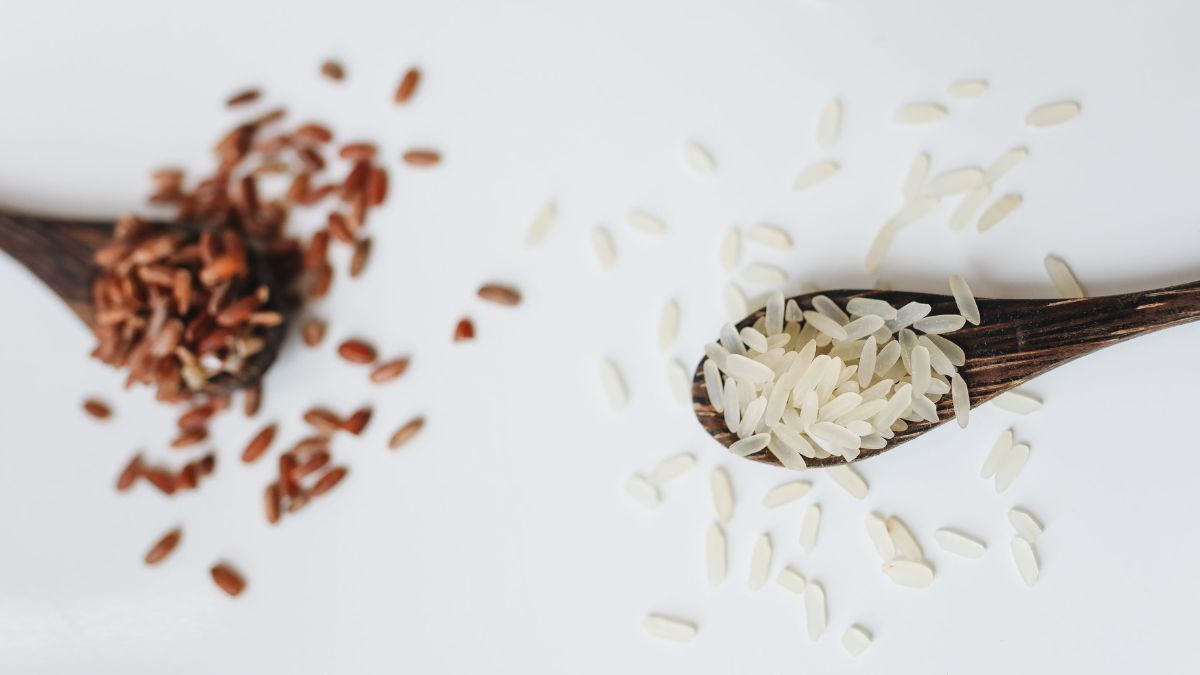
Brown Rice vs White Rice: The Difference Your Gut Actually Notices
Brown and white rice differ in fibre, texture and milling, but the bigger gut-health lever is what sits alongside the rice: dal, vegetables and other fibre-rich foods.
Table of Contents
Brown rice has about 4.43g of fibre per 100g; white rice has about 2.81g (IFCT 2017). That’s a real difference — roughly 1.6g more fibre per 100g — but it’s a moderate one, not a dramatic one. If your goal is meaningfully more fibre in your daily diet, switching from white to brown rice is a smaller lever than adding more dal, vegetables or a spoon of seeds. That doesn’t make the switch wrong; it means knowing what it actually achieves, rather than what the narrative around brown rice implies.
A standard serving of cooked rice — roughly a medium katori, around 150–200g cooked, from about 60–80g dry — would yield an additional 1–1.3g of fibre from brown rice over white, based on the per-100g difference. This is a genuine, cumulative contribution if rice is a daily staple: across a week, it adds up. But compared to the fibre difference between eating dal alongside rice versus skipping it, or including a vegetable versus not, it’s a smaller variable in the total equation.
Brown rice retains the outer bran layer that white rice has had removed through milling. That bran layer contains the fibre, as well as some B vitamins and minerals. Milling to produce white rice removes this layer for reasons of shelf life, texture and taste preference — the result is a grain that cooks more predictably, has a milder flavour, and stores better, at the cost of some nutritional content. This is the same whole-grain-versus-refined trade-off that applies across grains — it just lands at a smaller magnitude for rice than for, say, whole wheat versus maida.
| ⓘ Brown vs White Rice: The Actual Numbers Brown rice: ~4.43 g fibre per 100g (IFCT 2017) White rice: ~2.81 g fibre per 100g (IFCT 2017) Difference: ~1.6 g per 100g — real, not trivial, but moderate Compared to dal (chana ~25.22g/100g) alongside rice: a much smaller lever, NOT 0.3 g for white rice — that figure appears in some sources but is not the verified IFCT figure |
For a household where rice is the primary grain at most meals, with relatively little dal, vegetables or other fibre sources alongside, switching to brown rice makes a more meaningful contribution to total daily fibre than it would for a household already eating dal, vegetable sabzi and some fruit regularly. Context determines impact. The switch matters more when it’s filling a fibre gap than when it’s a small increment on top of an already-varied plate.
Brown rice has a nuttier flavour, a slightly chewier texture, and takes longer to cook than white rice — all of which contribute to why most households that didn’t grow up eating it need a transition period before it feels natural. Some cuisines and preparations suit it well; others don’t. Biryanis and khichiris made with brown rice have a different character from the same preparations with white. The compromise many households find: brown rice for simple, everyday dal-chawal, and white rice for more elaborate preparations where texture matters more.
South Indian rice-based diets — where rice is consumed in higher quantities across more meals than in North Indian cooking — make the brown rice substitution somewhat more impactful, simply because the base volume is higher. For a household eating rice once or twice a day as its primary grain, the cumulative fibre difference from a consistent brown-rice switch is larger than for a household eating rice occasionally. The same logic: the switch is worth more where rice does more of the daily nutritional work.
If a household is looking for the most impactful, realistic improvement to their rice-based meals’ gut-health profile, the answer is almost always the same: add more dal, more vegetable variety, or more fibre-rich accompaniments alongside the rice, rather than switching the rice itself. A bowl of sambar-and-white-rice is a more fibre-complete meal than the same bowl with brown rice and no sambar. The grain matters; what’s on the plate alongside it tends to matter more.
Parboiled rice — rice that’s been partially boiled in the husk before milling, then milled as normal — is worth knowing about for households looking for a middle ground. The parboiling process drives some nutrients from the husk into the grain before milling, retaining some of what white rice would otherwise lose. Parboiled rice is common across South India and Southeast Asia and is the basis of most commercial idli rice. It doesn’t carry the fibre profile of brown rice (the bran is still removed in milling), but its nutrient retention is somewhat better than standard white rice. Worth knowing about as an option for households that want some of the whole-grain benefit without the texture adjustment of full brown rice.
In households where rice features two or three times daily — as is common in many South Indian and rice-belt regional diets — the cumulative 1.6 g-per-100 g fibre difference from a consistent brown rice switch does become more meaningful than it would for occasional rice eaters. For these households specifically, the brown rice switch carries proportionally more weight than this piece’s general ‘moderate lever’ framing implies, and is worth taking more seriously as a steady daily habit rather than an occasional choice.
Disclaimer: This article is for general informational purposes only — not medical or dietary advice.
Brown rice has more fibre (~4.43g vs ~2.81g per 100g, IFCT 2017), which is a real difference, but moderate compared to the fibre contribution from dal and vegetables alongside the rice.
About 1.6g more per 100g — a genuine but moderate difference. Across regular meals it adds up, but it's a smaller lever than adding more dal or vegetables to the plate.
Because the bran layer — which contains the fibre — has been removed in milling. The same process that makes white rice milder-tasting and longer-lasting removes the fibre-containing outer layer.
Worth it if rice is a dominant part of your diet with relatively few other fibre sources. A smaller improvement when dal, vegetables and other whole grains are already regular. Not a necessary switch for anyone already eating a varied, fibre-rich plate.
Generally nuttier, slightly chewier, and takes longer to cook. Takes some adjustment for palates used to white rice, but many people adapt with regular exposure.
Add more dal and vegetables alongside the rice rather than changing the rice itself — a generous katori of sambar or dal adds more fibre to a rice meal than switching from white to brown rice would.