Brown Rice vs White Rice: What Actually Changes for Your Gut
Brown rice contains more fibre and retains more of the grain's outer layers, while white rice may be easier to tolerate for some people. Discover how both fit into a balanced Indian diet.
Table of Contents
Rice is not just a grain or crop in India. It is a sentiment. It is breakfast in the form of idli and dosa batter, lunch when paired with dal and sabzi, comfort food in any form after a long day, khichdi when the stomach is unsettled, as well as the foundational ingredient of countless regional dishes. From Bengal’s steaming gobindobhog or Tulaipanji rice to Hyderabad’s biryani to Kerala’s red rice to Tamil Nadu’s parboiled varieties and more, rice comes in many forms long before the brown-versus-white debate enters the conversation.
Yet somewhere along the way, brown rice acquired the reputation of being the obvious ‘healthy’ choice, while white rice was pushed into a forgotten corner of social media. However, for a gut-focused diet, the question is more interesting. What actually changes inside your digestive system when you choose brown rice instead of white? The short answer is: due to the grain’s outer layers, fibre content, digestion rate, and the way its carbohydrates interact with your gut, the entire process changes. But that does not automatically make brown rice suitable for every stomach, nor does eating white rice mean you are neglecting your gut. The difference starts with what happens during milling.
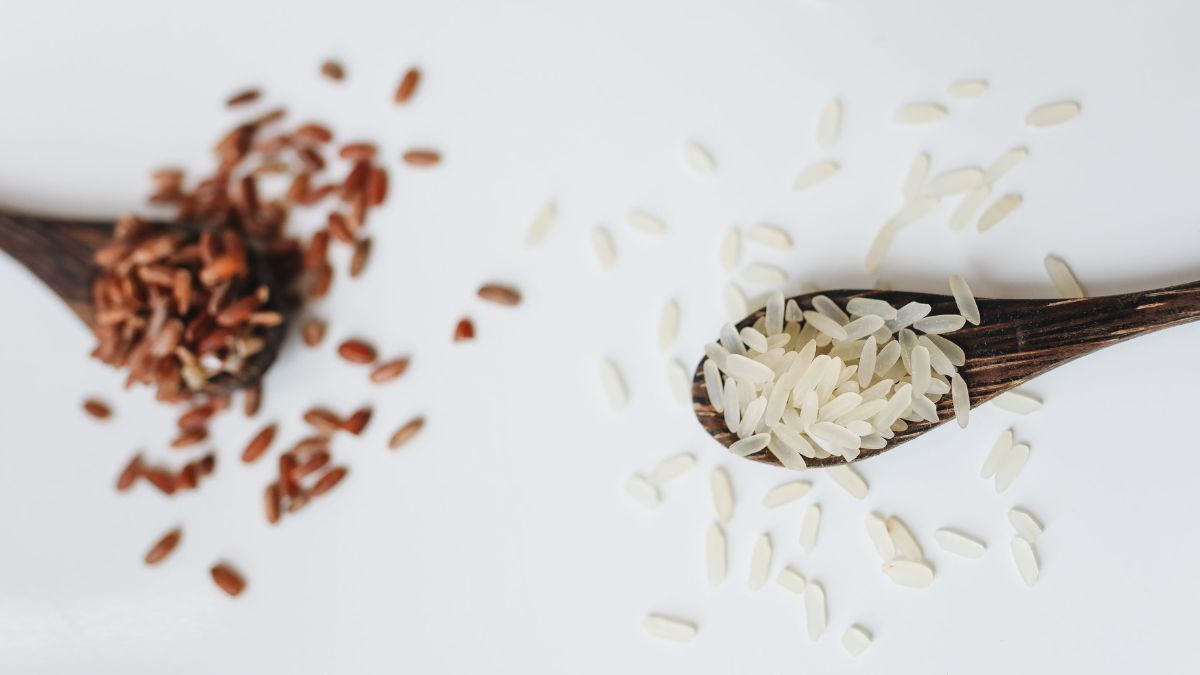
A whole rice grain contains several layers, such as the bran, germ, and endosperm. The bran and germ commonly sit around the starchy endosperm. While brown rice retains these outer layers, white rice is milled and polished to remove the bran and germ, leaving behind only the endosperm. And this distinction matters nutritionally. This means brown rice generally contains more dietary fibre, some additional micronutrients, unsaturated fats, and plant compounds than polished white rice.
A review on brown rice found that milling removes compounds found in the bran, while less-milled rice retains more fibre, micronutrients, and bioactive components. This is also broadly consistent with the Indian Council of Medical Research and National Institute of Nutrition’s (ICMR-NIN) latest Dietary Guidelines for Indians, which classify minimally polished or hand-pounded rice alongside whole grains and minimally processed cereals. So, nutritionally, brown rice does have more going on than white rice. But the gut story is not simply about counting grams of fibre.
Fibre often reaches parts of your digestive tract without being completely broken down in your small intestine. This is because different fibres behave differently: some add bulk to stools, some hold water, while some are fermented by gut microbes. This is important to keep in mind as gut bacteria can use certain undigested carbohydrates as substrates and produce metabolites such as short-chain fatty acids. Research on dietary fibre has established that its effects depend on its type, fermentability, as well as physical properties rather than simply its presence on a nutrition label.
Since brown rice contributes more fibre than polished white rice due to its intact bran layer, it can be useful for someone whose overall diet is low in fibre. A bowl of brown rice alongside dal, vegetables, curd, and fruit can contribute to a much more fibre-rich dietary pattern than a meal built largely around polished rice and other refined accompaniments. Research also suggests that cereal fibres and whole grains can influence gut microbial composition, although the effects are not uniform across studies or individuals. And that last point deserves main attention because more fibre is not automatically better for every gut every day.
Have you ever eaten brown rice and thought, why does this feel so much more substantial? There is a perfectly reasonable explanation. The presence of bran gives the grain a firmer texture and contributes additional fibre. It takes longer to chew and can take longer to digest compared to highly polished rice. So, for a person accustomed to a relatively low-fibre diet, suddenly replacing every serving of white rice with portions of brown rice may result in temporary bloating, excessive fullness or changes in bowel habits.
But that does not mean brown rice is ‘bad for digestion’. It can simply mean the digestive system is being asked to handle a larger amount of fibre than usual. This is relevant in an Indian diet, where rice is often eaten in generous portions but may be accompanied by varying amounts of vegetables, pulses, and other fibre-rich foods. If you are increasing fibre, a gradual change is much more sensible than a dramatic overnight switch.
This is where the brown rice conversation gets particularly interesting. The gut microbiome is influenced by your overall diet rather than one heroic ingredient. Whole grains provide indigestible carbohydrates and other compounds that can interact with intestinal microbes. Reviews of human studies suggest that whole-grain and fibre consumption can alter aspects of gut microbial composition, but the findings are not consistent enough to say that eating one particular grain will automatically transform your gut microbiome in a day or week.
In other words, your gut will not sit there waiting for brown rice. It prefers responding to the whole dietary pattern centred around it. Brown rice with dal, vegetables, beans, nuts, seeds, fruit, and fermented foods creates a very different microbial environment compared to brown rice eaten alone. The same principle applies to white rice. This is why a traditional Indian meal is always more interesting from a gut health perspective than a simple ‘brown rice versus white rice’ argument.
White rice often gets described as if milling has stripped it of all nutritional value. But that is a hyperbolic claim, as it not only remains an important source of carbohydrate and energy, but is also naturally low in fat and is eaten all over India. More importantly, white rice’s softer texture and lower fibre content can make it easier to tolerate for some people, as well as younger children and infants. For someone experiencing digestive discomfort, reduced appetite, or temporarily needing a gentler diet, plain white rice can be a practical food option.
This does not make white rice more ‘gut healthy’ than brown rice. It simply means that digestibility and nutritional density are two different notions. There is also considerable variation within white rice itself. Rice varieties differ in starch structure, amylose content, and cooking characteristics. Research has also shown that variety and cooking method can alter resistant-starch content and subsequent glucose responses. So comparing brown rice with white rice as though each category behaves identically is a gross oversimplification.
This is where context becomes more useful than food rules. Imagine two plates. Plate one contains a large mound of white rice, very little dal, minimal vegetables, and a fried side. While plate two possesses a moderate serving of rice with dal, beans or chana, two vegetable preparations, curd, and a little pickle. The second meal will have a considerably more diverse supply of fibre and plant compounds even if the rice itself remains white in both meals.
This aligns with the broader approach of the World Health Organisation (WHO), which recommends obtaining carbohydrates primarily from whole grains, vegetables, fruits, and pulses while emphasising dietary diversity, adequacy, and balance rather than relying on any single ‘miracle’ food.
There is no universal winner. Brown rice wins nutritionally in terms of fibre and retention of the grain’s outer layers. It can be a useful way to increase whole-grain intake and diversify your diet.
White rice wins on familiarity, versatility and, for many people, ease of digestion. It can absolutely have a place in a balanced gut-friendly Indian diet when consumed in moderation. And there is a third winner that is often overlooked: variety.
A gut-friendly diet does not have to become a daily bowl of brown rice. It can include rice alongside whole wheat, millets, oats, barley, pulses, vegetables, fruits, nuts, and seeds. So, if brown rice works for you, keep it in the rotation. If white rice is what makes your everyday dal-bhaat, curd rice or khichdi satisfying and comfortable, there is no reason to banish it.
For your gut, the bigger question is not simply ‘brown or white?’ It is: what does the rest of your plate look like, how much variety does your diet contain, and how well does your own digestive system respond to it? That is a far more useful and desi way of looking at rice.
Disclaimer: This article is intended for general educational purposes only and should not be considered medical advice.
Brown rice retains the outer bran and germ layers, providing significantly more dietary fibre and slower digestion, whereas white rice is milled and polished, offering a softer texture that is easier on sensitive stomachs.
The extra fibre and firm texture require more chewing and take longer to digest. Suddenly switching from white to brown rice can overwhelm the digestive system with too much fibre at once.
No. While it has less fibre than brown rice, white rice provides easily digestible energy and is often better tolerated by individuals experiencing temporary digestive discomfort, reduced appetite, or illness.
The overall dietary pattern matters most. Pairing either brown or white rice with diverse foods like dal, vegetables, beans, curd, and seasonal fruits creates a far more gut-friendly plate than relying on the grain alone.
There is no universal winner. Brown rice offers higher fibre and nutrient retention, while white rice offers easier digestion and familiarity. Variety and personal digestive response are what truly matter.