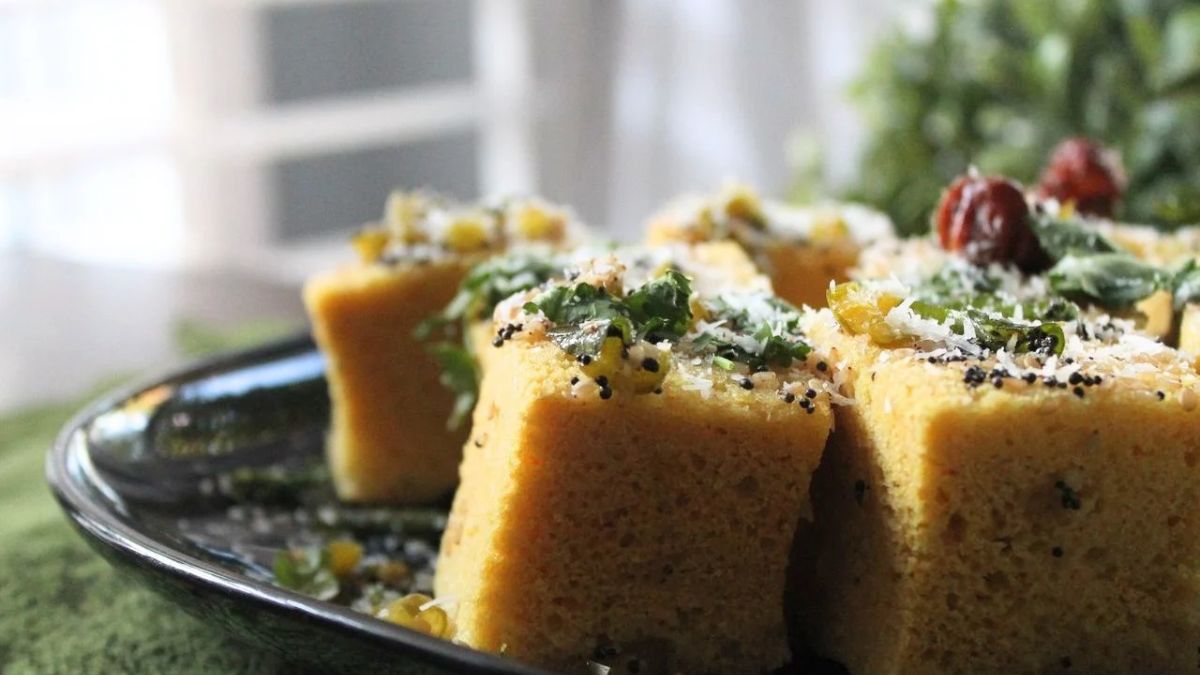
Three Chai-Time Snacks That Aren’t Deep-Fried
Roasted chana, moong sundal and instant dhokla: ordinary Indian snacks for the gap between lunch and dinner.
Table of Contents
Roasted chana, moong sundal and instant besan dhokla are three Indian snacks that do not need deep frying. They bring pulses into chai time, adding protein and fibre in amounts that depend on the recipe and portion. A serving can help bridge the gap between lunch and dinner; you do not need a snack if you are not hungry.
For the quickest option, toss ready-roasted chana with a little oil and spices, then let it cool completely before storing it in a dry, airtight jar. For sundal, soak whole moong, cook it until fully tender but still holding its shape, and finish with mustard seeds, curry leaves, coconut and lemon. Cooking times vary.
Instant dhokla uses besan, curd and fruit salt for a quick rise. It skips fermenting the batter overnight. Traditionally fermented dhokla is still a fermented food after steaming, but neither version should be assumed to supply live probiotics. Besan remains a useful pulse ingredient without that claim.
Tea can reduce absorption of the non-haem iron in plant foods eaten alongside it. The effect can be meaningful for that meal. Vitamin C helps iron absorption, but a squeeze of lemon does not guarantee that it cancels tea’s effect. If iron is a concern, have tea between meals and follow clinical advice.
Refrigerate cooked snacks promptly. Avoid leaving them out beyond two hours, or one hour above 32°C. Choose thoroughly cooked sprouts for chaat, particularly for people at greater risk of food poisoning. Increase fibre gradually, with adequate fluid.
Lunch and dinner get thought about. Breakfast gets talked about constantly. The snack that happens somewhere between four and six, with tea, mostly happens by reflex. It is usually whatever is within reach: biscuits, a packet of namkeen, leftover mithai, something fried from the corner shop.
None of that is a moral failing and none of it needs to be given up entirely. But some familiar defaults offer less protein or fibre, or more salt and oil, than you might want from an everyday snack.
There is a practical argument too. A snack with some protein and fibre can help you feel satisfied until dinner, although portions and appetite matter. The three below bring pulses into the picture, with the plant protein and dietary fibre they provide.
For the recipes below, use a 240 ml measuring cup, a 5 ml teaspoon and a 15 ml tablespoon.
Makes: approximately 2 cups.
Bhuna chana has been an Indian snack for a very long time, sold by weight from sacks and eaten by the handful. It brings protein and fibre together, and takes about ten minutes to turn from plain to moreish.
This recipe starts with ready-roasted chana, not raw dried chickpeas.
For later: keep the jar cool and dry, and use a dry spoon. Make small batches rather than assuming they will keep for weeks. Discard damp, mouldy or off-smelling chana; normal appearance and smell do not guarantee safety.
Makes: approximately 4–6 small snack servings.
Sundal is a South Indian favourite, made as prasad during Navratri but far too useful to keep for festivals. It is essentially a cooked pulse with a tempering: warm, savoury and easy to put together once the moong is ready.
Check the moong as it cooks: you want tender beans, rather than a mash or a hard centre.
Makes: one 15 cm round tin, approximately 4 snack servings.
Steamed rather than deep-fried, soft, and satisfying with tea. The tempering uses a little oil. It takes more steps than the chana, but gives you a batch to portion out.
For the batter
For the tempering
Some traditional dhoklas use a fermented rice-and-pulse batter. The instant besan version above uses fruit salt for its rise and does not ferment the batter overnight. A short rest is not the same process.
Fermentation changes flavour, texture and food components, so the versions are not necessarily nutritionally identical. But fermentation or curd alone does not make dhokla probiotic. After steaming, you cannot assume it supplies live cultures in beneficial amounts.
Traditionally fermented dhokla still counts as fermented after cooking. “Fermented” describes how it was made; “probiotic” requires live microorganisms with demonstrated benefits. The ISAPP consensus makes that distinction. Besan brings protein and fibre without needing a probiotic claim attached.
Three recipes are a starting point rather than the whole repertoire:
Raw or lightly cooked sprouts can carry harmful bacteria. Thorough cooking is safer, and people who are pregnant, young children, older adults and people with weakened immunity should avoid raw or undercooked sprouts. Health Canada’s sprout guidance explains the risk. Rinsing alone does not make raw sprouts reliably safe.
Tea contains polyphenols, including tannins, that can reduce absorption of non-haem iron from food eaten alongside it. Non-haem iron is the form found in plant foods, including pulses.
That can meaningfully affect the iron absorbed from your chana or sundal. The effect on iron levels over months is a different question: your overall diet, iron stores and tea habits also matter.
You do not necessarily need to give up chai. Having it between meals is a practical adjustment, especially if you have low iron or are at risk of deficiency. A small controlled trial found less inhibition with tea an hour after a test meal than alongside it. That supports a gap, rather than a guaranteed timing rule.
Vitamin C improves non-haem iron absorption, so lemon with sundal is a useful pairing. A squeeze does not guarantee that tea’s effect is cancelled. For diagnosed iron deficiency or iron supplements, follow your clinician’s advice on treatment and timing.
Keep something in the house. A lot of unplanned snacking is a supply problem rather than a willpower problem, and a jar of spiced chana makes the 4 pm decision easier.
Sundal works on days when you have thought about soaking ahead. Make it for that day, or refrigerate it promptly for the next. Dhokla can be portioned and refrigerated, with only what you want to eat taken out at a time.
For cooked sundal and dhokla: cool in shallow containers and refrigerate within two hours of cooking, or one hour above 32°C. Do not wait for a batch to become completely cold on the counter. Keep the fridge at 4°C or below, cover once chilled, and eat within 2–3 days. If reheating, heat to 74°C at the centre, checked with a food thermometer. These precautions follow leftover-handling guidance and the FDA’s hot-weather advice.
Take out only the portion you will serve, keep total time out within those limits and discard cooked food left out too long. Reheating does not rescue it.
And the samosa can still have its place. The argument here is only for having more than one automatic option when chai time comes around.
This article provides general food and nutrition information, not individual medical advice or treatment for iron deficiency or digestive conditions. Increase fibre gradually and have adequate fluid. Follow any clinician-advised fibre or fluid restriction. Check ingredients for allergies and individual tolerance, and follow the food-safety guidance above. Seek medical advice for digestive symptoms that persist, are severe or keep returning. People with diagnosed iron deficiency, and those who are pregnant or have specific medical needs, should follow their healthcare professional’s advice.
Not inherently. A planned snack can help if you are hungry between lunch and dinner. Whether you need one depends on your appetite, meal pattern and health needs. You do not need to eat just because it is 4 pm.
A dhokla made from fermented batter does, even after steaming. An instant fruit-salt batter does not undergo that same fermentation. Neither version should automatically be called probiotic: fermentation and proven live-culture benefits are different claims.
Not necessarily, but tea can meaningfully reduce non-haem iron absorption from food eaten with it. If you have low iron, consider tea between meals and get advice on supplement timing if relevant. Lemon helps absorption but does not guarantee complete protection from tea’s effect.
Yes. Chana and lobia are useful alternatives, and peanut sundal is another familiar version. Soaking and cooking times differ. Cook whichever ingredient you use fully; do not apply the moong timing to every bean.
Plain roasted chana is a pulse snack that provides protein and fibre without deep frying. Many packaged namkeen mixes contain more added oil and salt, but some are pulse-based too. Compare ingredients, nutrition labels and the portion you actually eat rather than treating all namkeen as refined flour.
Yes, with suitable storage. Keep fully cooled, dry-roasted chana airtight. Refrigerate cooked sundal and dhokla promptly and eat within 2–3 days; the room-temperature limits still apply when serving or carrying them to work. Use an insulated bag with an ice pack if chilled storage is needed during travel.