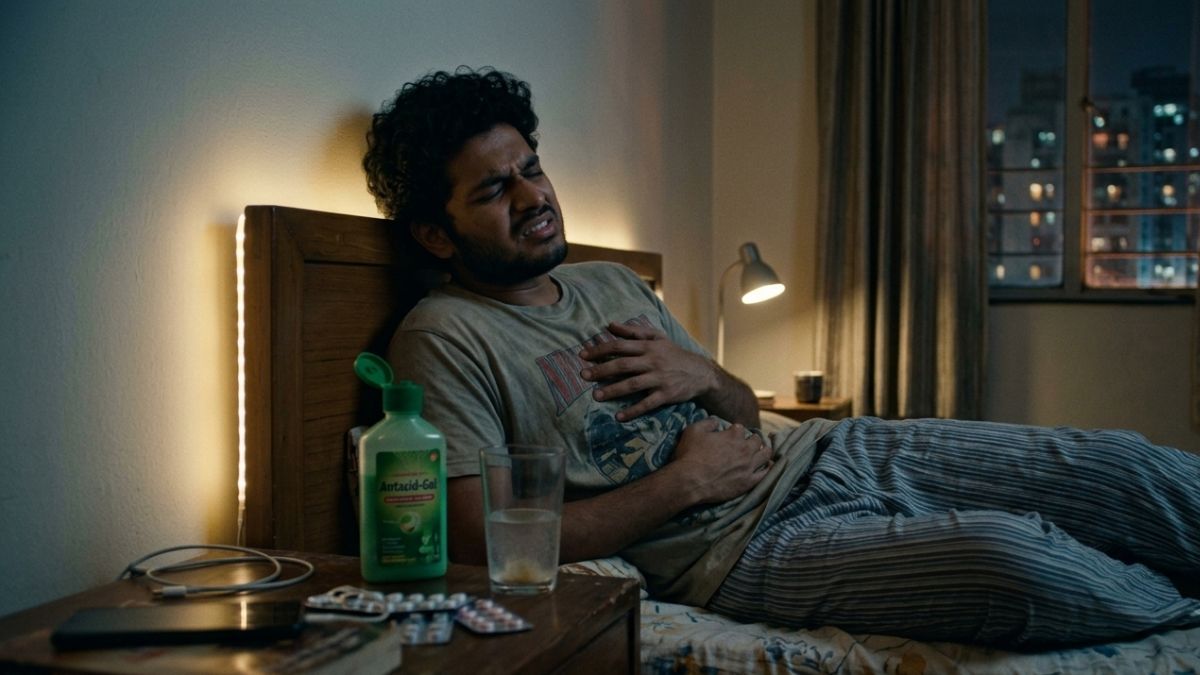
Why Is Acidity Worse at Night? Acid Reflux, Explained
That late-night burning may have less to do with what you ate and more to do with when you ate, when you lay down and what your body was doing in between.
Table of Contents
That late-night burning may have less to do with what you ate and more to do with when you ate, when you lay down and what your body was doing in between.
Expert reviewed by Qurath Ain, Certified Nutritionist and Clinical Dietitian
Yes, acidity and acid reflux genuinely do get worse at night, and there are specific reasons why. Lying flat removes gravity’s help in keeping stomach acid down, and saliva, which helps neutralise acid through the day, slows down significantly while you sleep. Together, these mean acid sits in contact with the oesophagus for longer after dark. You’ve had a perfectly decent dal-chawal dinner, you’re finally horizontal and ready to sleep, and then it starts: that slow, burning climb up the chest, the sour taste at the back of the throat, your body apparently deciding bedtime is the moment for a digestive revolt.
Your stomach produces acid to break down food; that part is working exactly as it should. The trouble begins when acid travels upward into the oesophagus, the tube connecting your mouth to your stomach. A small muscular valve, the lower oesophageal sphincter, normally acts like a tight lid, keeping acid where it belongs. When that valve relaxes too much, or too often, stomach acid sneaks through, and that’s acid reflux.
The burning sensation is the acid irritating the oesophagus lining, which, unlike your stomach, has no protective coating for it. It’s deeply uncomfortable, and an enormous number of people in India experience it regularly, particularly after rich, spicy or heavy meals. This nighttime acid reflux not only lowers the quality of sleep with frequent awakenings, but it could also increase the risk of certain diseases, including cardiovascular diseases, ulcers and obstructive sleep apnea syndrome.
Here’s the catch with night-time: gravity stops working in your favour the moment you lie flat. During the day, even if acid briefly splashes upward, gravity pulls it back down fairly quickly. Horizontal, that natural correction disappears, and acid can sit in your oesophagus for longer, causing more irritation and a more intense burning feeling.
Alongside this, saliva production drops significantly at night. Saliva is mildly alkaline and helps neutralise acid in the oesophagus every time you swallow through the day; at night, swallowing becomes less frequent and saliva flow slows. Your body loses one of its quietest, most constant defences right when acid exposure is potentially highest.
Late dinners are deeply ingrained in how many Indian households function, work runs long, and the kitchen often comes alive at nine o’clock. But eating a full meal and heading to bed within an hour or two afterwards is one of the most reliable triggers for night-time reflux.
The metabolism, circadian rhythm and the digestion process slow down by the end of the day. The stomach is still actively churning through food, producing acid and expanding, just as you lie down and ask it to also cope with being flat. Fatty foods slow digestion further, keeping the stomach full and acidic for longer. Common triggers, spicy food, tomato-based gravies, citrus, coffee, even mint, can relax the lower oesophageal sphincter, though how much each one affects you varies from person to person. A heavy biryani with raita and a cup of chai at ten at night is not a small ask of your digestive system. It increases digestive load, making your digestive system overwork.
Not all sleeping positions are equal when it comes to reflux. Some research suggests lying on your right side makes acid reflux worse, possibly because of how the stomach sits anatomically, while sleeping on your left side seems to help keep acid lower in the stomach, away from the oesophageal opening. It’s a small adjustment, but people who make it often notice a real difference.
Elevating the head of the bed by around 20 to 25cm, rather than just piling on extra pillows, which can create an uncomfortable bend at the waist, can also help gravity do some of its daytime work even while you sleep. As per research, the left lateral decubitus position is associated with significantly shorter nocturnal oesophageal acid exposure time and faster oesophageal acid clearance compared with the supine and right lateral decubitus positions
The most consistently effective change is creating a proper gap between your last meal and lying down, around three hours where possible. This doesn’t mean starving yourself; it means shifting dinner earlier, or keeping evening meals lighter. A smaller plate of khichdi or dal with roti is far kinder to your oesophagus at night than a full celebratory spread.
Loose clothing helps too, tight waistbands after meals increase pressure in the abdomen, pushing acid upward. A short walk after dinner keeps you upright a little longer, giving your stomach time to begin emptying. And cutting back on tea and coffee in the evenings is worth trying if you already notice night-time symptoms, small experiments, not permanent sacrifices.
If you’re not sure whether what you’re feeling is acidity, heaviness or something else, “Acidity, Heartburn and Indigestion: Are They the Same Thing?” is a useful place to start. And if timing feels like the bigger pattern than the food itself, “Does Meal Timing Matter? How Eating Schedules Affect Digestion” digs into that further.
Occasional reflux after a late or heavy meal is common and usually manageable with lifestyle shifts. But if the burning happens most nights, disrupts your sleep consistently, or comes with difficulty swallowing, unexpected weight loss, or any blood in vomit or stools, don’t brush it off, these are worth discussing with a doctor.
Log it: Any night-time acidity recently? Note it in your Symptom Log — the timing pattern often tells you more than the food does.
Try this: push dinner 30–60 minutes earlier this week, or keep tonight’s portion a little lighter.
Ask Happy Tummy GPT: “My acidity gets worse after I lie down — what should I check first?”
Why is my acidity worse at night?
When you’re flat, gravity can no longer pull acid back down into the stomach, and saliva production decreases. Both mean acid stays in contact with the oesophagus for longer, intensifying the burning sensation. As your day ends, your biological clock/circadian rhythm also changes. Physical and physiological functioning of the body slows down; similarly, your digestion also slows down. That is the reason it is recommended to consume light meals and easily digestible food to avoid gastric overload, and give a 2-3 hour gap between meals and bedtime.
Is drinking water at night helpful for acid reflux?
Small sips of plain water can help dilute acid and wash it back down. But drinking large amounts right before bed can add volume to the stomach and potentially make things worse.
Does eating spicy food always cause acidity?
Not always, and not for everyone. Spicy food can irritate an already sensitive oesophagus and may relax the sphincter, but individual tolerance varies. Paying attention to your own patterns is far more useful than following a blanket list of forbidden foods. Also, it can’t be applied to all spices; every individual has a different spice tolerance capacity. Note down which spice doesn’t suit you and limit/avoid it and see the difference it makes.
Can stress make night-time acidity worse?
Yes. Stress is a recognised contributor to acidity, and many people notice their gut feels it most in the evening, once the day’s tension catches up with them. If you’re already carrying stress into the night, it’s worth looking at both the stress and the acidity together. With stress, the body enters fight-or-flight mode. Stress hormones such as cortisol and adrenaline are released into your bloodstream, which slows down the digestive process to divert energy toward dealing with stress. The body relaxes the LES (lower oesophageal sphincter) and slows down stomach emptying. With this, acid gets built up and pushed into the food pipe (oesophagus).
Disclaimer: This article is intended for general educational purposes and is not a substitute for personalised medical or dietary advice.